Woodcreepers are in the family Furariidae, consisting of 318 species in 71 genera. They are found throughout South and Central America, extending into large parts of Mexico. This page covers a group of birds commonly referred to as wood creepers. These birds are not closely related to North America’s small Brown Creeper, which is in the family Certhiidae.
I observed 10 species of wood creepers during the September trip, taking photos of 7.
Plain-brown Woodcreeper
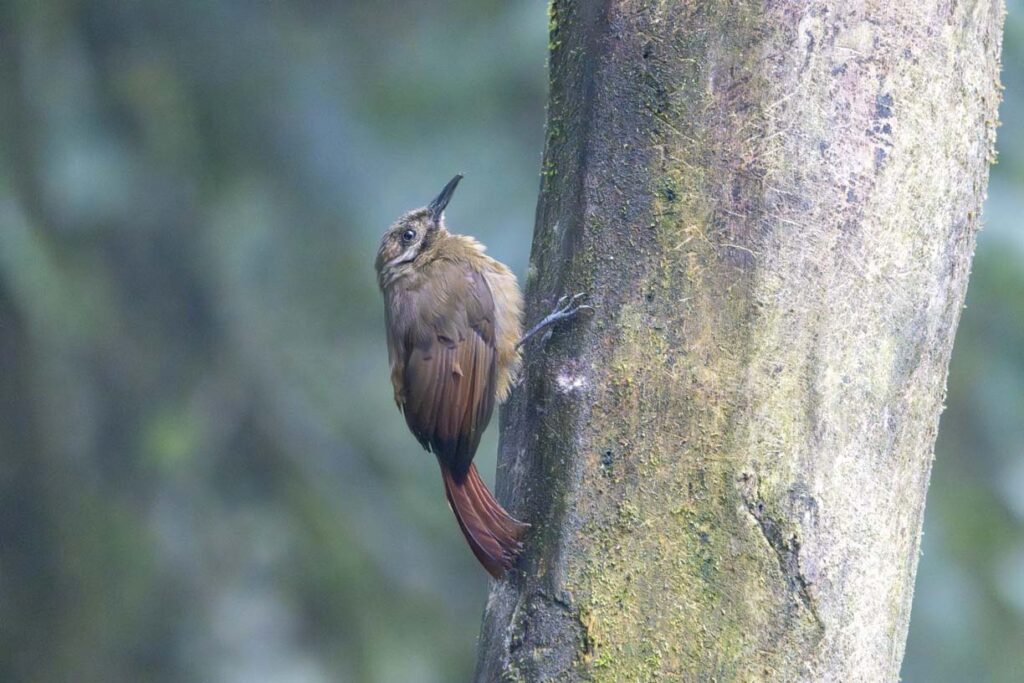
The aptly-named Plain-brown Woodcreeper is a medium-sized songbird with nondescript olive-brown and chestnut plumage on its back and lighter, buffy brown throat, breast, and belly. As shown here, it tends to cling to the trunk of the tree in search of arthropods and other invertebrates. They are known to follow swarms of army ants to take prey flushed by these swarms, although we did not observe that behavior.
Wedge-billed Woodcreeper
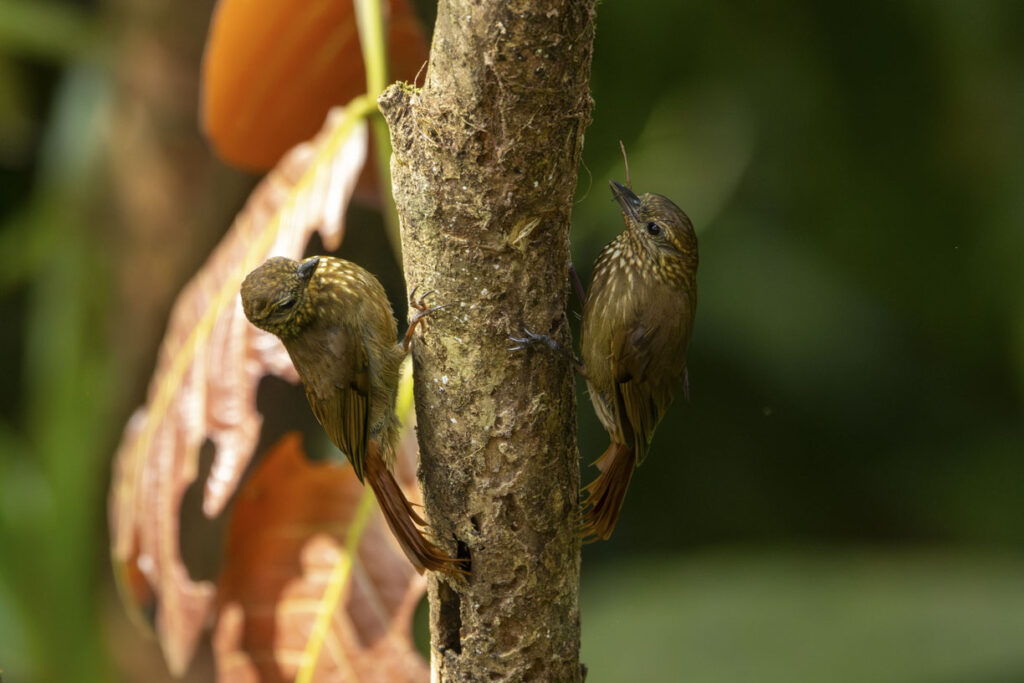
Wedge-billed Woodcreepers are the smallest and shortest-billed of the woodcreepers. Its bill is distinctly wedge-shaped, and its breast and neck are finely streaked. Note the stiff, bristled tail feathers. This aids the bird as it climbs up the trunk of trees.
Strong-billed Woodcreeper
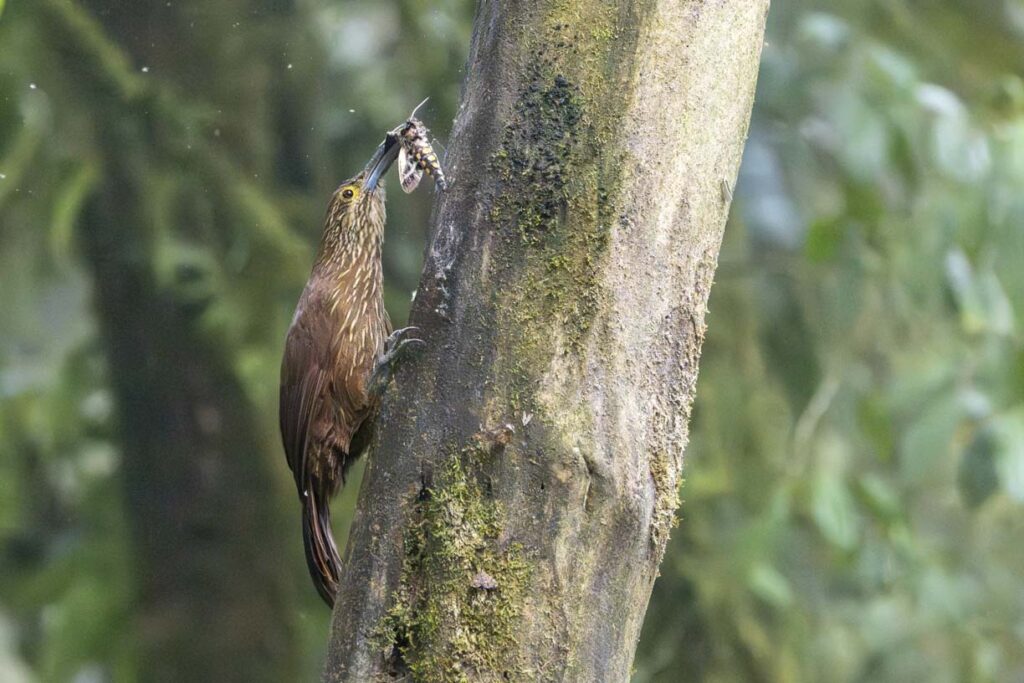
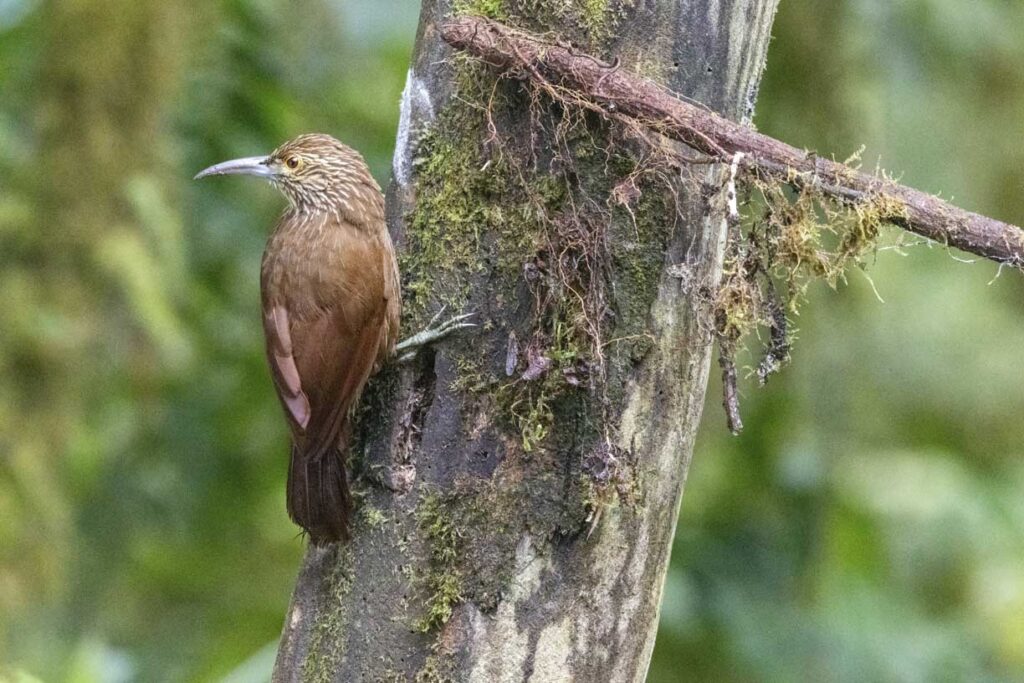

We move from the smallest to one of the largest wood creepers. The Strong-billed Woodcreeper is a large bird with its eponymous long, strong bill. We saw it mostly at dawn, as it came out to capture moths that were attracted to moth lights. In the bottom picture, you can see some of the scales from the moths wings floating in the air as the bird shakes the moth.
Spotted Woodcreeper
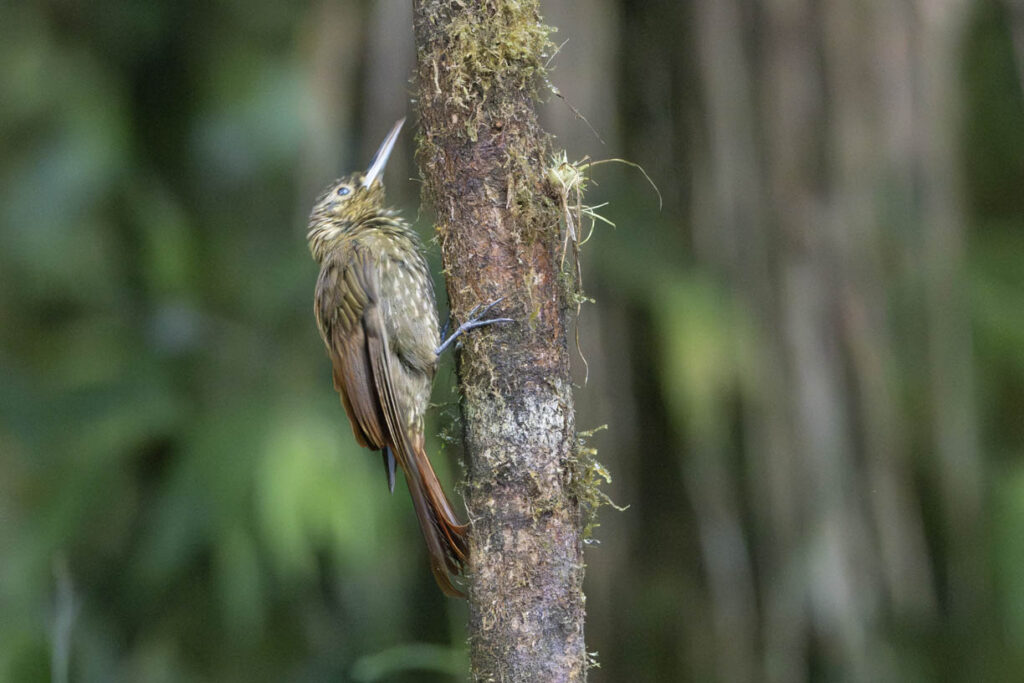
The Spotted Woodcreeper has a large, bi-colored bill. Its bill looks oversized compared to the body. Its underside is spotted, and it has a bold eye-ring. It is found mostly at elevations of between 1500 and 6000 feet, with its range extending from Mexico, through Central America and the Pacific slope of the Western Andes in Columbia and Ecuador.
Olive-backed Woodcreeper
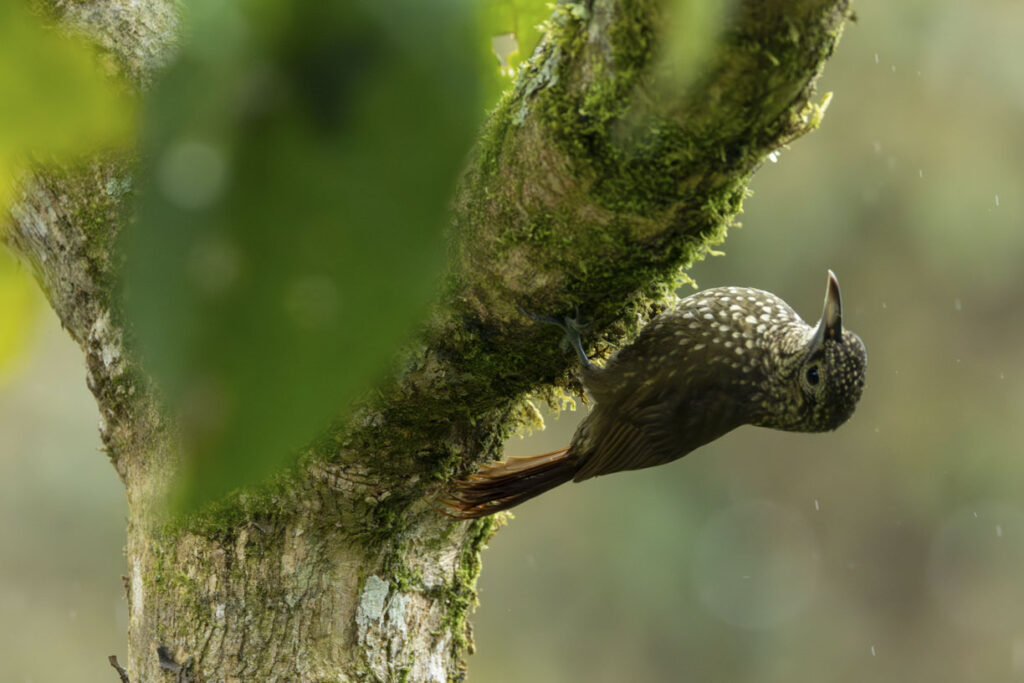
The Olive-backed Woodcreeper is closely related to and looks similar to the Spotted Woodcreeper. There are some subtle differences, such as more olive upper parts and a more boldly spotted crown. In addition, the Spotted range is restricted to the Pacific side of the Andes western slope. This bird was observed in San Isidro, which is on the eastern side of the eastern range.
Montane Woodcreeper
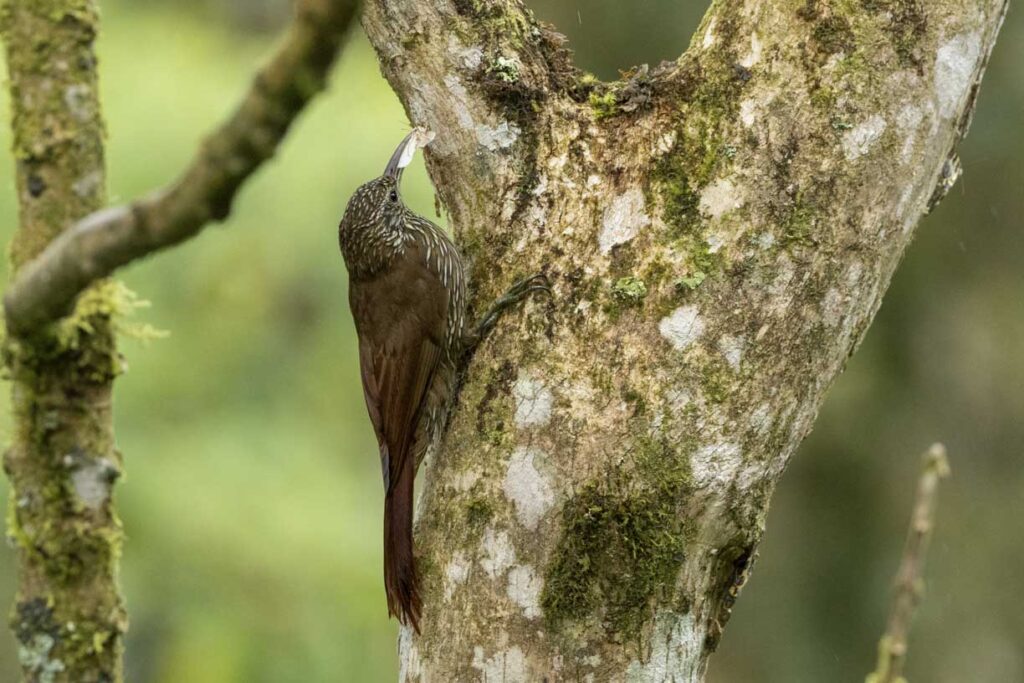
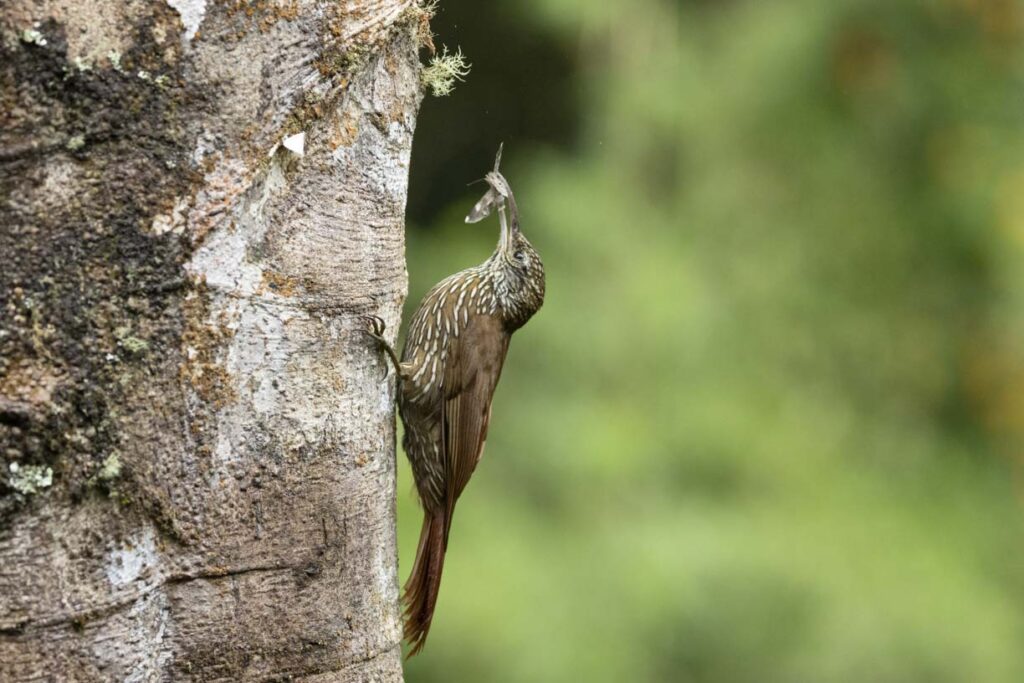
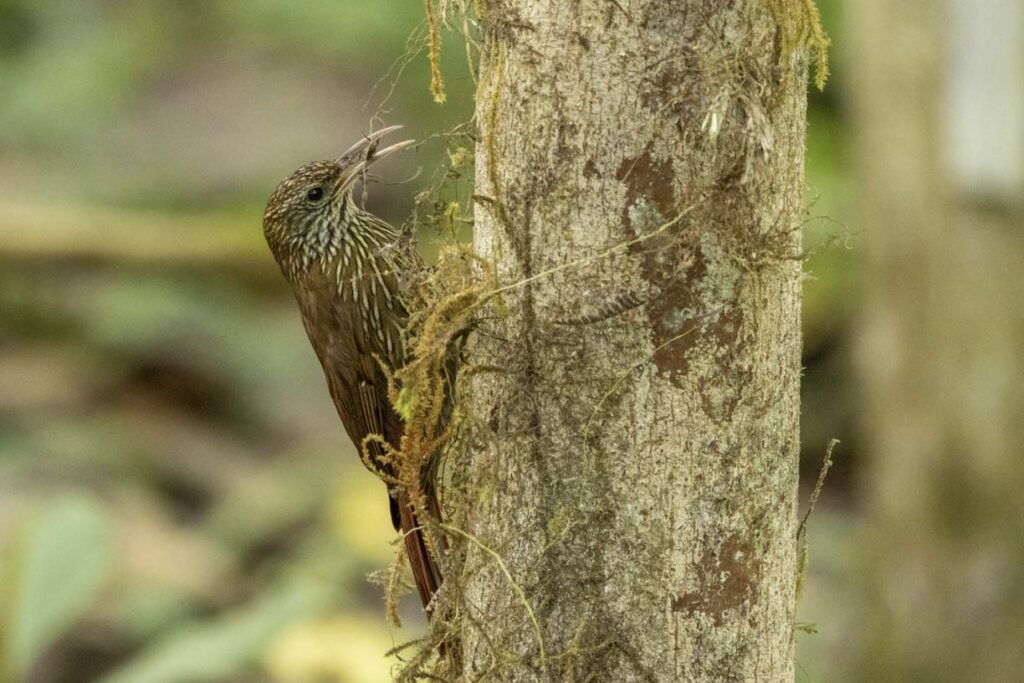
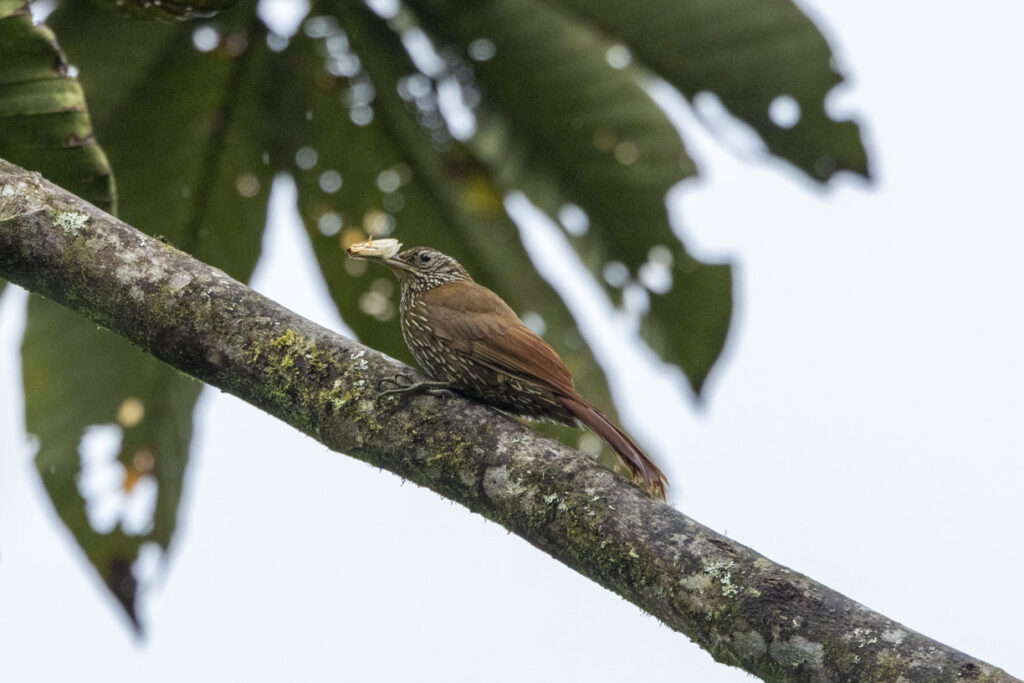
The Montane Woodcreeper was the most common wood creeper of the trip. However, its range is restricted to the mountainous areas of South America, primarily in the Andes, from 5,000 to 10,000 feet, from Venezuela to Bolivia.
Streaked Tuftedcheek
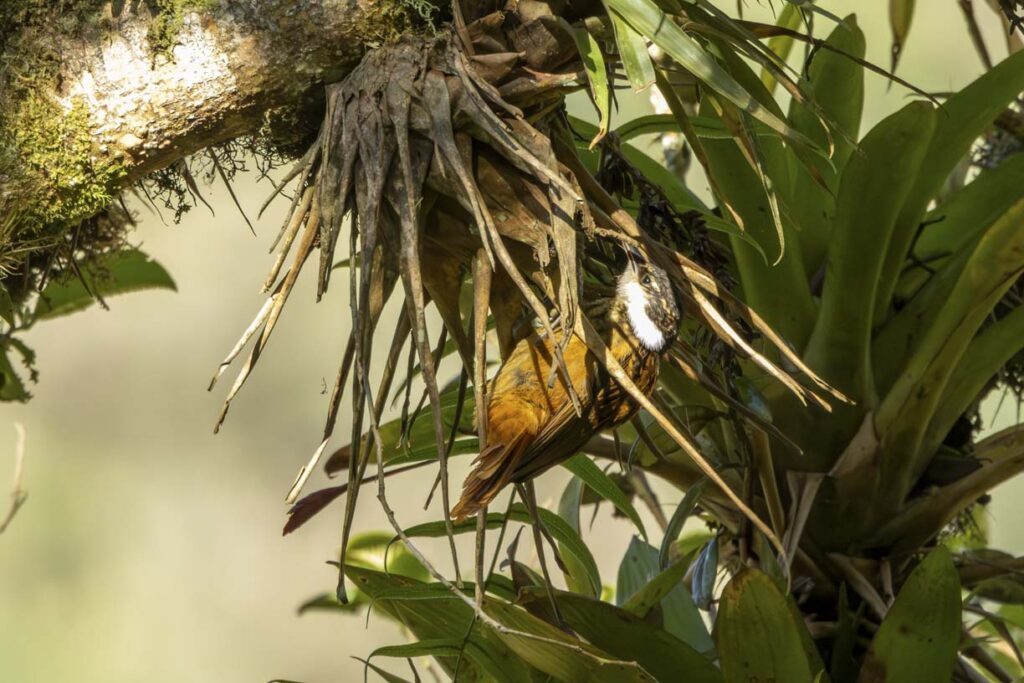
The Streaked Tuftedcheek is indeed a streaked bird, with white feathers on its throat extending onto its face to give it the tufts on its cheeks. It forages high in the canopy, searching through epiphytes and dead leaves for butterfly larvae and small frogs.