Matt Whitbeck and I arranged a 10-day bird trip to Morocco, adding a day in Portugal since our Air Portugal allowed a free layover with our ticket. We flew from Washington-Dulles Airport, through Lisbon to the Marrakech Airport. We arrived on Friday, April 24, and spent the night in a Riad near the historic Medina.
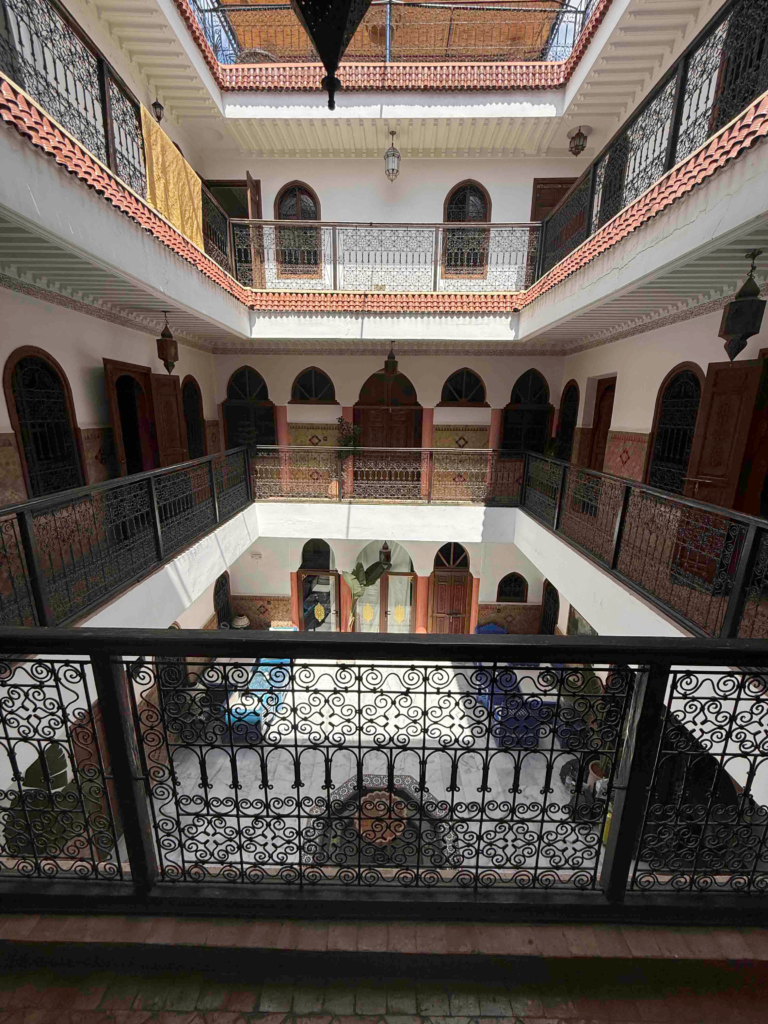
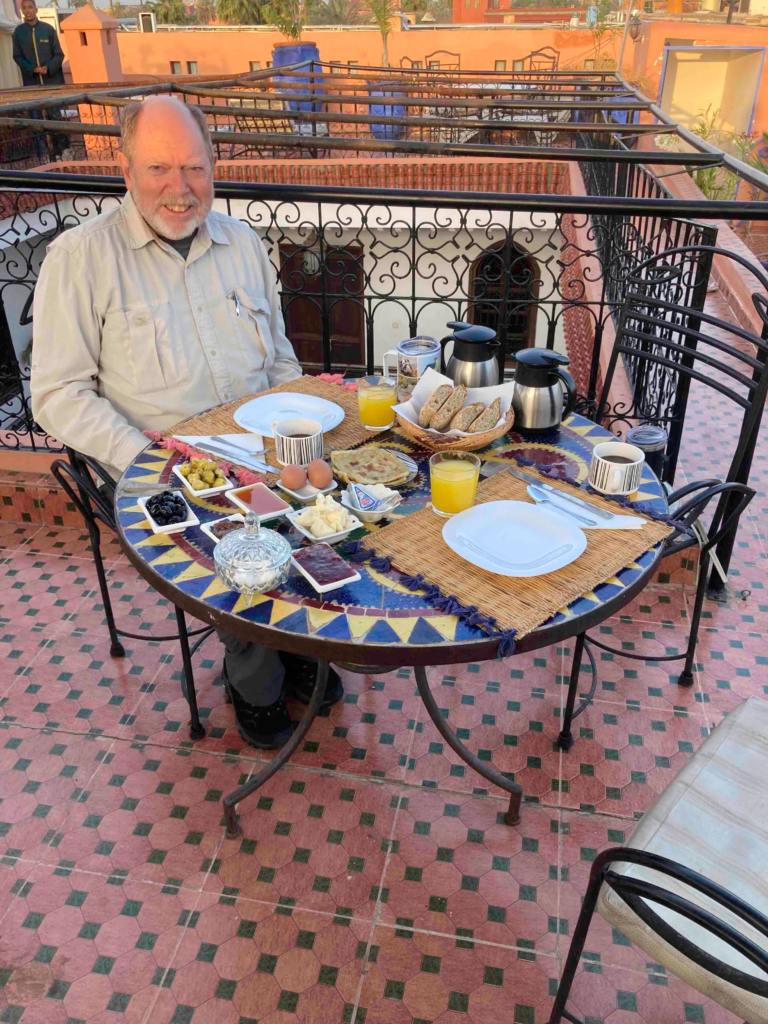
Moroccan breakfast shown above. The the left, Riad courtyard.
After spending the night at the Riad, and catching up on sleep after our red-eye flight, we woke early on Saturday morning, had an early Moroccan breakfast, and met our guide Mohammed to start our birding adventure. First stop was the High Atlas Mountains.
1. High Atlas Mountains (April 25-26)

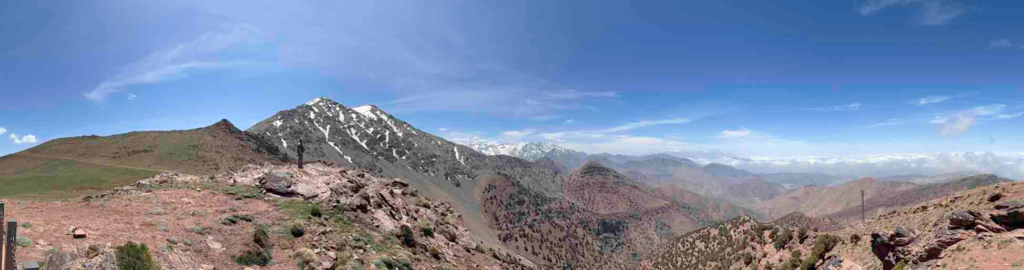
The High Atlas Mountains is the highest range in North Africa, extending from the Atlantic Ocean to the Algerian Border. Mount Toubkal is the highest peak at 13,671 feet. We were birding at around 10,000 feet.
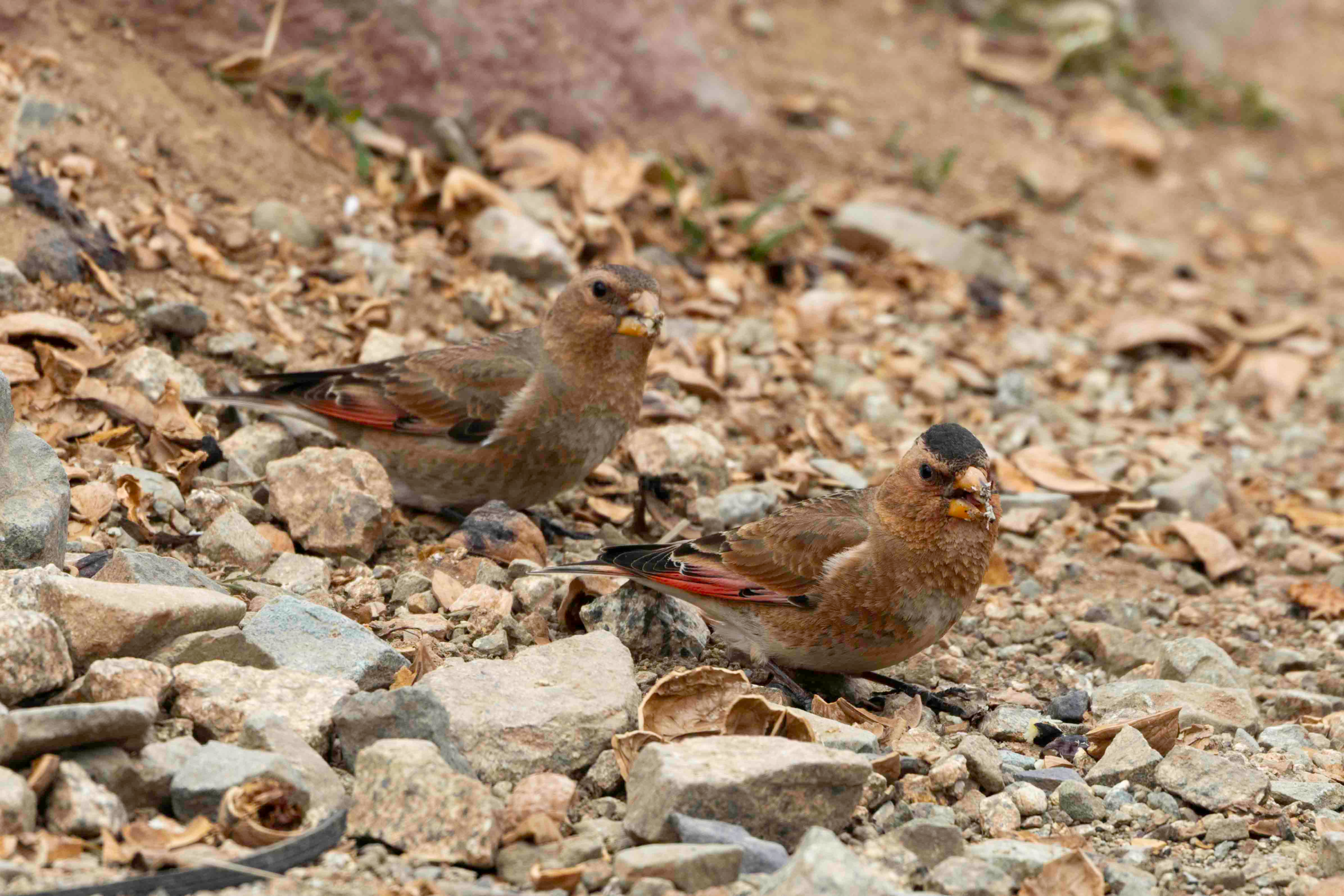
Crimson-winged Finch
Our target species was the Crimson-winged Finch, a high-elevation specialist found on barren landscape such as rocky slopes. Two distinct subpopulations exist, with one found in Morocco’s High Atlas Mountains, and the other ranging from Turkey, Pakistan, into the Western China. We spent a couple of hours before lunch searching for this species, but no luck. After taking a break for lunch, we returned and spent more time. Finally we spotted them high on the slopes. Eventually, they worked their way down the slope, ending up by the side of the road where they picked through a pile of walnut and almond shells discarded by some vendors who sold shelled nuts in the parking lot.
We saw several other species while searching for the Finches. Here are a few of them.
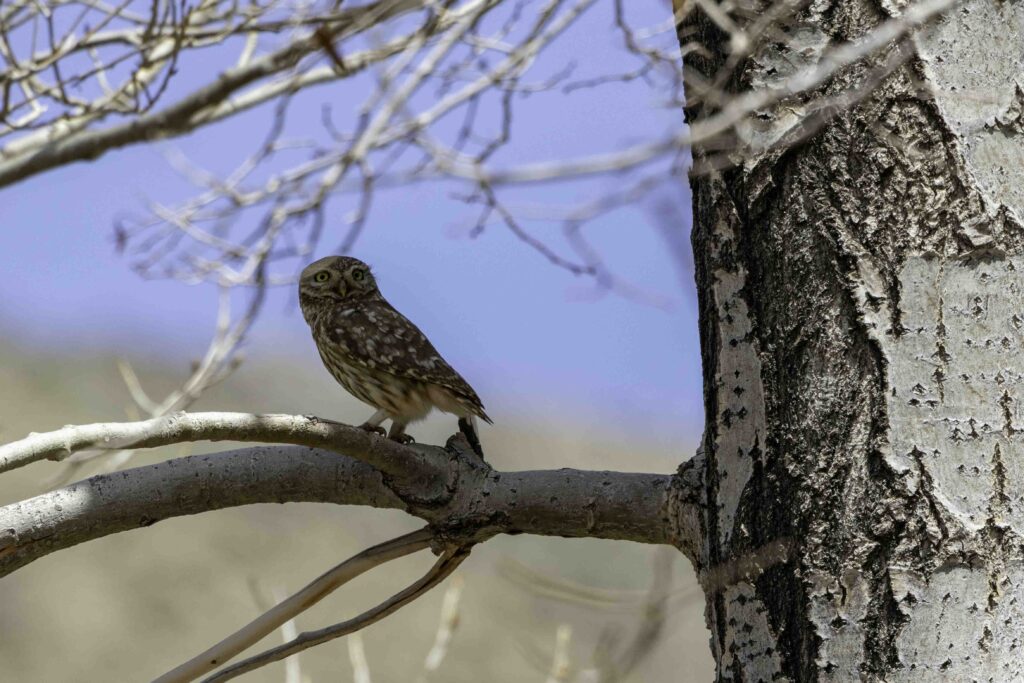
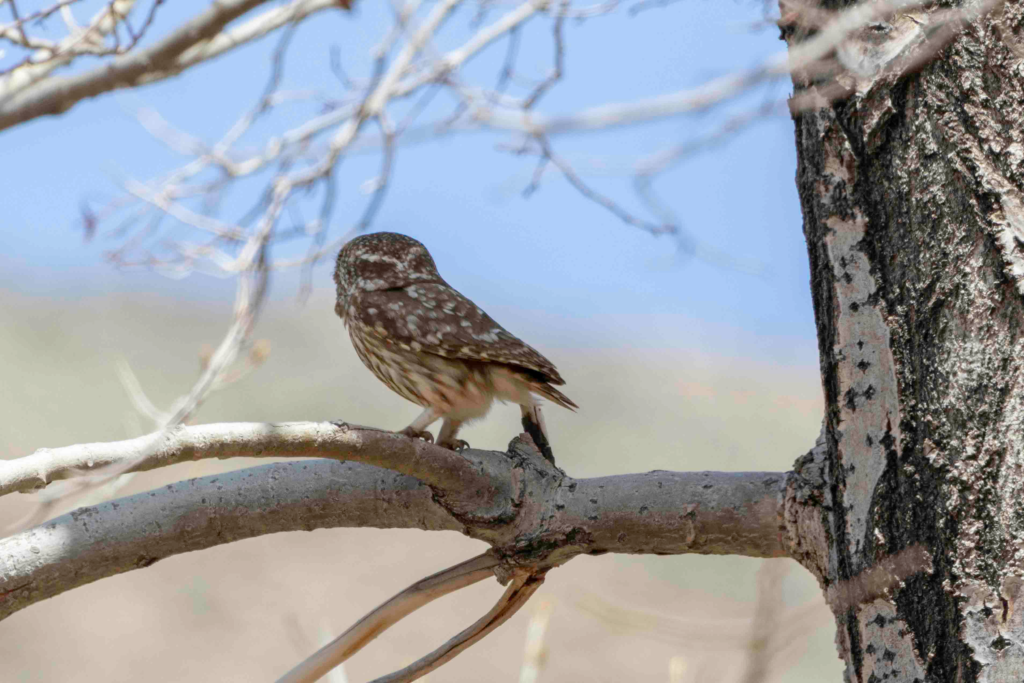
Little Owl

Little Owl looking away – Note false “eyes” on back of head


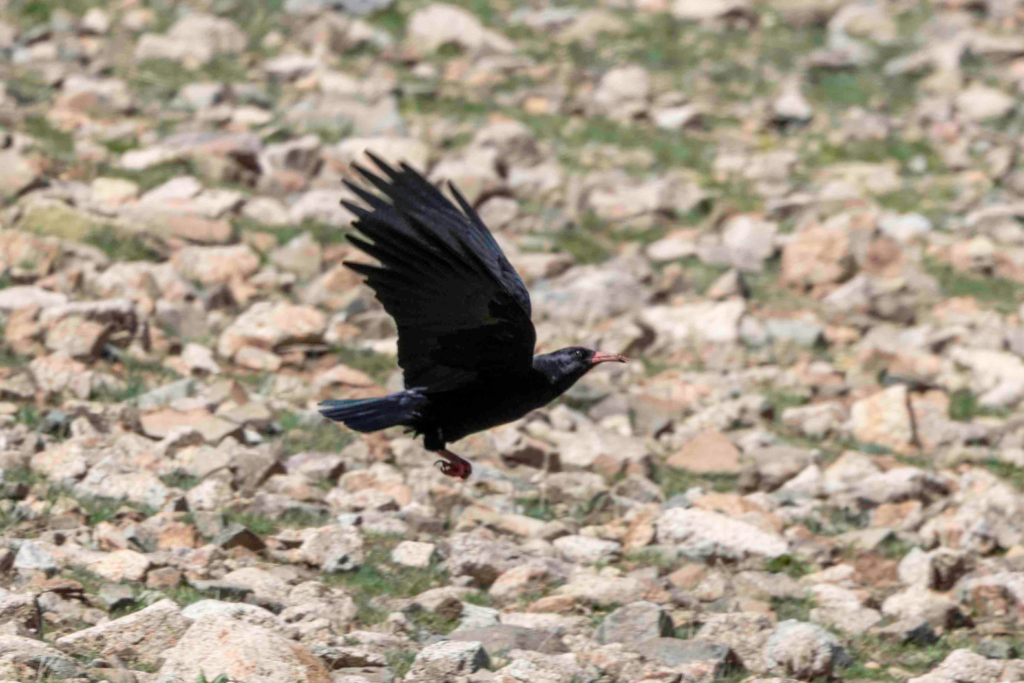
Red-billed Chough
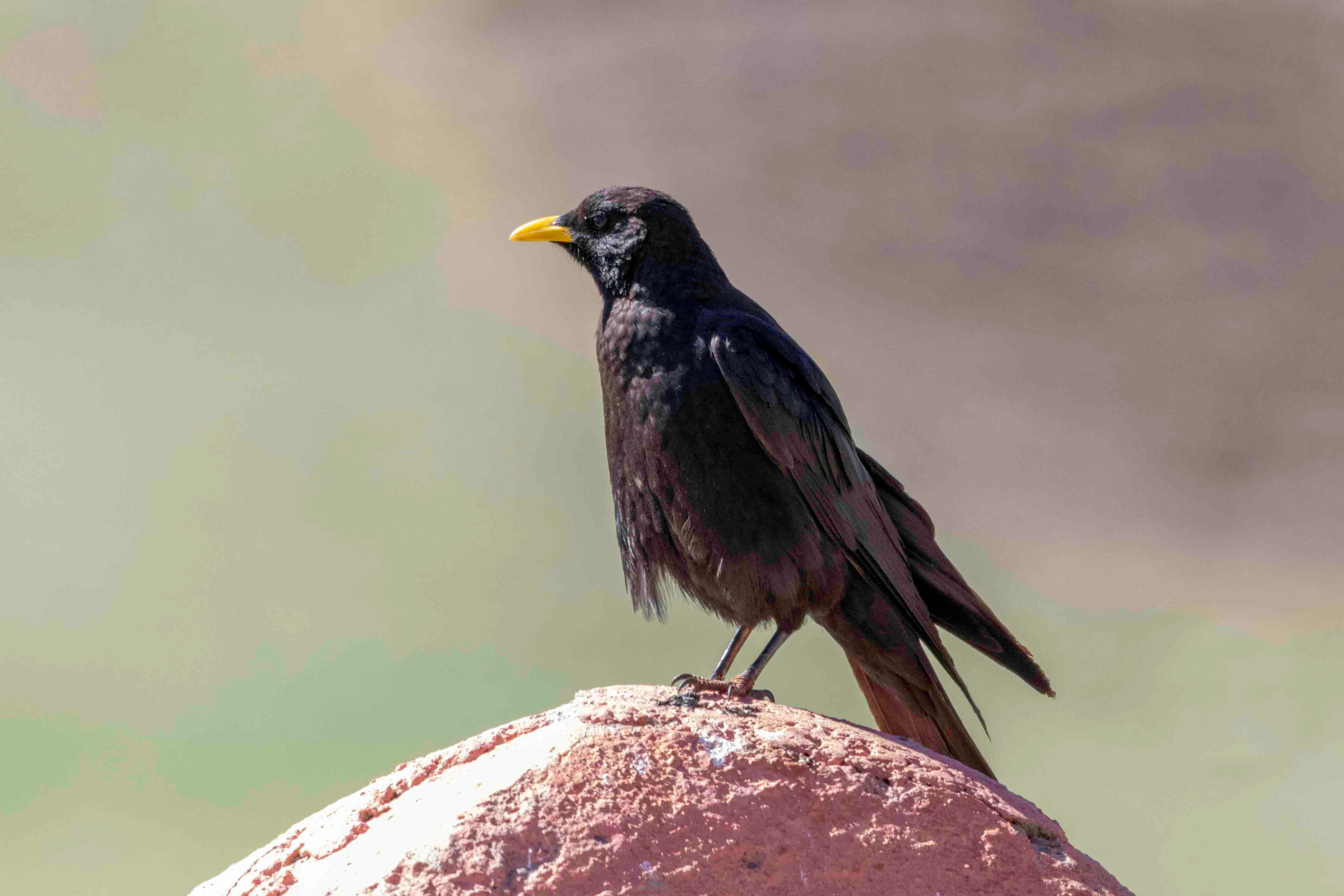
Yellow-billed Chough


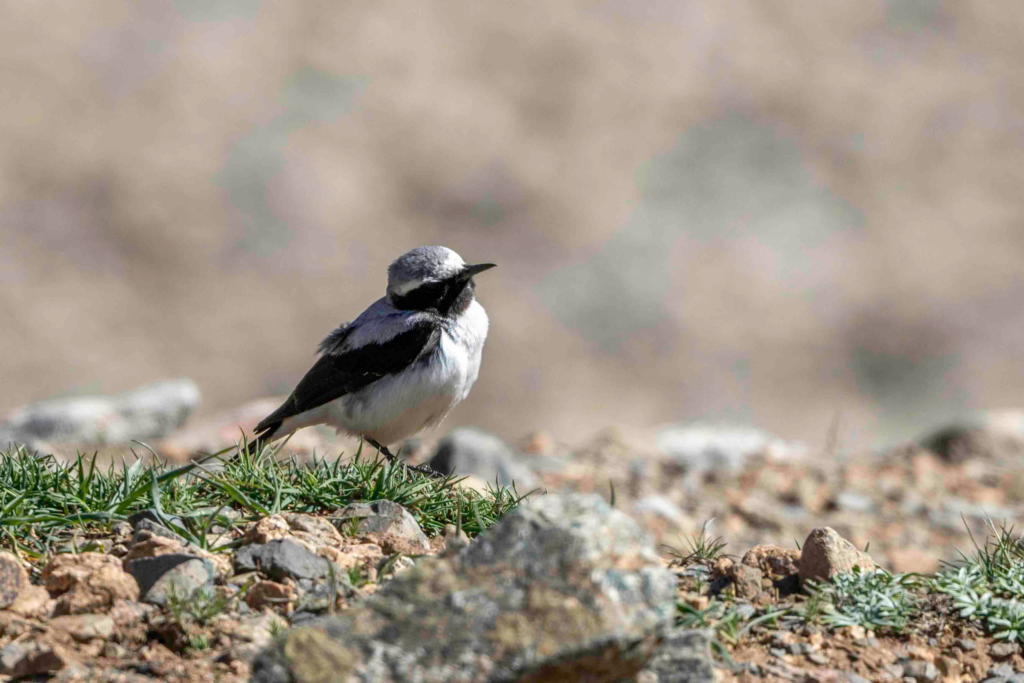
Atlas Wheatear
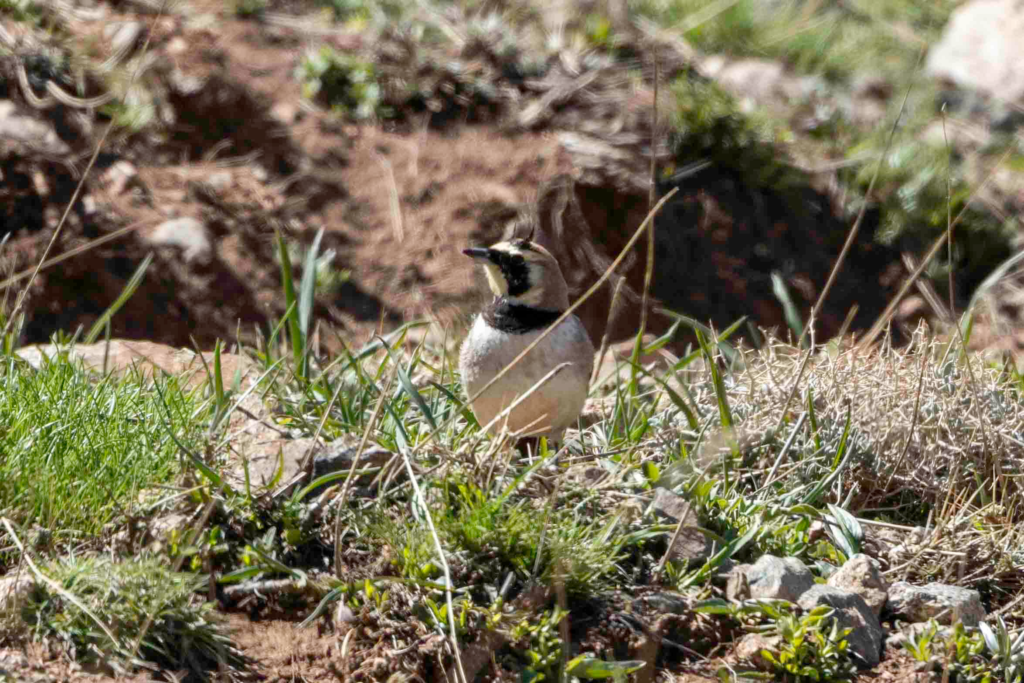
Horned Lark


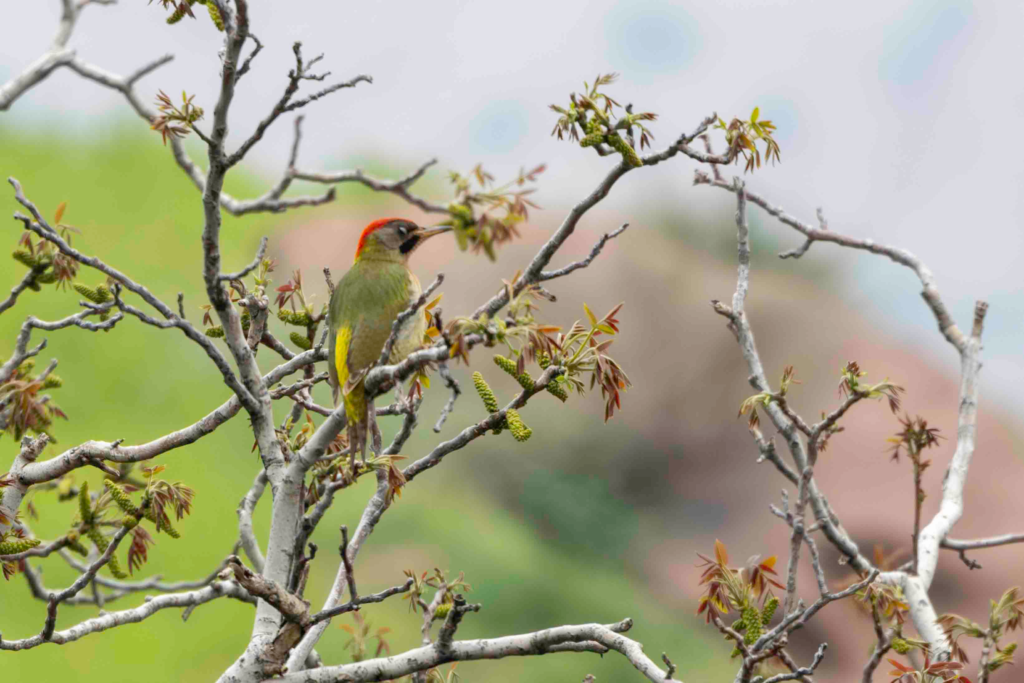
Leviant’s Woodpecker
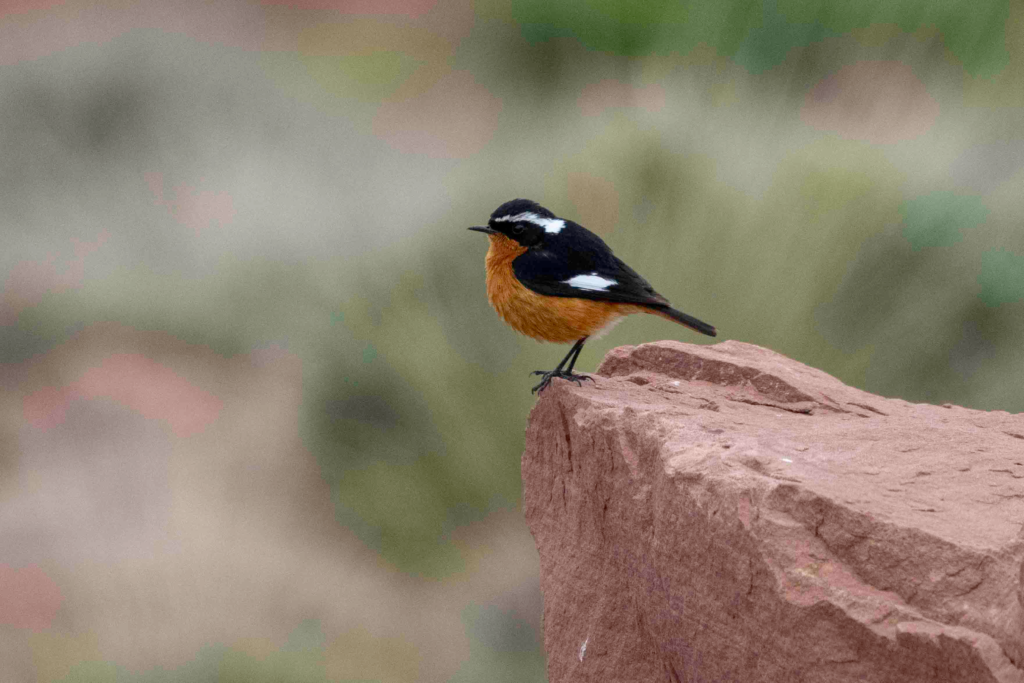
Moussier’s Redstart
After a full day of birding, we stayed at a hotel in the foothills of the High Atlas Mountain. The next day we would be traveling east, transversing the High Atlas over the Tizi-n-Tichka Pass toward the high steppes of Boumalne du Dades.
2. Boumalne du Dades (April 27-28)


We spent the next two days exploring the Boumalne du Dades. We stayed at the Kasbah Tiziri, a restored Kasbah on the edge of the Dades Valley. A great place to watch the sunrise from the rooftop. Then after another Moroccan breakfast of various breads, jams, fresh orange juice, cheese, and boiled eggs, we were off to the Tagdilt Track.
This is one of the best places to see the Thick-billed Lark. Aptly named, this bird has an enormous bill for such a small bird. We were basically in a dump, looking for it and other species while trying to keep our distance from the stray dogs that breed here. We saw several other species that seemed to find the dumps suitable habitat.


Thick-billed Lark
Red-rumped Wheatear

Bar-tailed Lark

Temminck’s Lark

Western Yellow Wagtail

Temminck’s Lark on Nest
After an hour or two at the dump, we explored other parts of the Tagdilt Track. This involved driving cross country across an arid landscape in search of Black-bellied Sandgrouse and Cream-colored Coursers. We were successful.


Cream-colored Courser

Female Black-bellied Sandgrouse

Male Black-bellied Sandgrouse

Desert Lark

HoopoeLark
Next, we headed for a canyon area where a Pharaoh Eagle-Owl was known to nest. We were fortunate to see it with two youngsters. Nearby was a Long-legged Buzzard nest as well as a Lanner’s Falcon nest. We also spotted several Trumpeter Finches.

Pharaoh Eagle-Owl with young-un

One of the owlets was roosting separately but nearby

Long-legged Buzzard

Trumpeter Finch
After lunch (a vegetarian Berber Pizza for me, Matt had a “Mixte” taco consisting of groundbeef, cheese, and french fries in a wrap), we headed for the Gorges du du Dades.
Here we had some great views of Eurasian Crag Martin and Blue Rock-Thrush.


Eurasian Crag-Martin

Blue Rock-Thrush
We returned to the Kasbah before 6 pm, so had over an hour until dinner. This gave us plenty of time to check out the wetlands behind the Kasbah. Glad we did – had 16 species including the only Great Spotted Woodpecker of the trip (lifer for both of us).

Great Spotted Woodpecker

European Turtle-Dove

European Serin

Western Cattle-Egret
The next day we packed our bags, but not before another morning outing. We had some great views of White Storks that roosted on some ruins of Kasbahs. But the highlight of the morning was a Golden Oriole. Both of us got some great looks at it, but it flew away before we could take in pictures of it.


Continuing our drive east, we took a detour to drive through another gorges, the Gorges du Todra. This is a more popular tourist destination, and the crowds proved it so. Curious, since the gorges we drove through a day earlier seemed every bit as scenic, and maybe even more so. Despite the crowds, we had a couple of good looks. Gray Wagtails were very active at the entrance to the gorge, and at the end we had our best look at Tristram’s Warbler, another Morocco specialty.

Gray Wagtail

Tristram’s Warbler
After leaving the gorge, we drove a bit until we pulled off the road into a scrubby area with a desert wadi. A wadi is a dry riverbed that only contains water after a heavy rainfall. Scrub Warblers prefer this habitat. After a brief search, we came across what appeared to be a family group — two adults and three fledglings. They were quite active, in and out of some scrubby bushes, and hard to photograph given the sharp contrast between the noon sun and shady bushes. After watching for a bit, we noticed a Desert Wheatear nearby, singing from the top of a bush.

Scrub Warbler

Desert Wheatear
3. Merzouga, April 28 -30
Our trip continued east. This was one of our longer driving days is far with another 3 hours to Merzouga. Merzouga would be our furthest east destination (about 30 miles from the Algeria border) and would take us to the western edge of the Sahara desert. Arriving at our inn located several miles from Merzouga on the edge of the desert, we were pleased to learn that the innkeeper knew where we could find an Egyptian Nightjar. These are mainly nocturnal birds that spend their days sleeping under a bush, with their camouflaged feathering making it almost impossible to find. A few minutes drive, another 10 minute walk, and we were on it — or actually there were two in the area.


Egyptian Nightjar
Back to our inn, the Maison Acacias. Matt and I appeared to be the only overnight guests. We were told that some other guests had been staying there and arranged a trip camping in the Sahara. My room was huge — it was designed to sleep at least 5 (perhaps more if some slept on couches). Our food there was marvelous — we started with an Eggplant and cheese Tagine and moroccan bread (knobs). We both thought it was the main dish and snarfed it up. But the innkeeper soon arrived with our entrees! After dinner, I relaxed on top of the roof overlooking the desert marveling at the starry night.


The next morning we again had a wonderful Moroccan breakfast. After breakfast, we got into the SUV with Mohammed and headed toward the dunes of Erg Chebbi. Our first stop was a watering hole where sandgrouses typically come in each morning to get their fill of water. After waiting for a bit, the first group came in. Then some more. And still more. Reluctant at first they would land several hundred feet from the watering hole.. We stayed in the vehicles since they served as blinds (there was our vehicle and three others). Eventually they walked toward the hole. After drinking a bit, they would fly off and another group would come in. This went on for about an hour. During this time, we had two species, the Spotted Sandgrouse and the Crowned Sandgrouse, with the latter outnumbering the former by at least two to one.


Crowned Sandgrouse


Spotted Sandgrouse
Placeholder