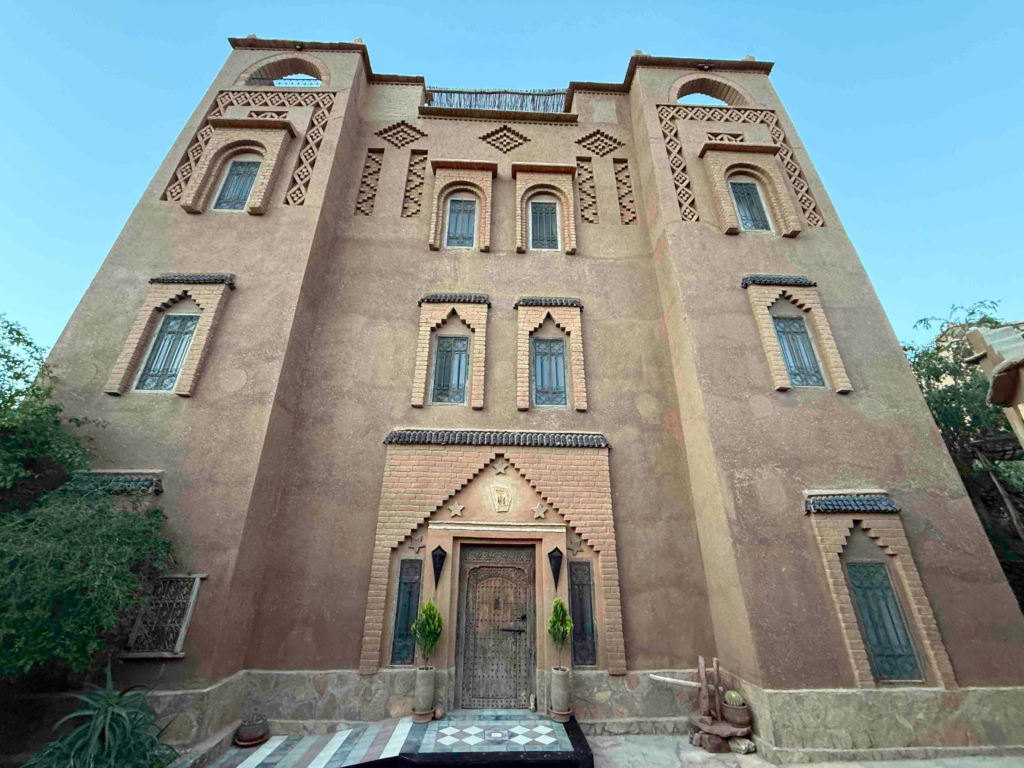
We spent the next two days exploring the Boumalne du Dades. We stayed at the Kasbah Tiziri, a restored Kasbah on the edge of the Dades Valley. The Kasbah had a rooftop deck, which served as a great place to watch the sunrise before breakfast. And after dinner we heard a Eurasian Scops=Owl calling after sunset.
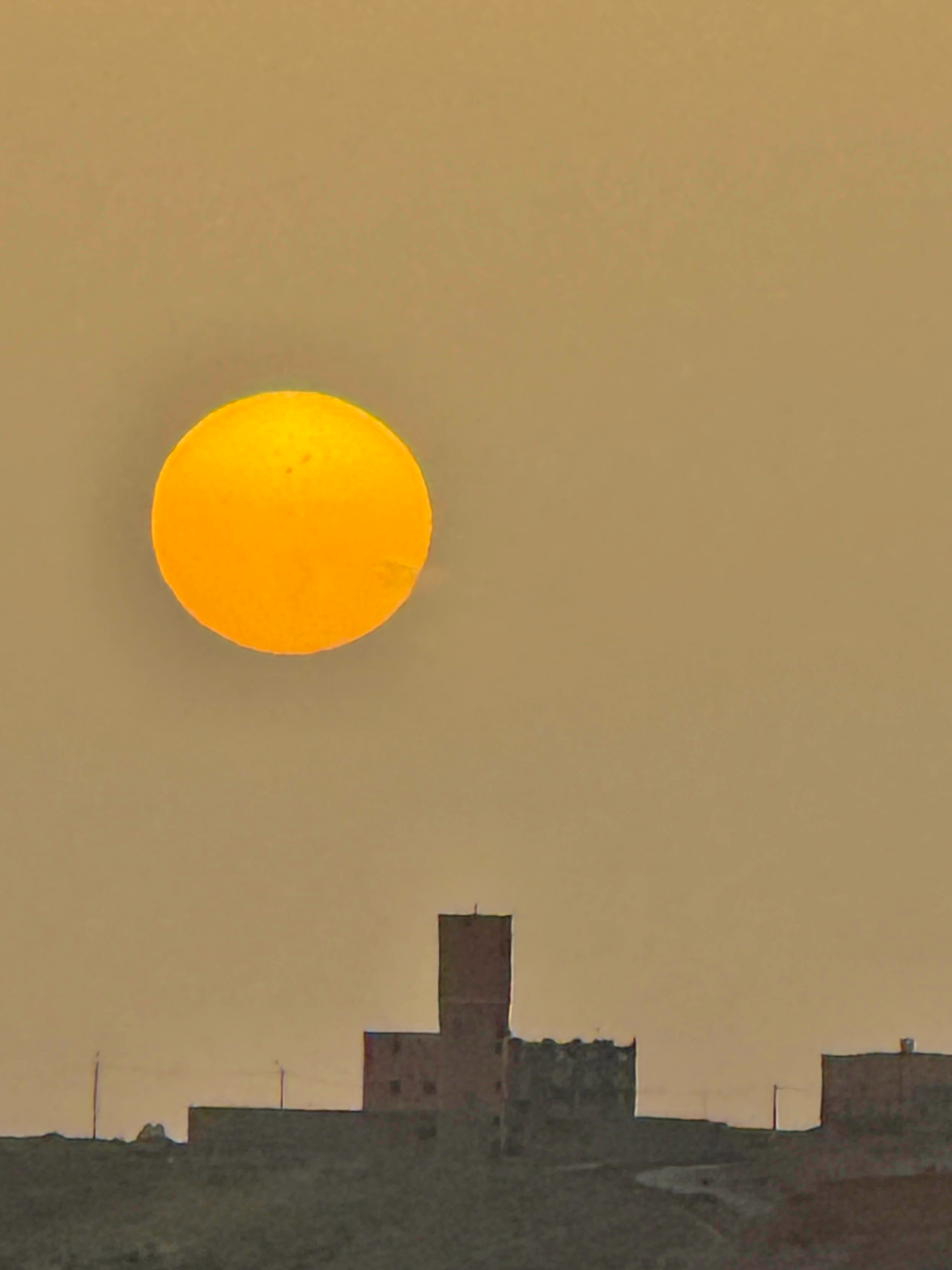
Sunrise from the rooftop of our Kasbah
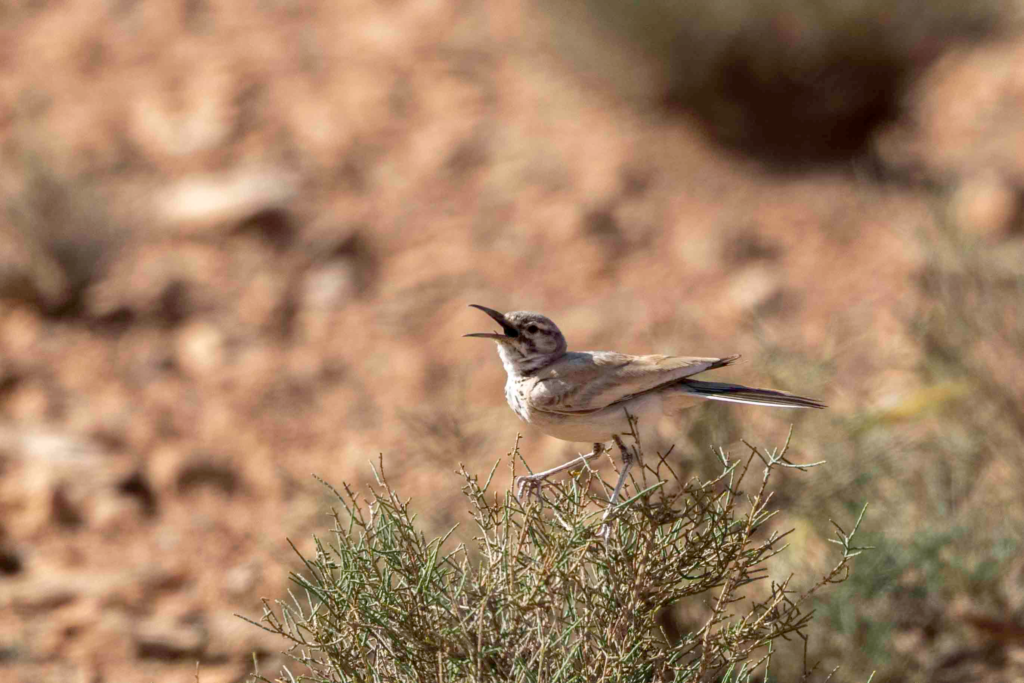
After another Moroccan breakfast of various breads, jams, fresh orange juice, cheese, and boiled eggs, we were off to the Tagdilt Track. This is one of the best places to see the Thick-billed Lark. so named due to its enormously thick bill. While this was a bird-rich areas with several other species, we were basically birding in a dump, looking for it and other species while trying to keep our distance from the stray dogs that breed here. We saw several other species that seemed to find the dumps suitable habitat.
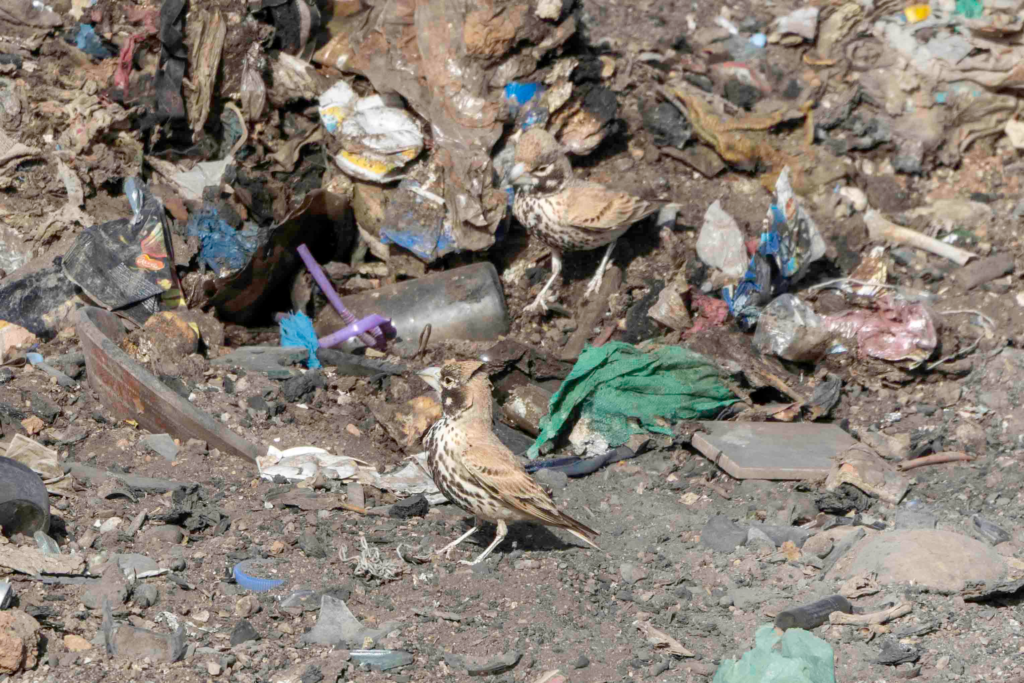
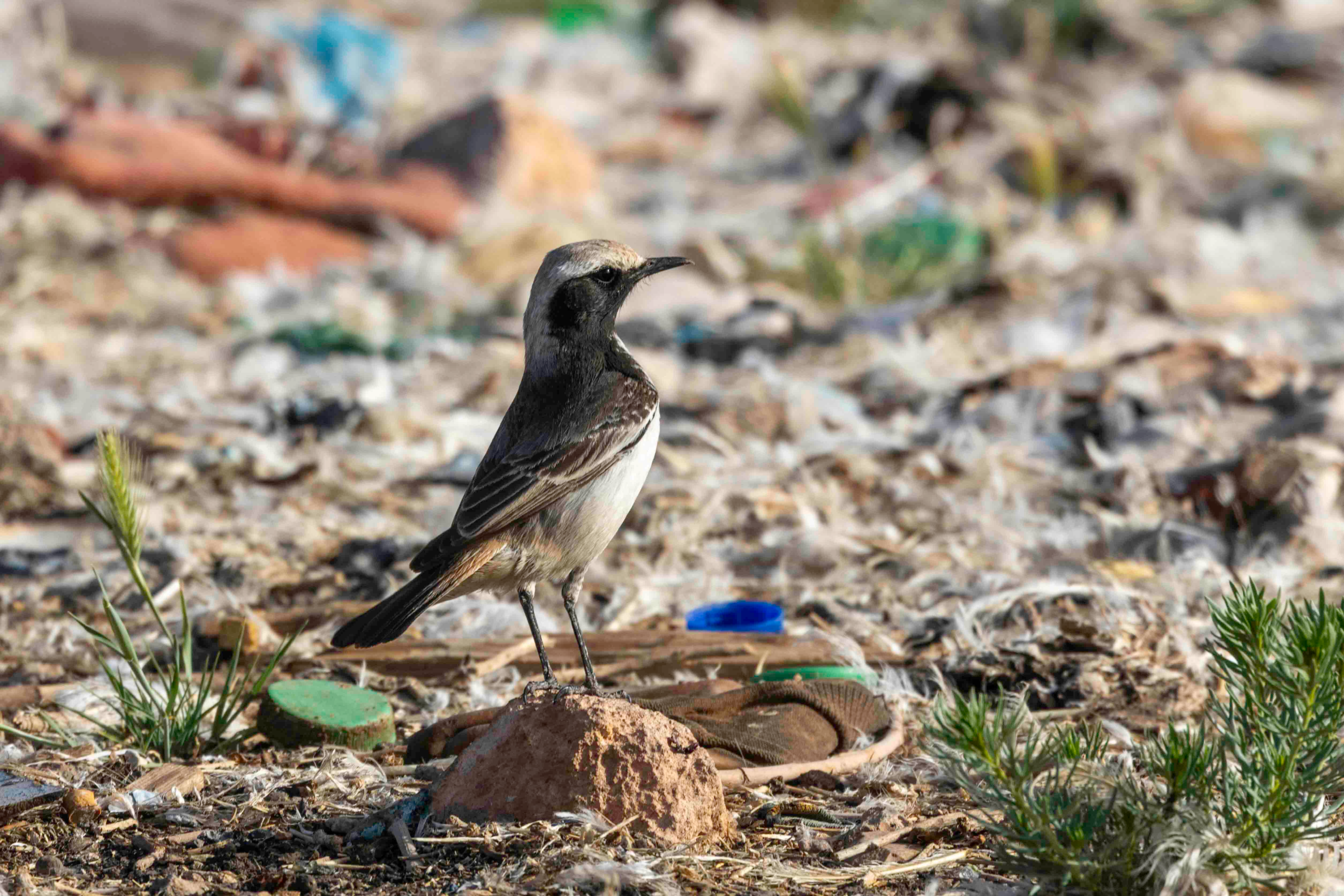
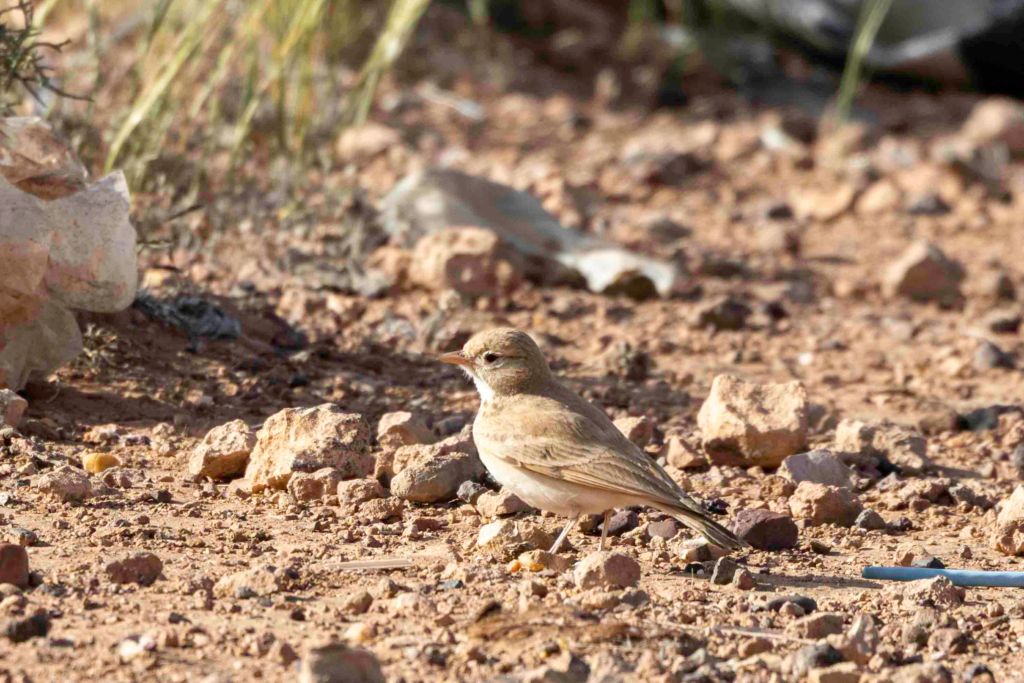
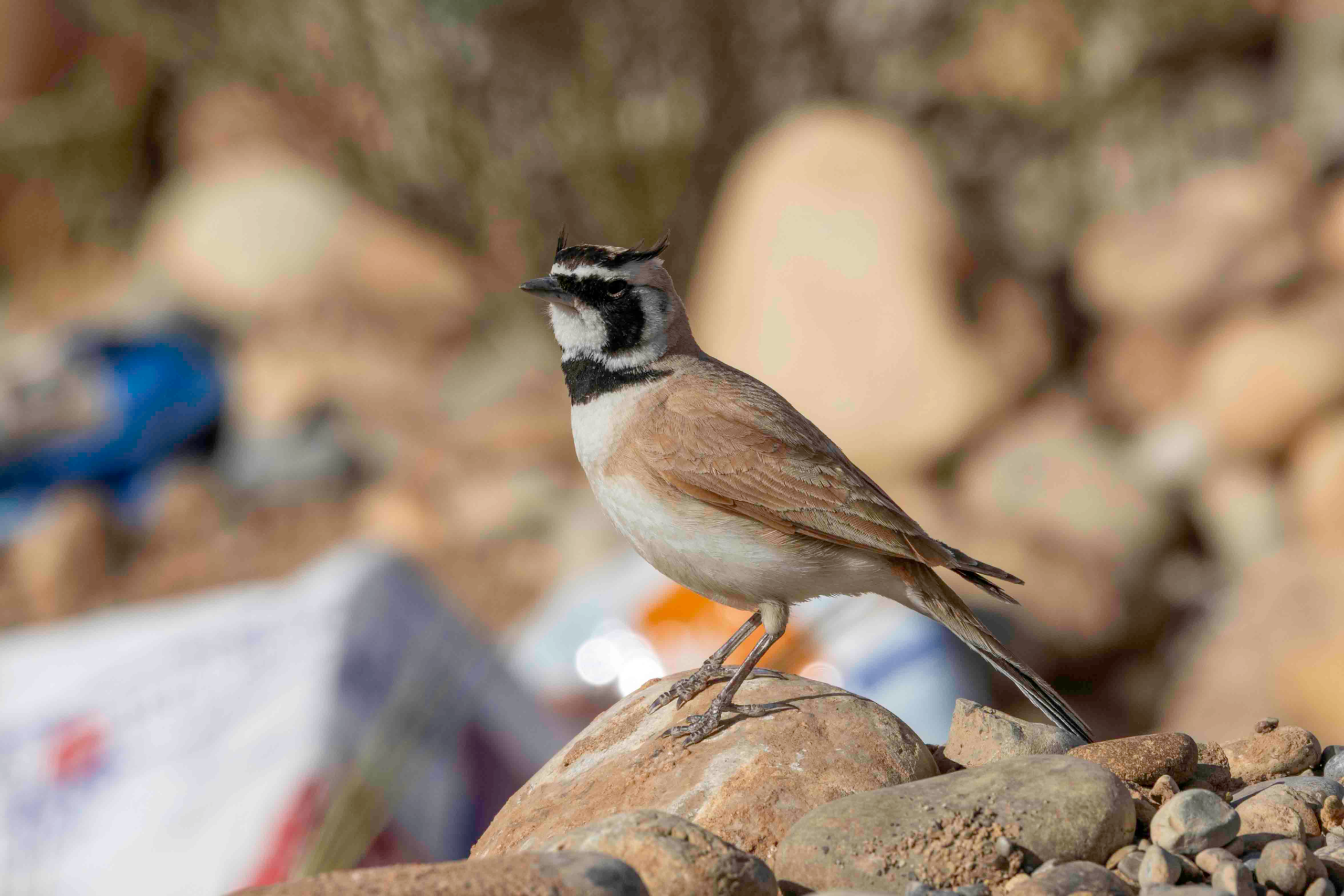
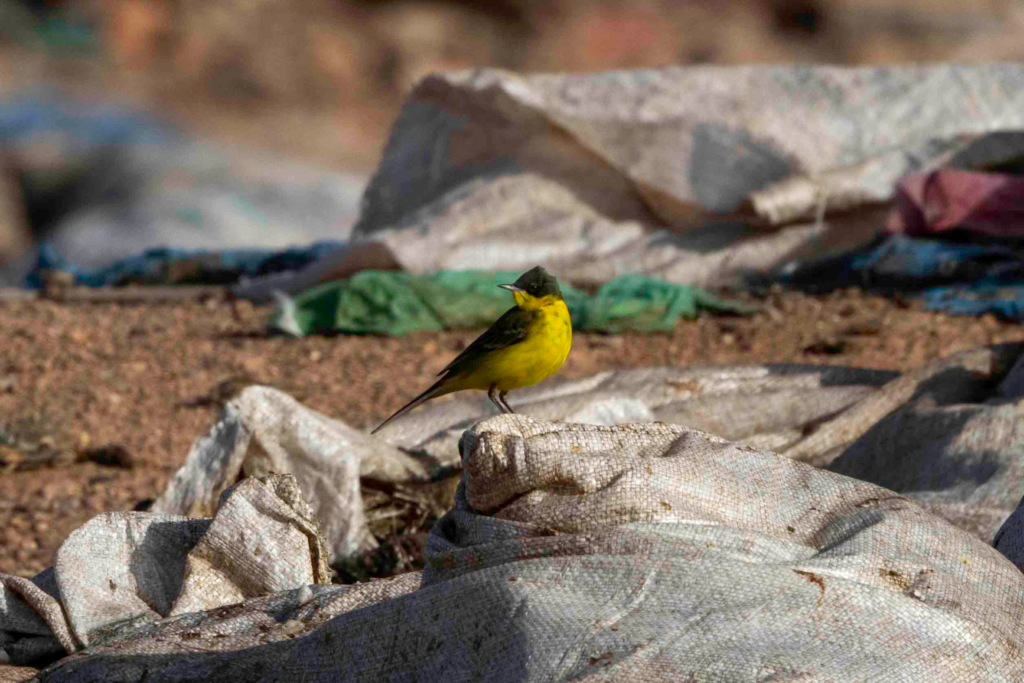
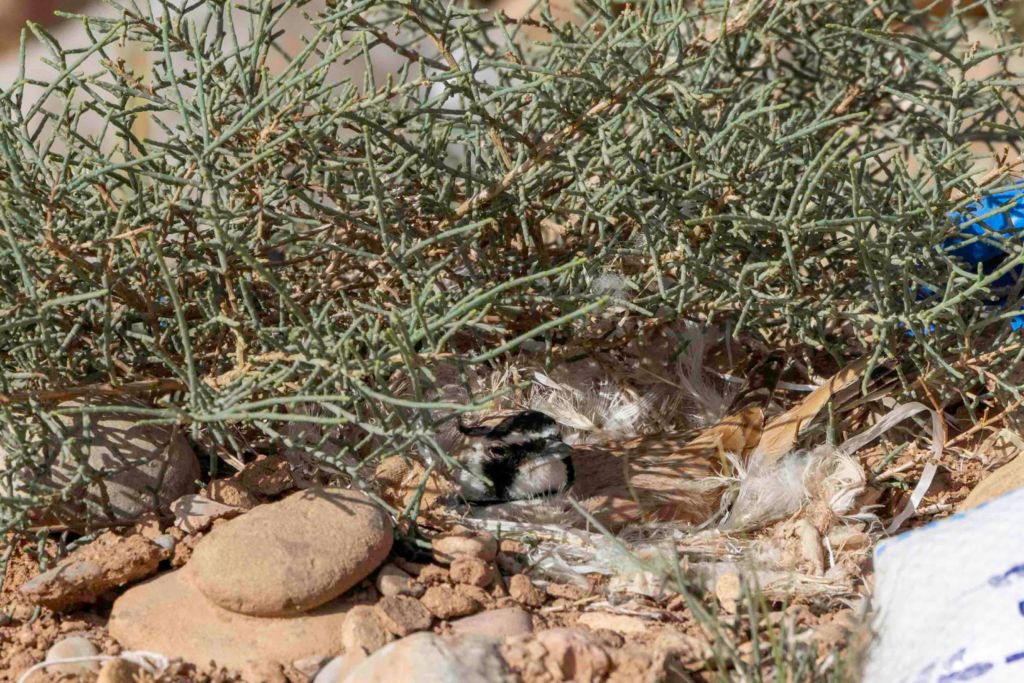
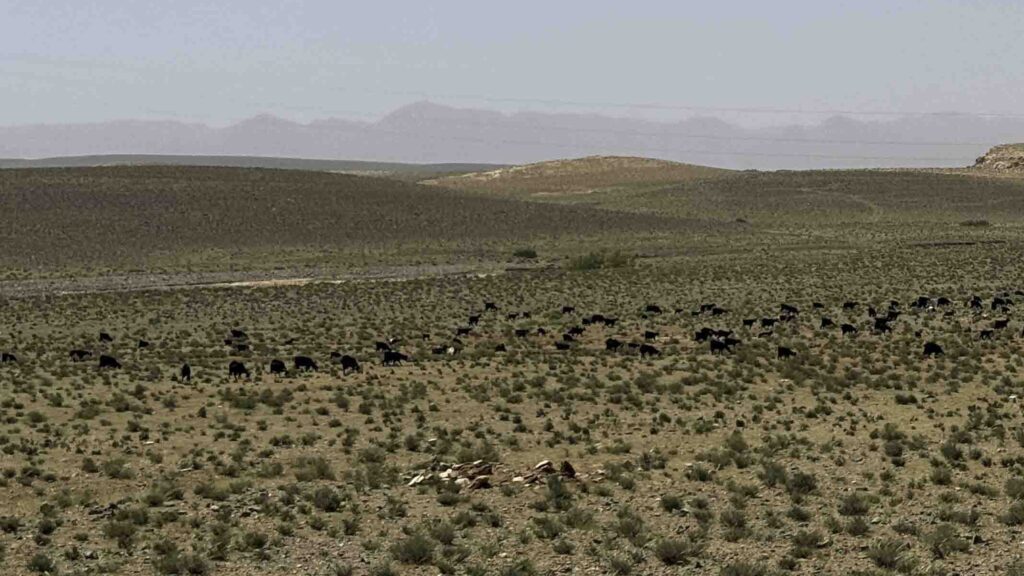
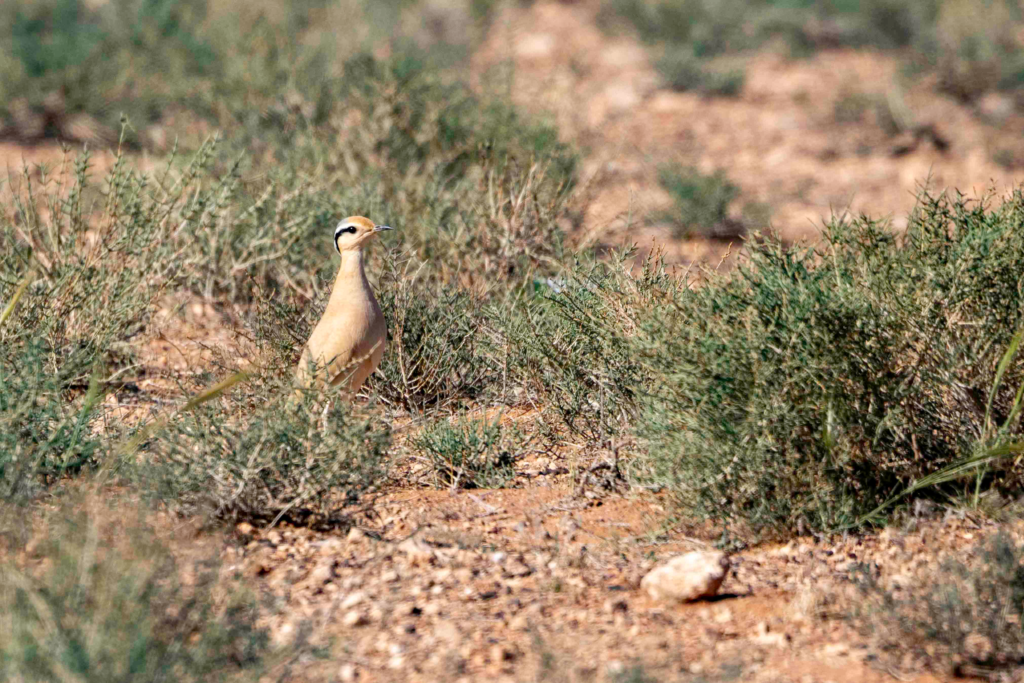
After an hour or two at the dump, we explored other parts of the Tagdilt Track. This involved driving cross country across an arid landscape in search of Black-bellied Sandgrouse and Cream-colored Coursers. We were successful.
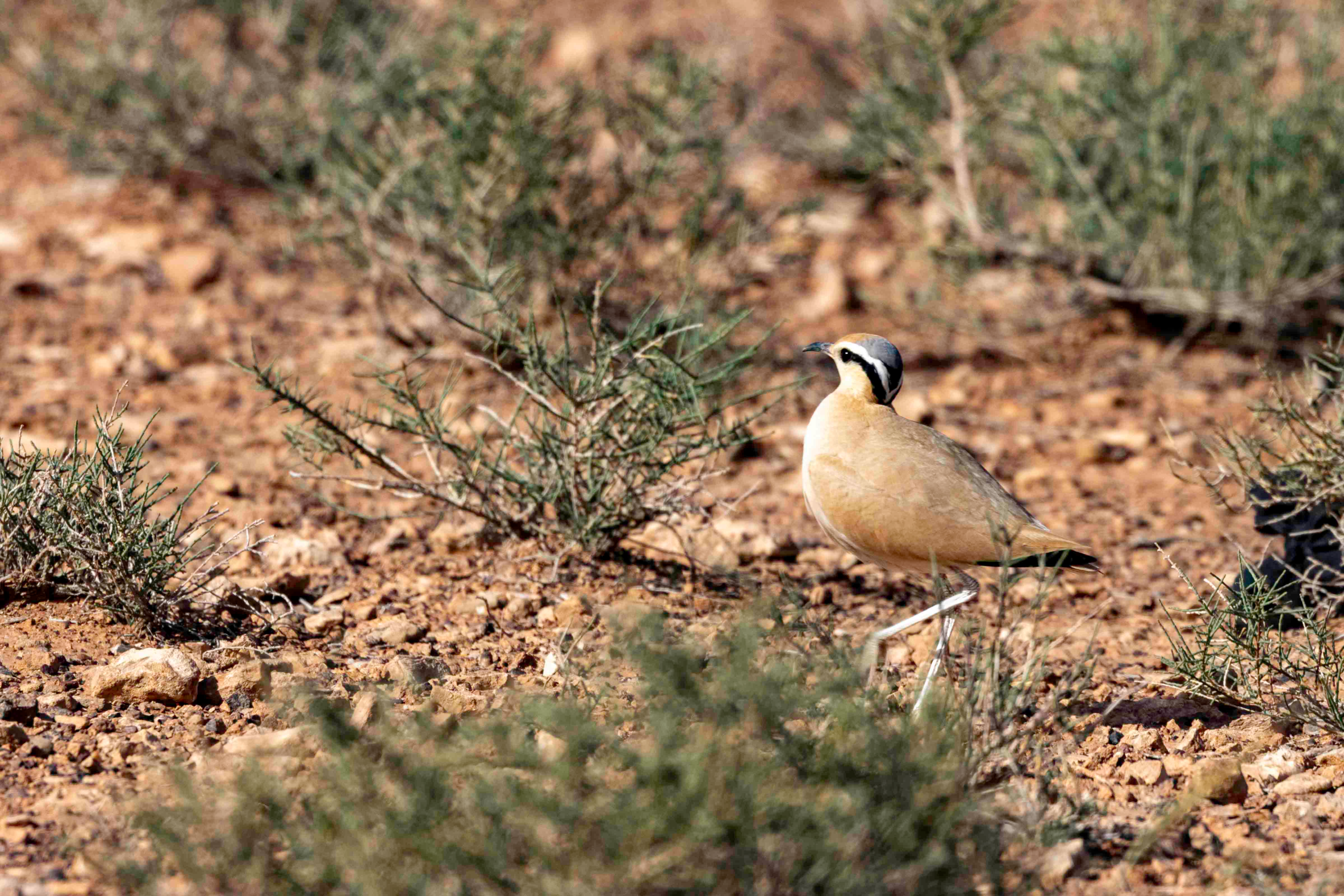
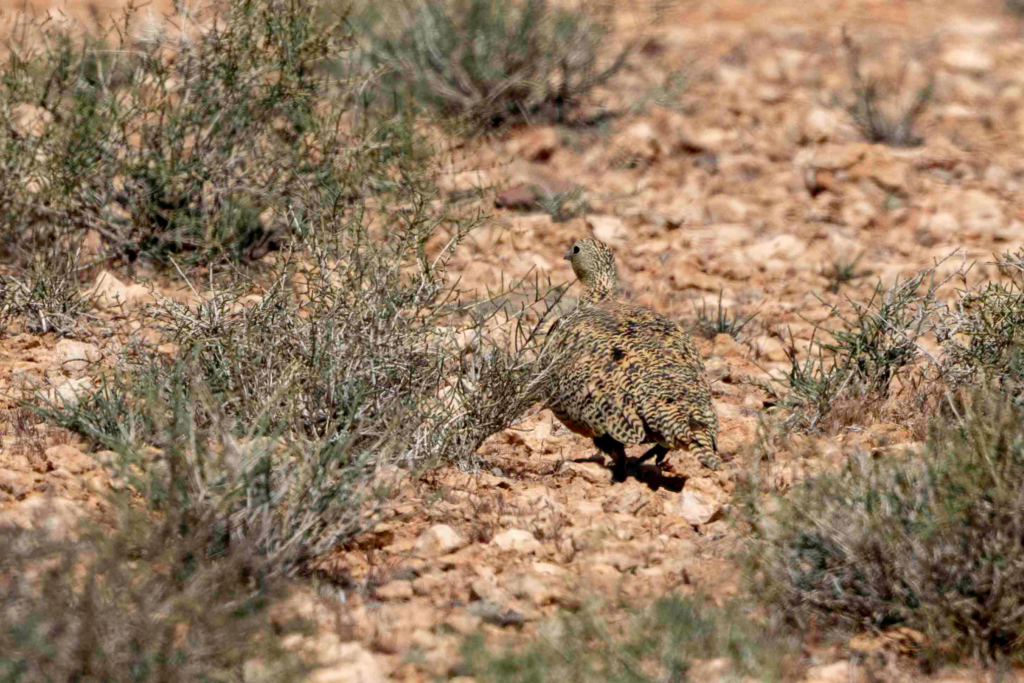
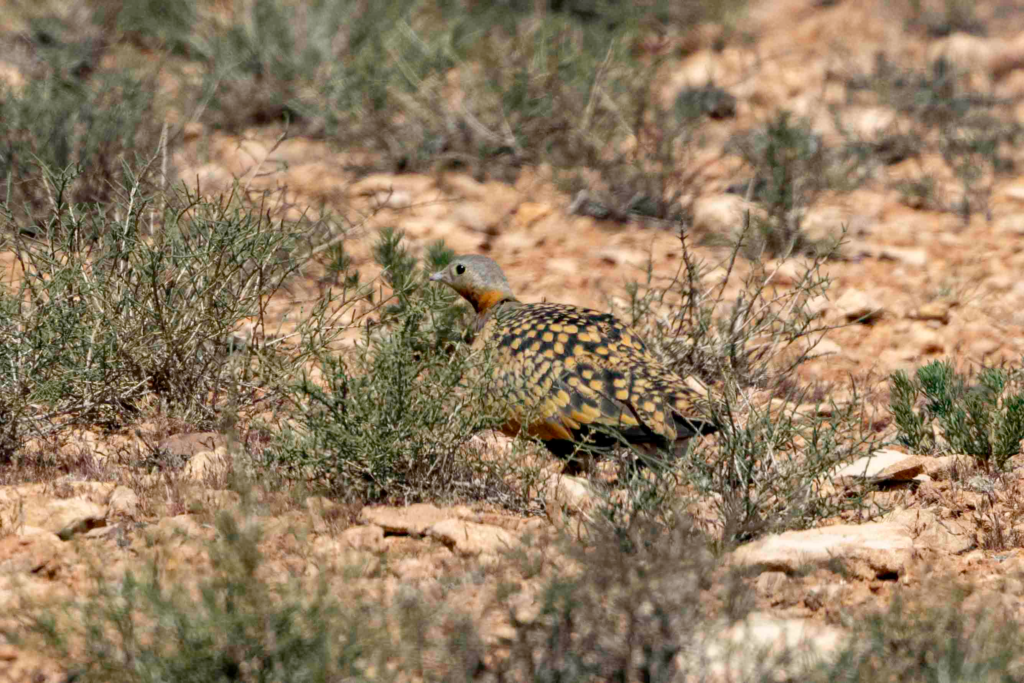
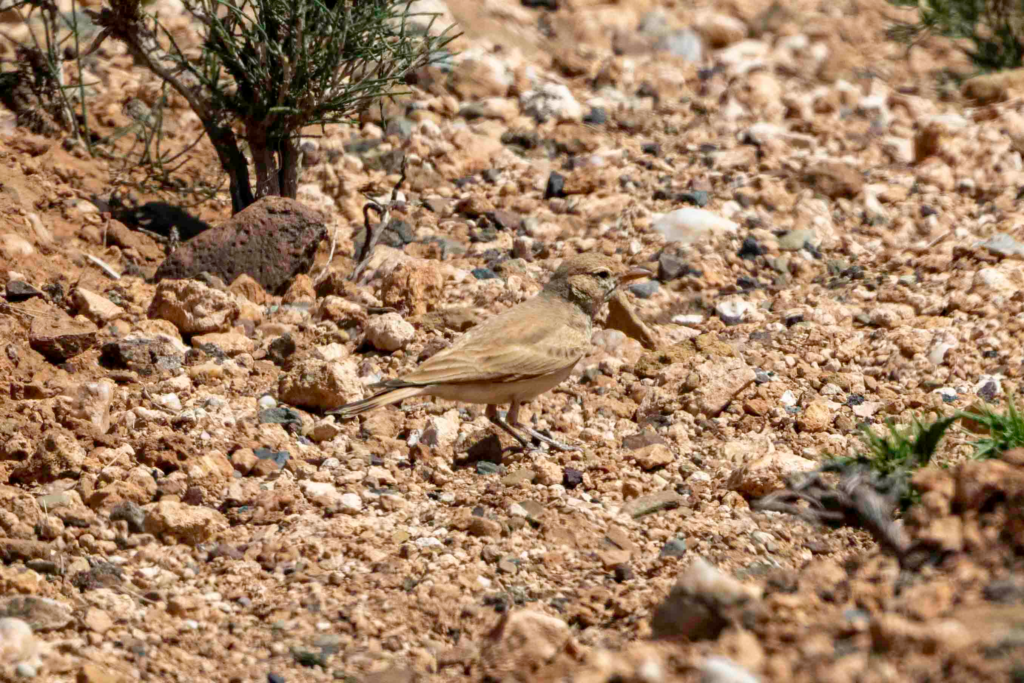
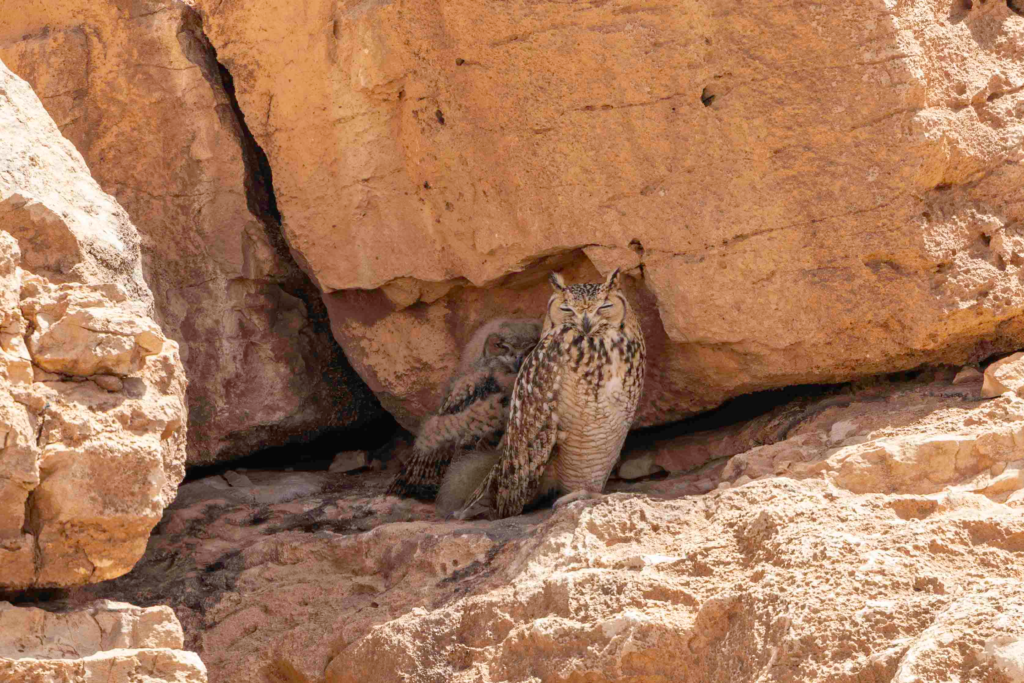
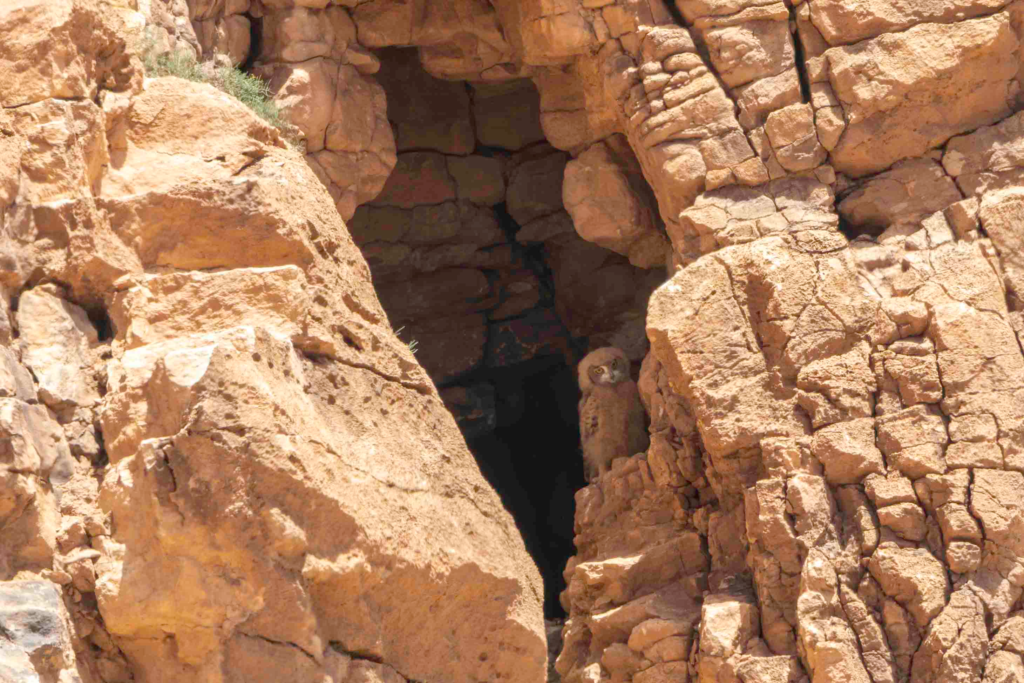
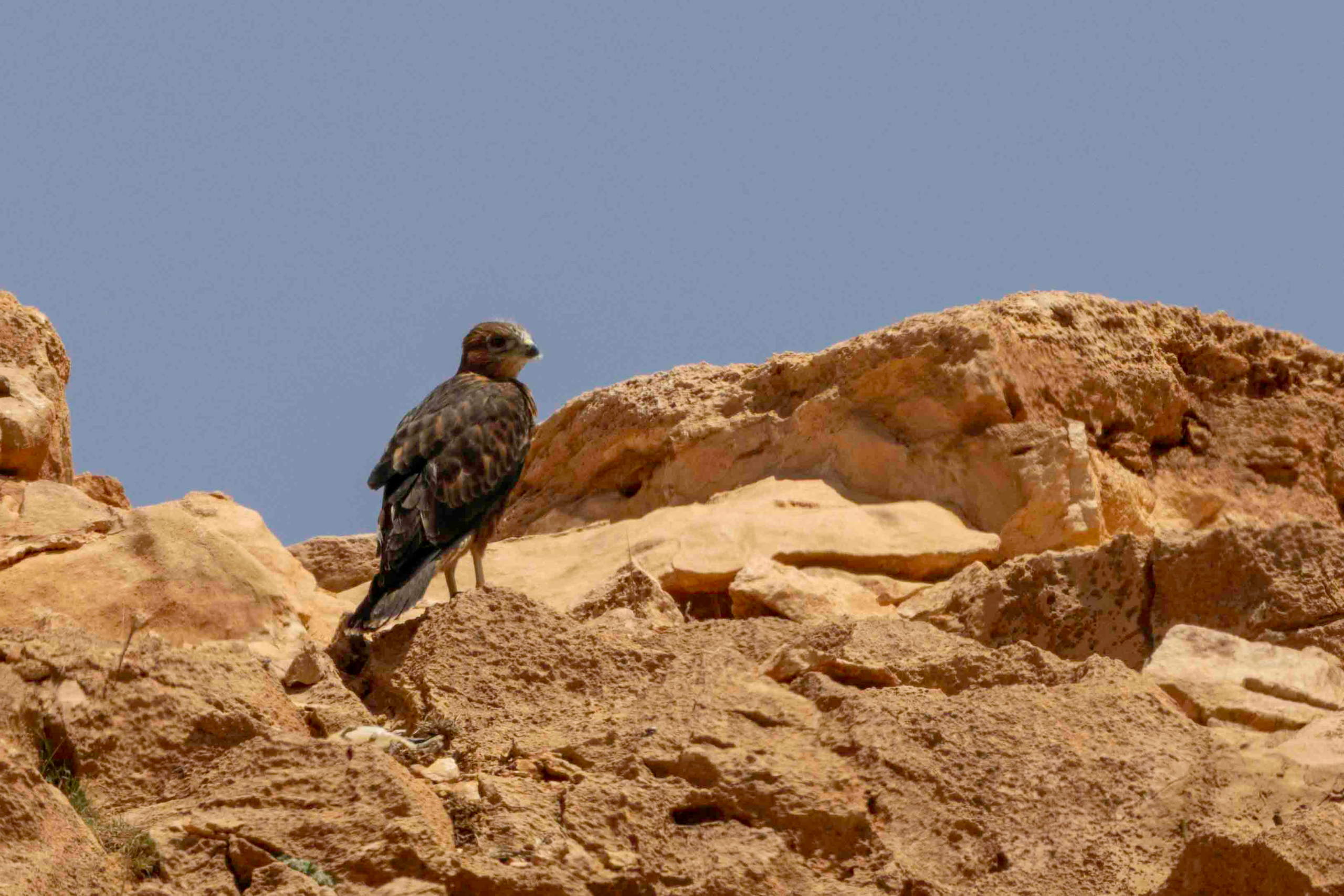
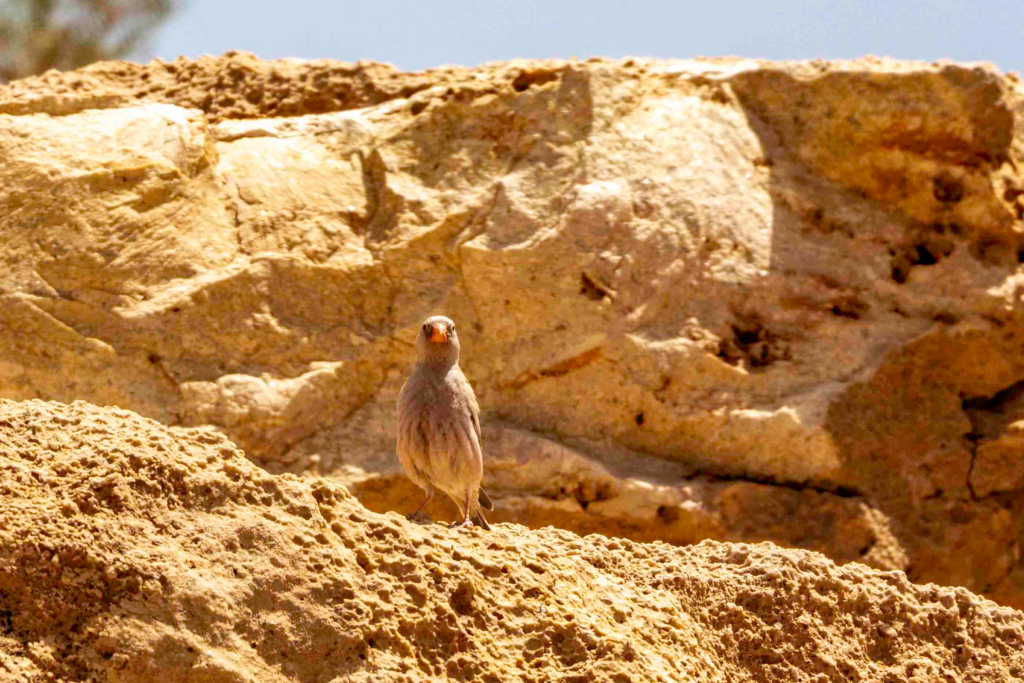
Next, we headed for a canyon area where a Pharaoh Eagle-Owl was known to nest. We were fortunate to see it with two youngsters. Nearby was a Long-legged Buzzard nest as well as a Lanner’s Falcon nest. We also spotted several Trumpeter Finches.
After lunch (a vegetarian Berber Pizza for me, Matt had a “Mixte” taco consisting of groundbeef, cheese, and french fries in a wrap), we headed for the Gorges du du Dades.


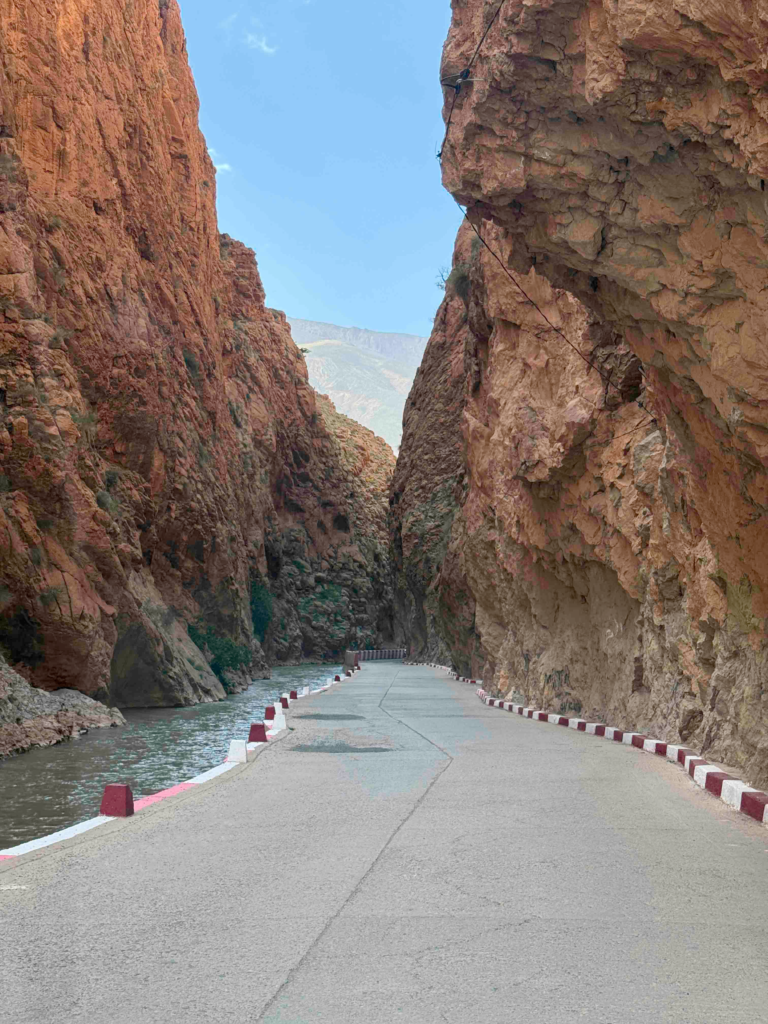
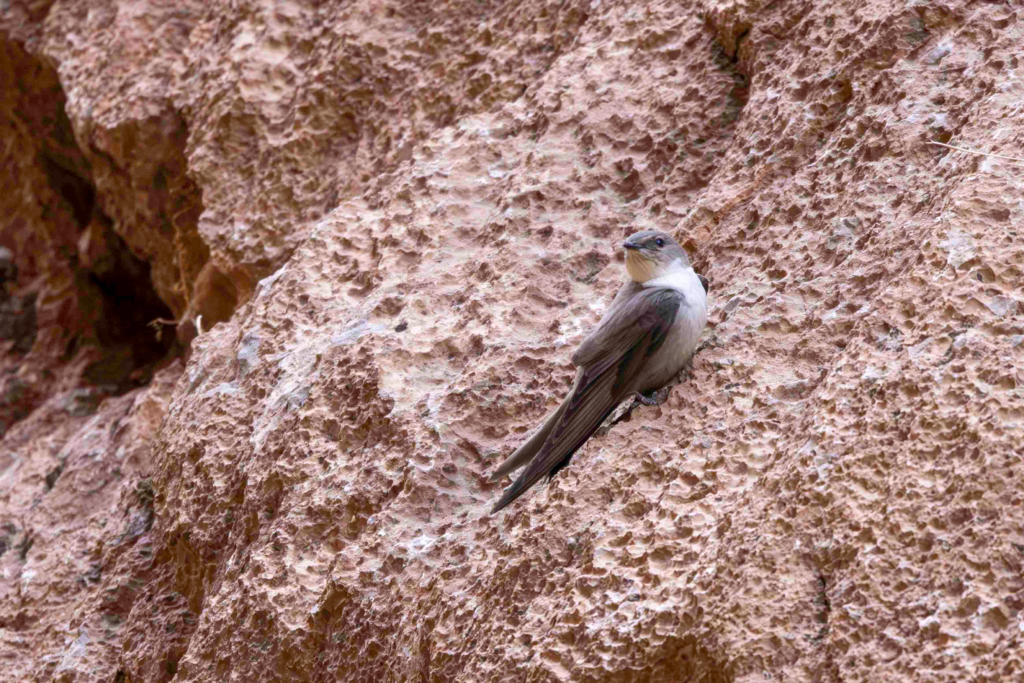
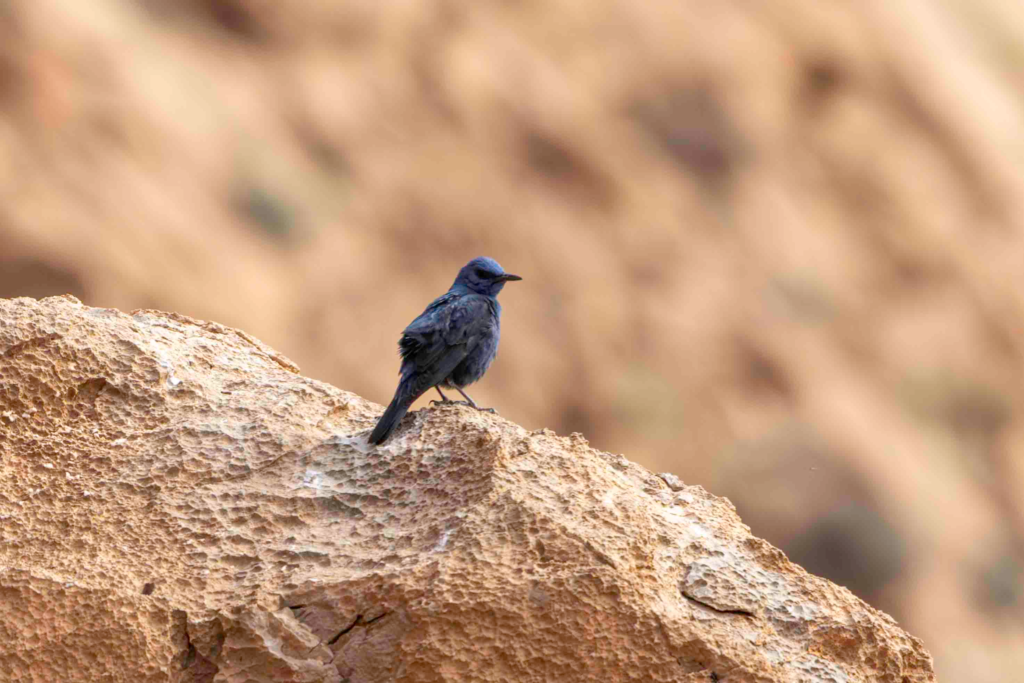
The Gorges was quite scenic. We had some great looks at a Eurasian Crag-Martin and a Blue Rock-Thrush.
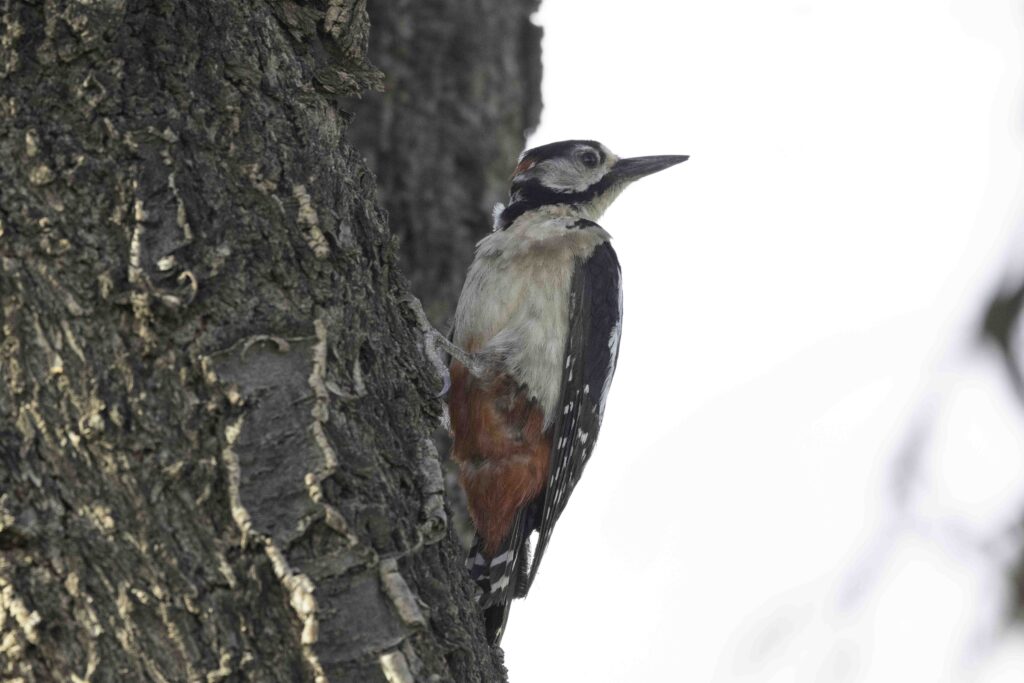
We returned to the Kasbah before 6 pm, so had over an hour until dinner. This gave us plenty of time to check out the wetlands behind the Kasbah. Glad we did – had 16 species including the only Great Spotted Woodpecker of the trip (lifer for both of us).
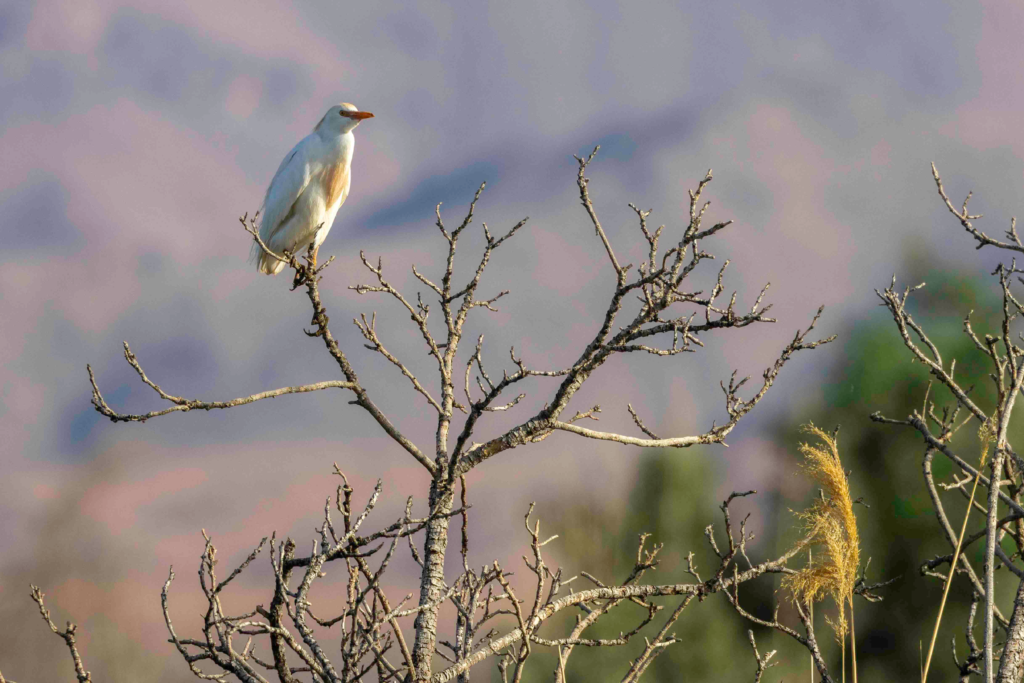
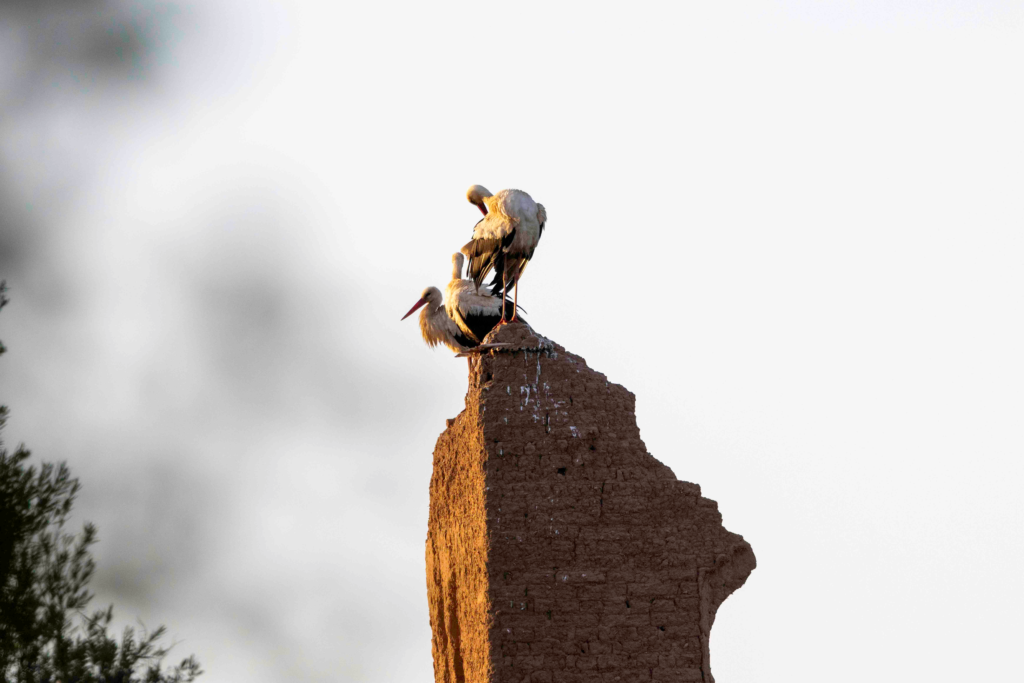
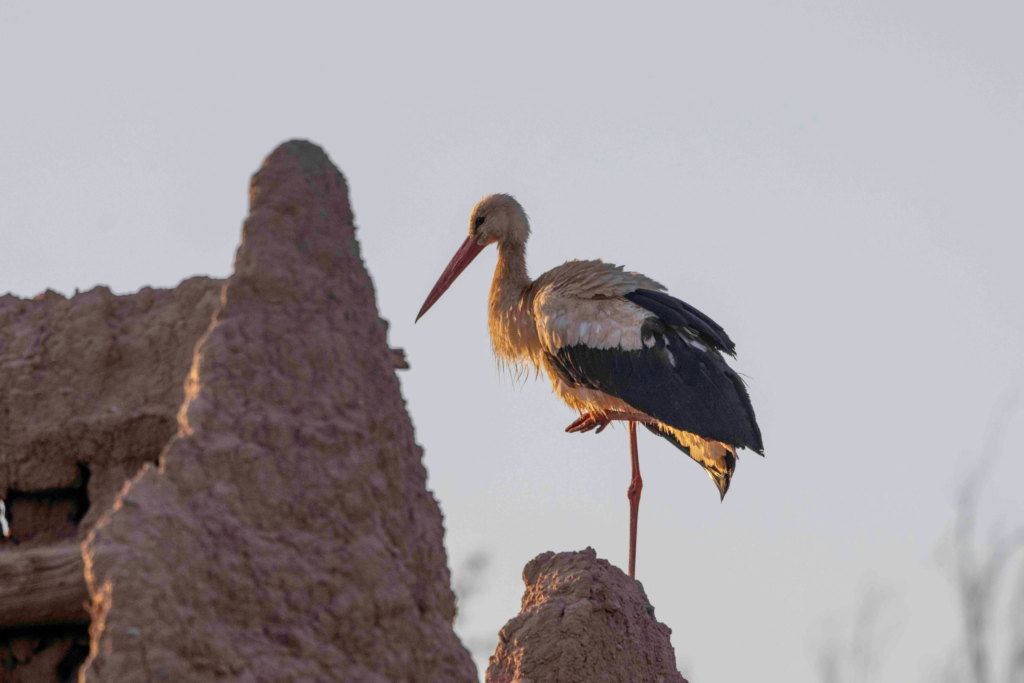
The next day we packed our bags, but not before another morning outing. We had some great views of White Storks that roosted on some ruins of Kasbahs. But the highlight of the morning was a Golden Oriole. Both of us got some great looks at it, but it flew away before we could take in pictures of it.
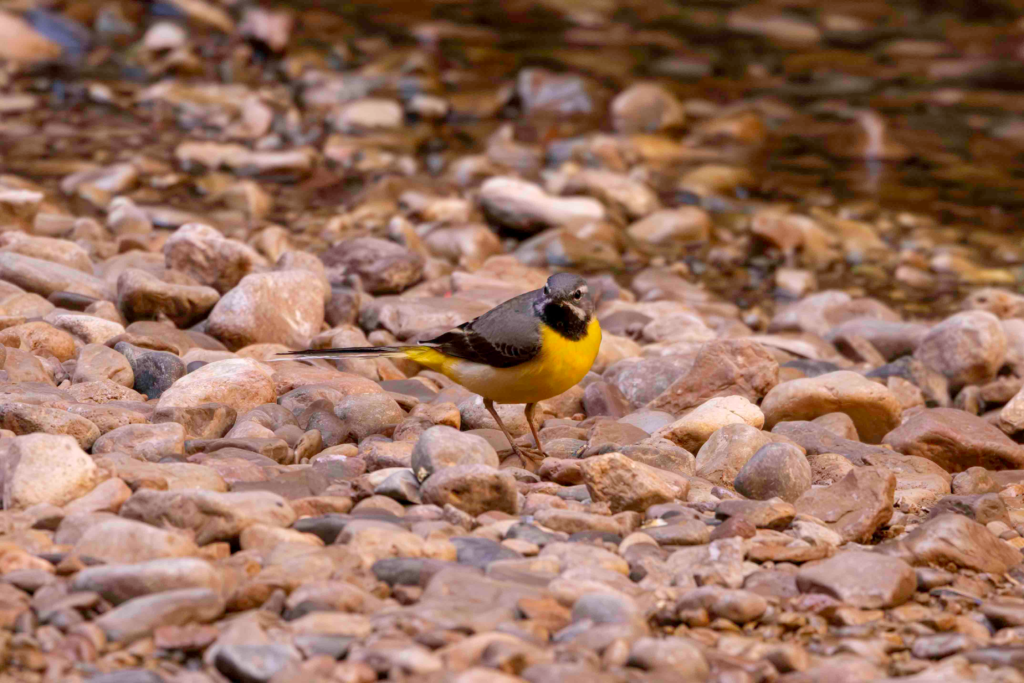
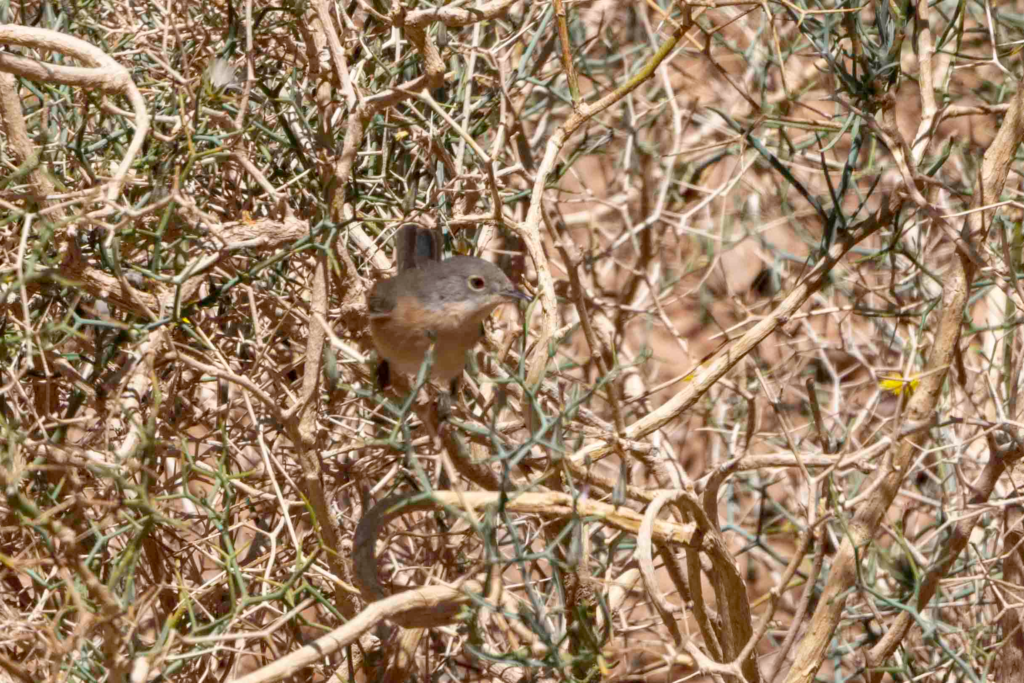
Continuing our drive east, we took a detour to drive through another gorges, the Gorges du Todra. This is a more popular tourist destination, and the crowds proved it so. Curious, since the gorges we drove through a day earlier seemed every bit as scenic, and maybe even more so. Despite the crowds, we had a couple of good looks. Gray Wagtails were very active at the entrance to the gorge, and at the end we had our best look at Tristram’s Warbler, another Morocco specialty.
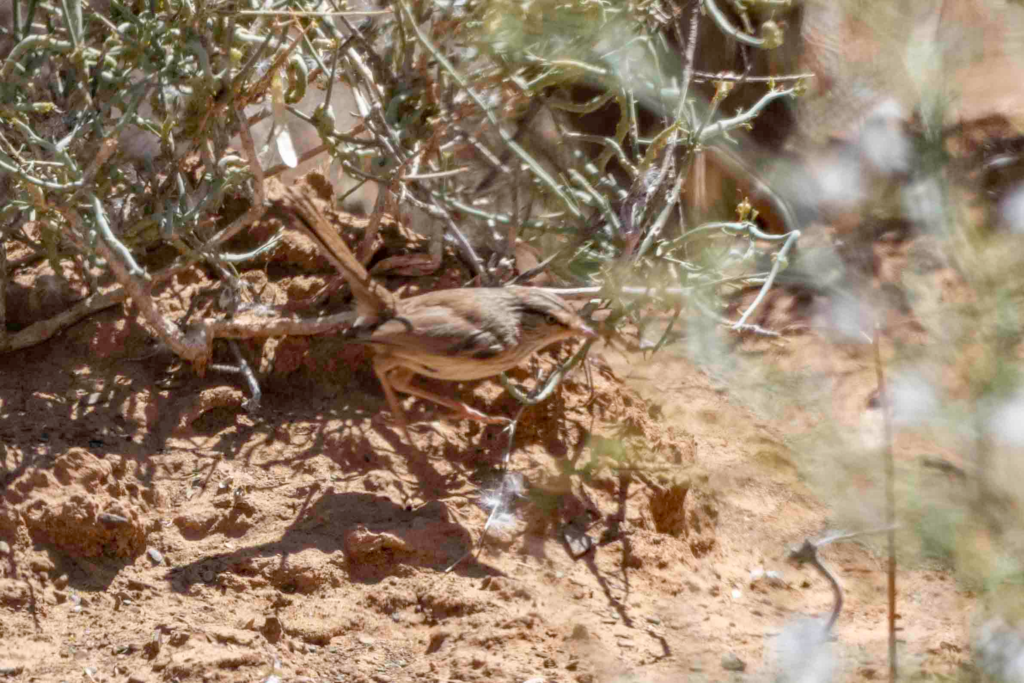
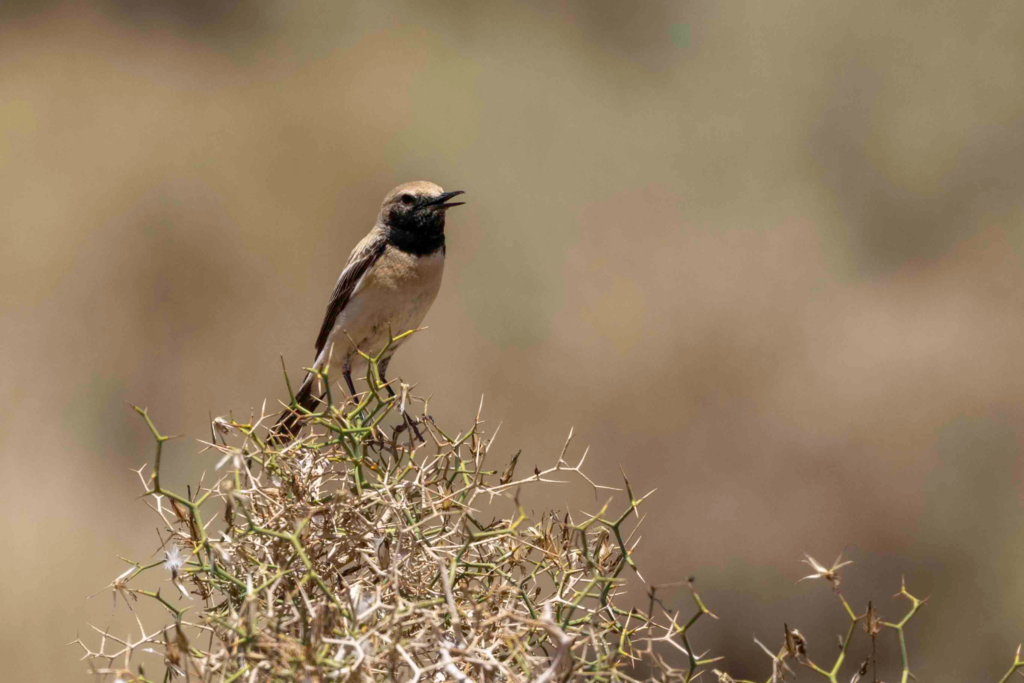
After leaving the gorge, we drove a bit until we pulled off the road into a scrubby area with a desert wadi. A wadi is a dry riverbed that only contains water after a heavy rainfall. Scrub Warblers prefer this habitat. After a brief search, we came across what appeared to be a family group — two adults and three fledglings. They were quite active, in and out of some scrubby bushes, and hard to photograph given the sharp contrast between the noon sun and shady bushes. After watching for a bit, we noticed a Desert Wheatear nearby, singing from the top of a bush.