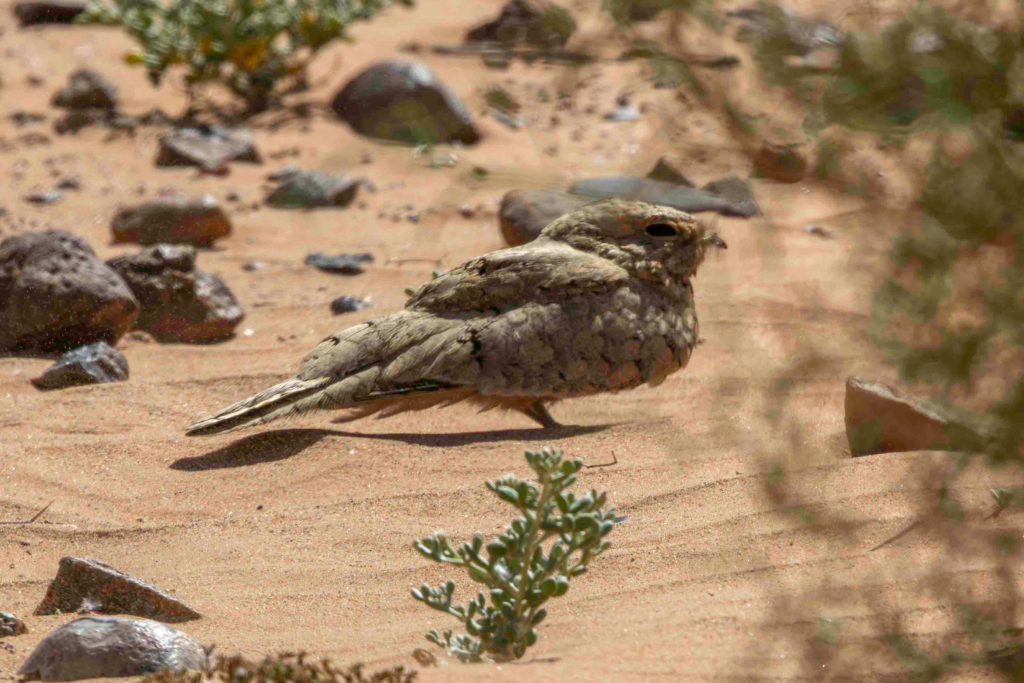
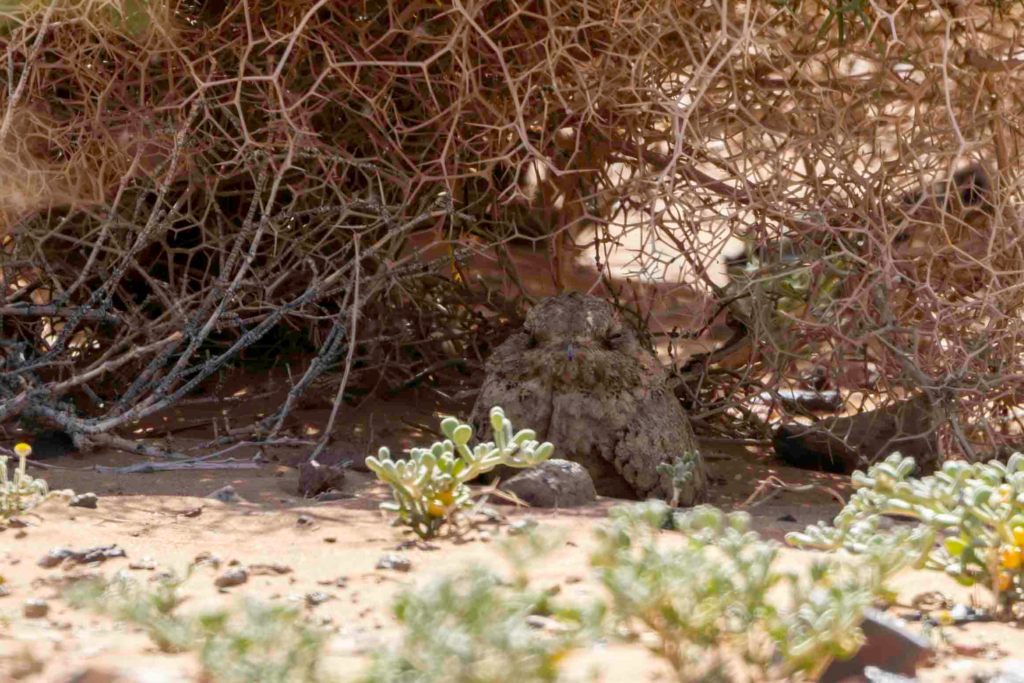
Our trip continued east. This was one of our longer driving days is far with another 3 hours to Merzouga. Merzouga would be our furthest east destination (about 30 miles from the Algeria border) and would take us to the western edge of the Sahara desert. Arriving at our inn located several miles from Merzouga on the edge of the desert, we were pleased to learn that the innkeeper knew where we could find an Egyptian Nightjar. These are mainly nocturnal birds that spend their days sleeping under a bush, with their camouflaged feathering making it almost impossible to find. A few minutes drive, another 10 minute walk, and we were on it — or actually on them since two were in the area.
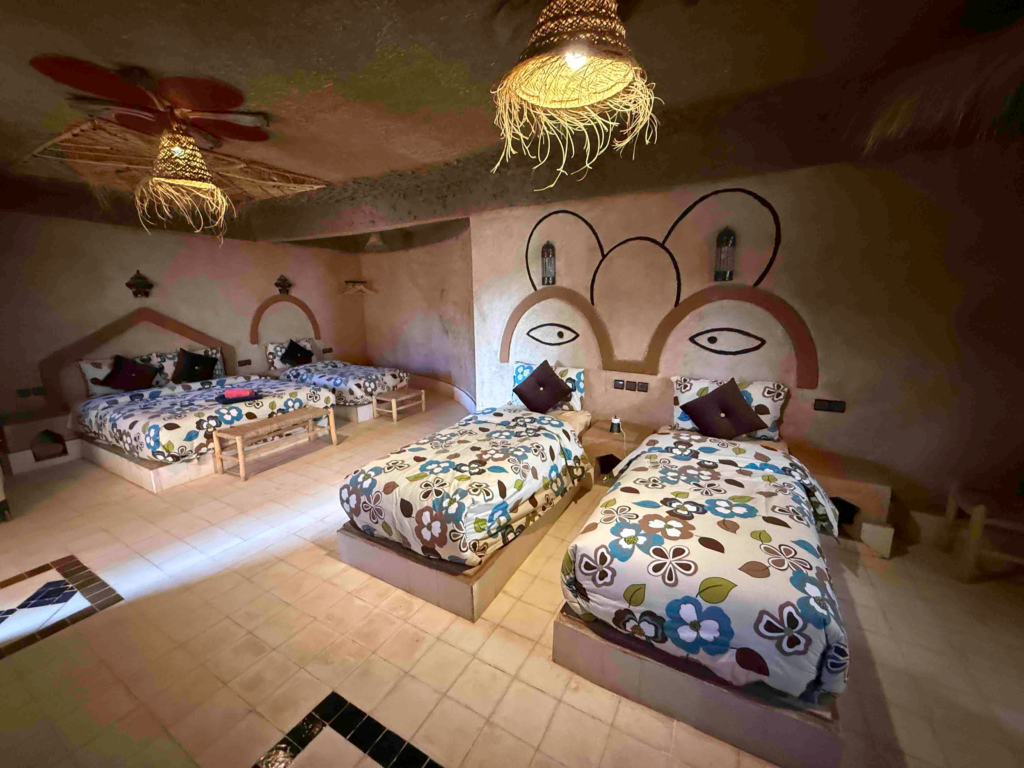
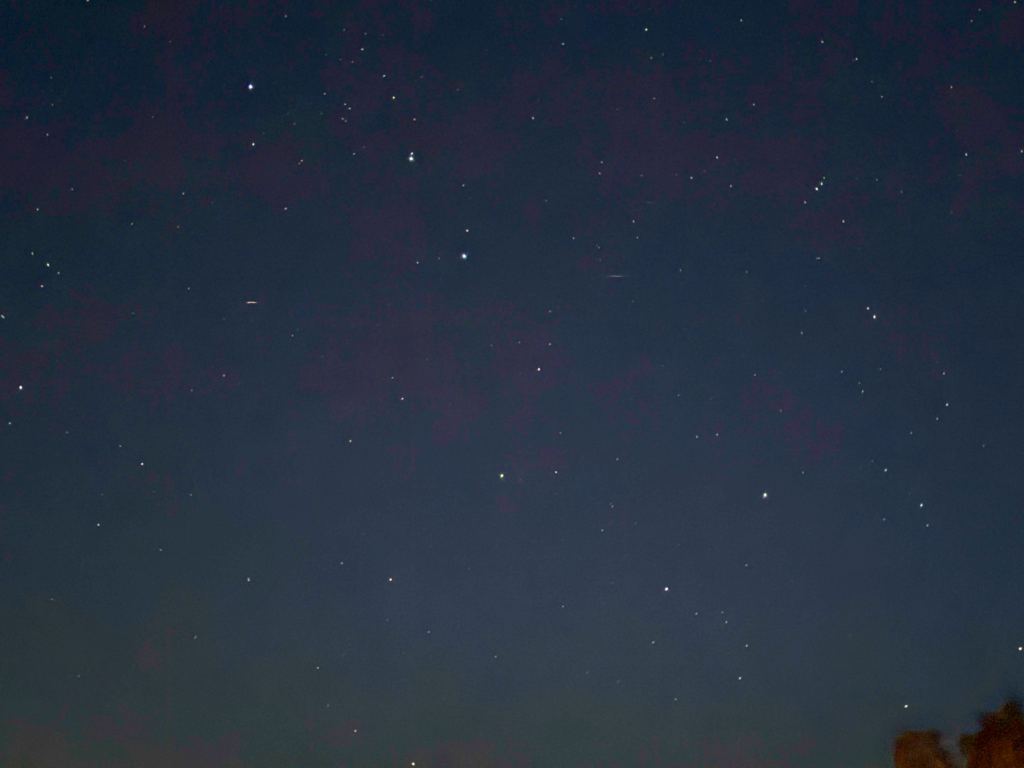
Back to our inn, the Maison Acacias. Matt and I appeared to be the only overnight guests. We were told that some other guests had been staying there and arranged a trip camping in the Sahara. My room was huge — it was designed to sleep at least 5 (perhaps more if some slept on couches). Our food there was marvelous — we started with an Eggplant and cheese Tagine and moroccan bread (knobs). We both thought it was the main dish and snarfed it up. But the innkeeper soon arrived with our entrees! After dinner, I relaxed on top of the roof overlooking the desert marveling at the starry night.
The next morning we again had a wonderful Moroccan breakfast. After breakfast, we got into the SUV with Mohammed and headed toward the dunes of Erg Chebbi. Our first stop was a watering hole where sandgrouses typically come in each morning to get their fill of water. After waiting for a bit, the first group came in. Then some more. And still more. Reluctant at first they would land several hundred feet from the watering hole.. We stayed in the vehicles since they served as blinds (there was our vehicle and three others). Eventually they walked toward the hole. After drinking a bit, they would fly off and another group would come in. This went on for about an hour. During this time, we had two species, the Spotted Sandgrouse and the Crowned Sandgrouse, with the latter outnumbering the former by at least two to one.
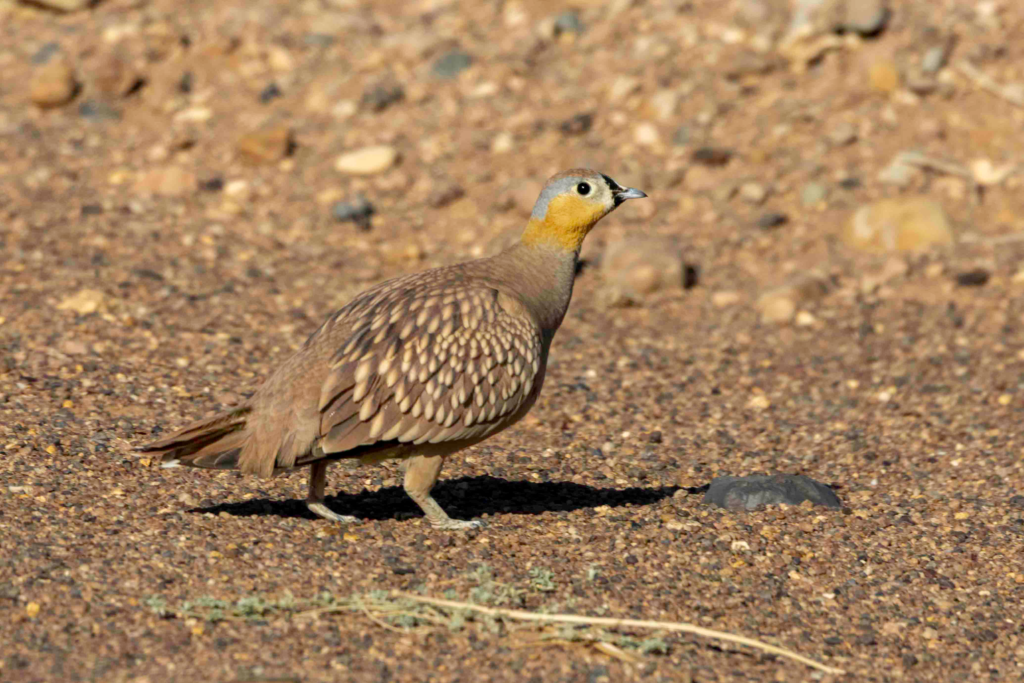
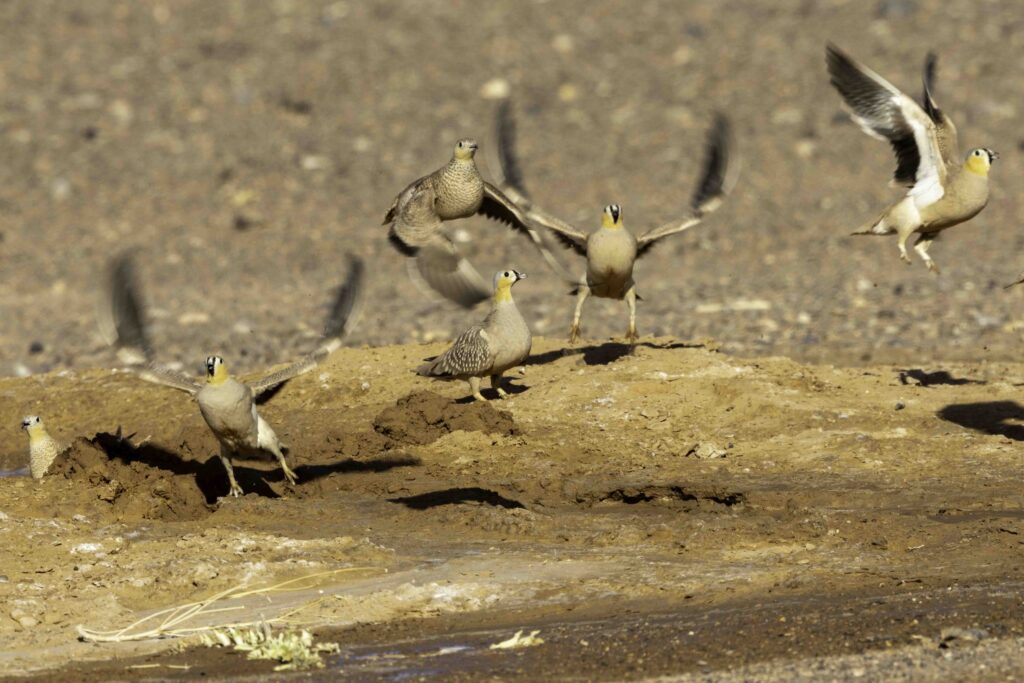
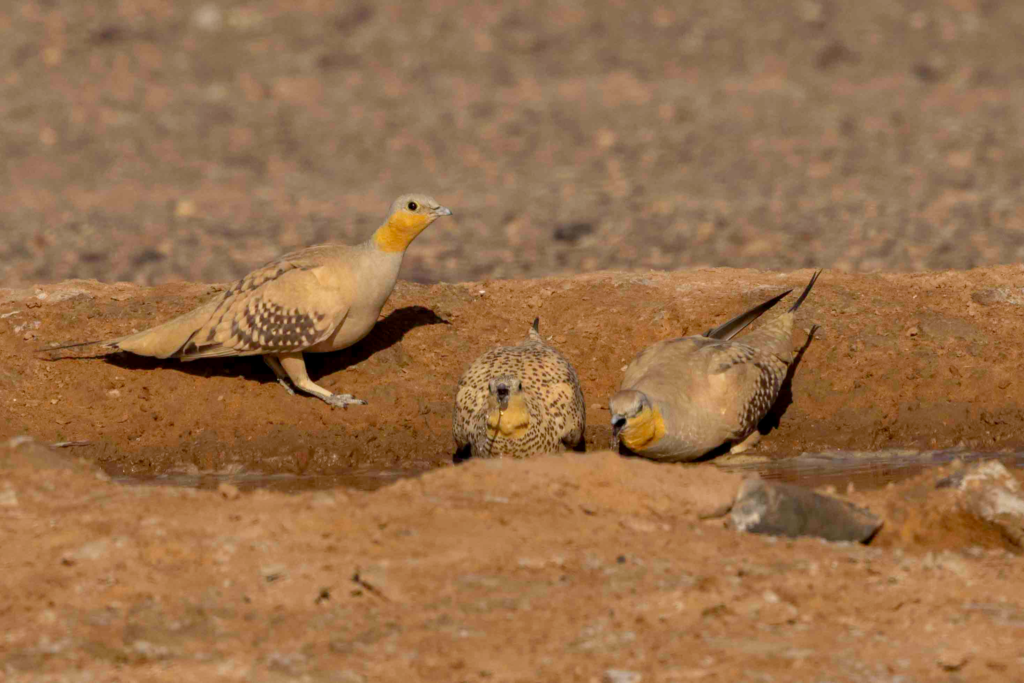
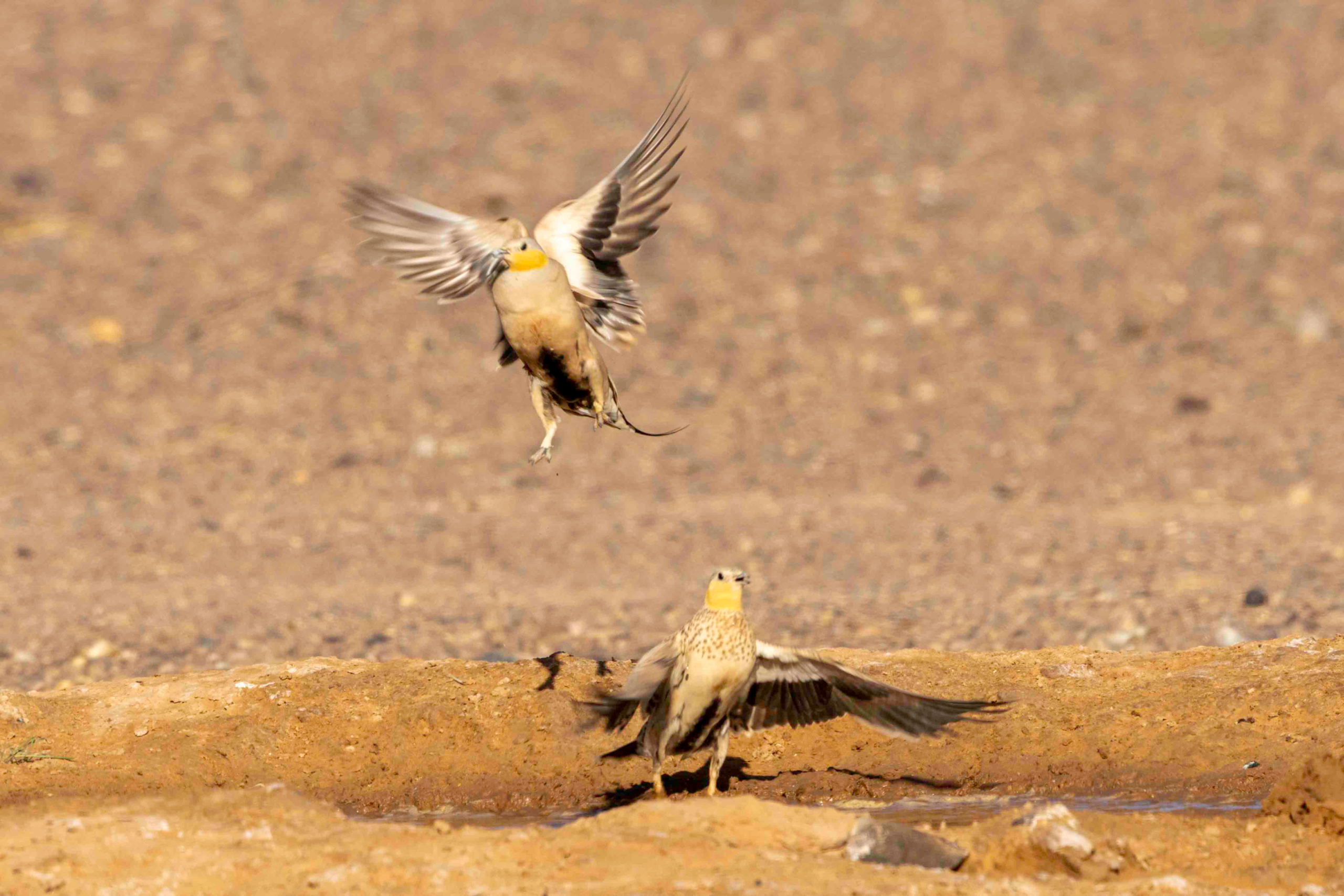
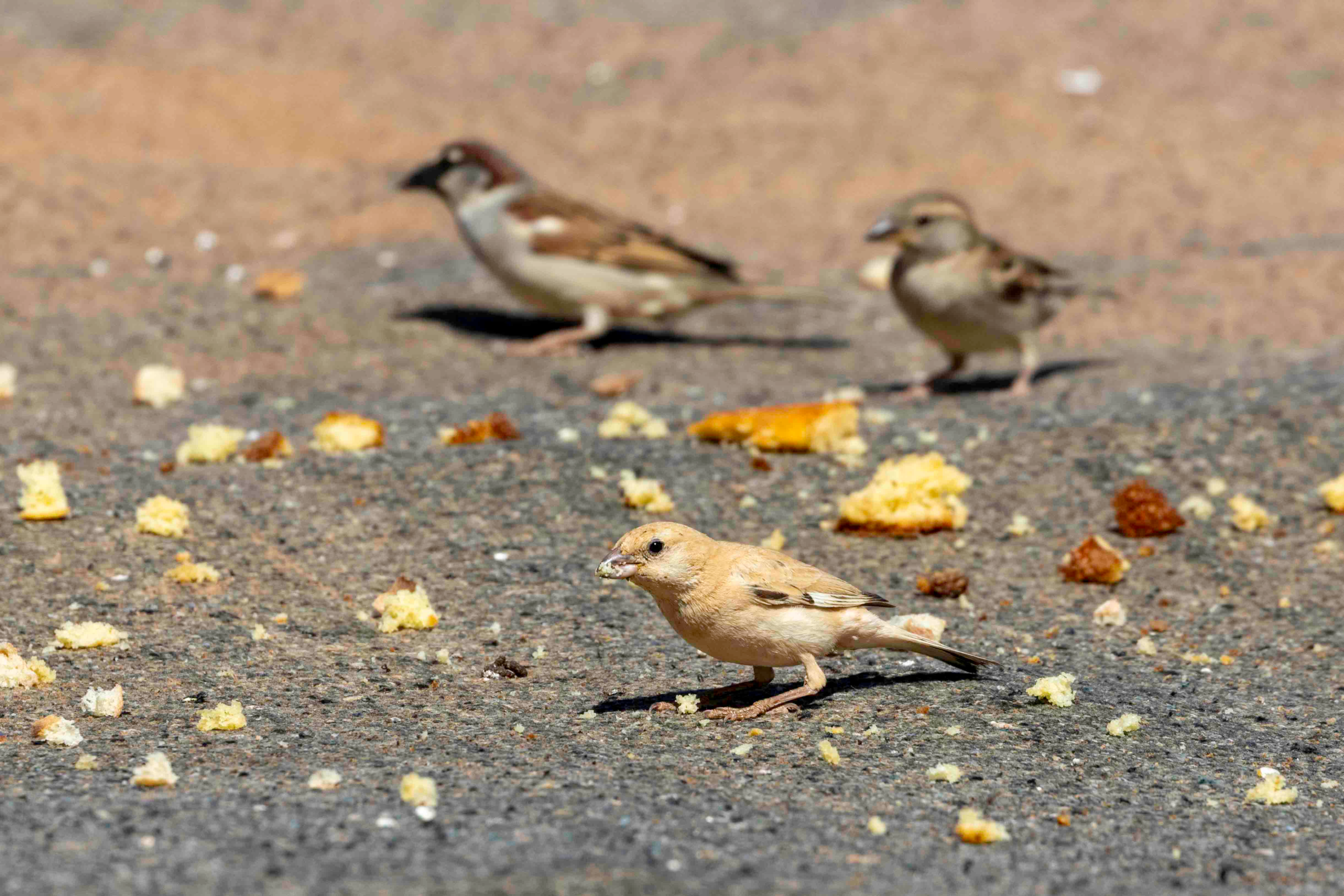
After drinking from the water hole for about an hour, the Sandgrouses flew off. We continued on to our next stop, a desert camp – the KamKam Dunes Tents next to the Erg Chebbis sand dunes. We were served mint tea while watching several desert bird species come in to eat bread crumbs off the top of a tent.
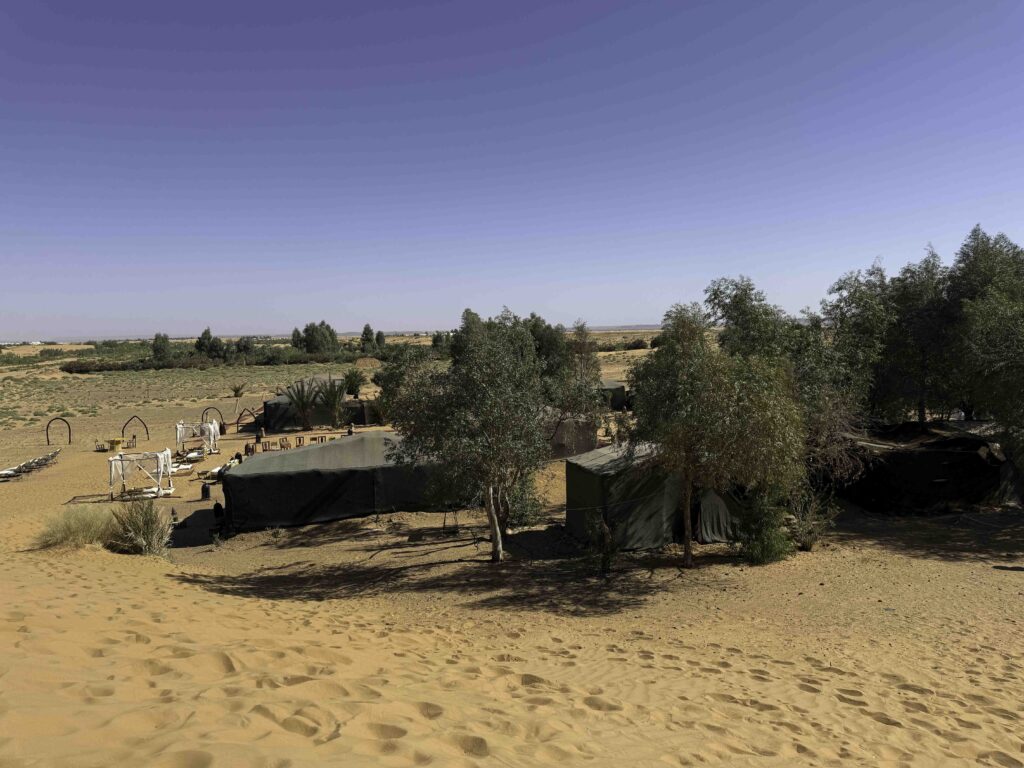
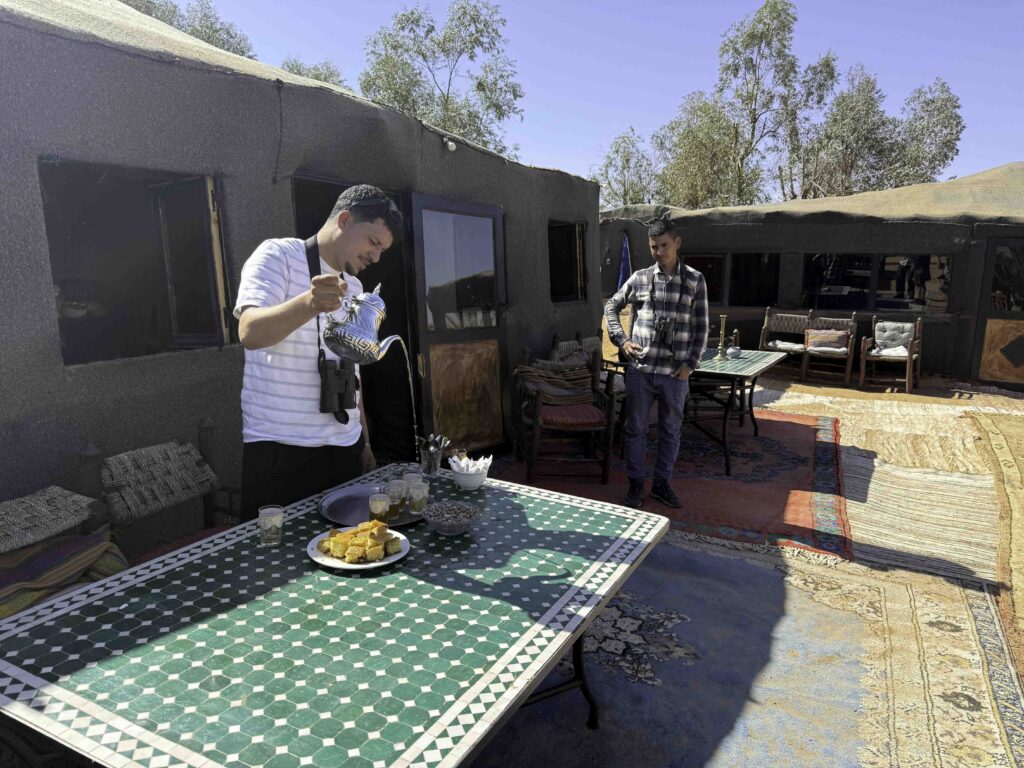
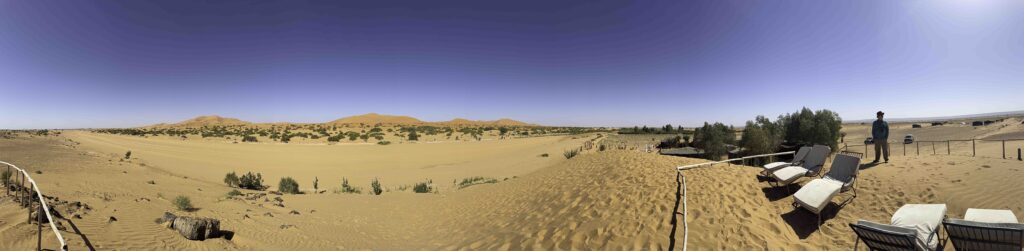
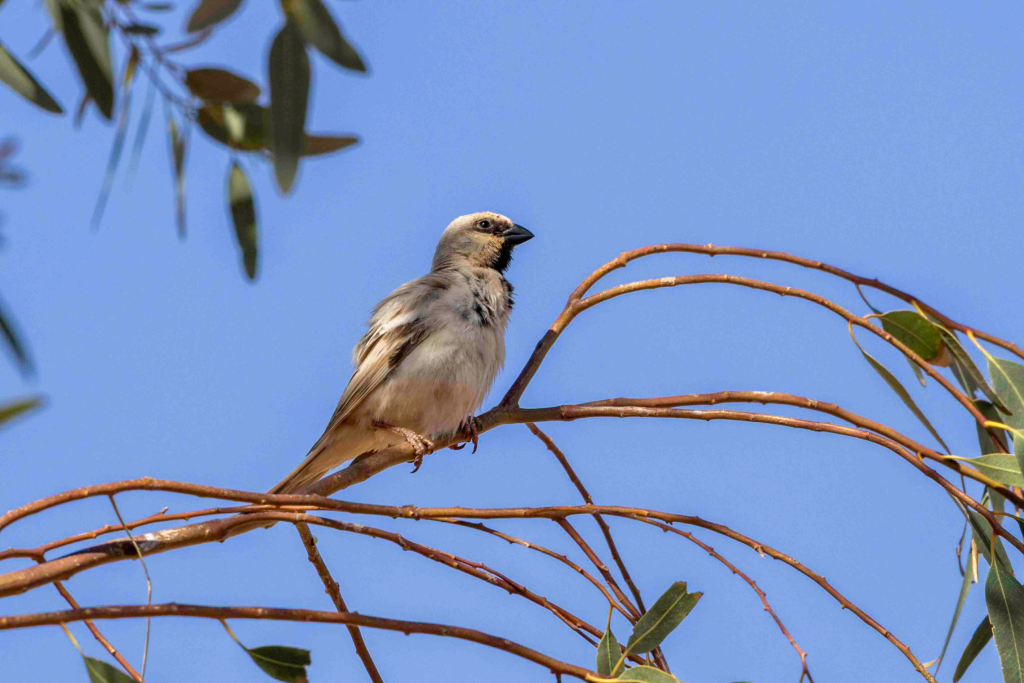
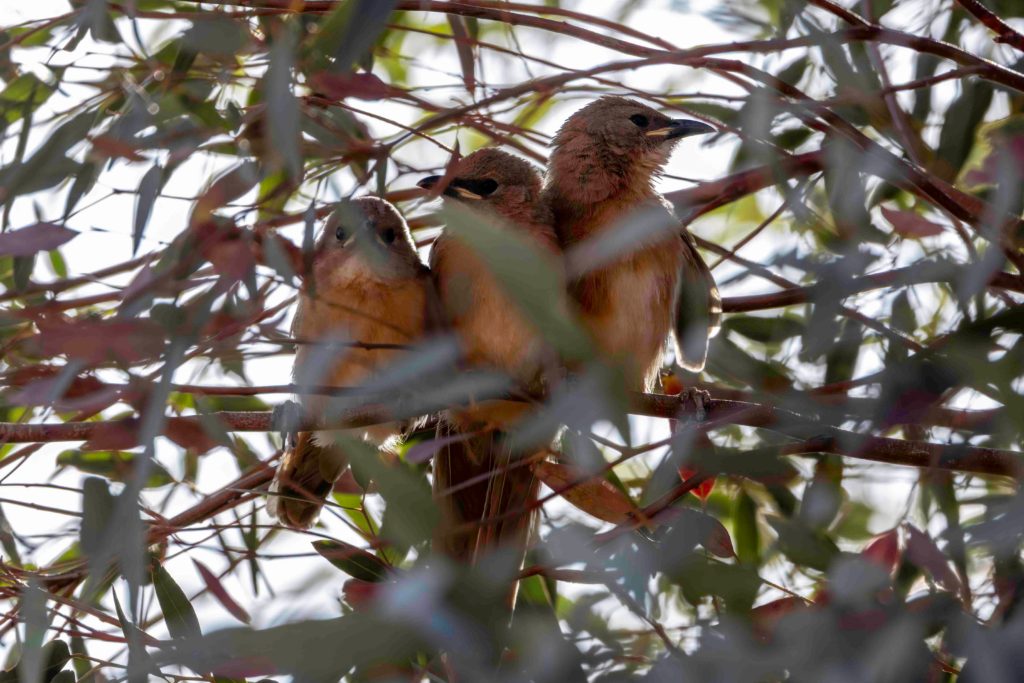
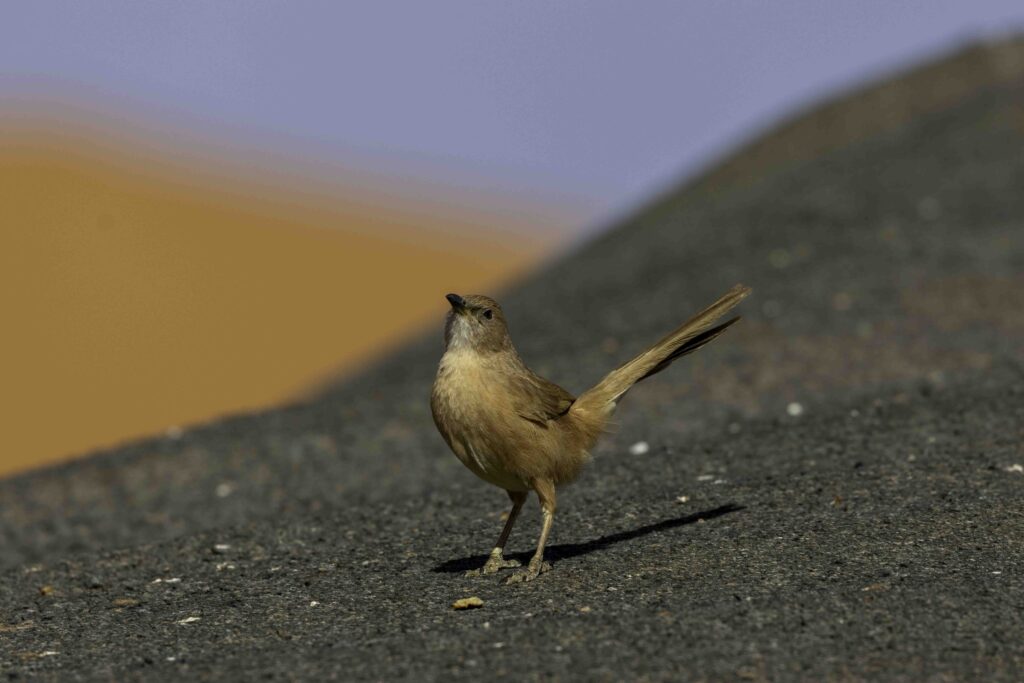
After spending an hour at the camp, we continued out into the desert scrub. We saw several dromedaries on the landscape, with few other signs of life, but it was there if you looked closely. Eventually our guide found an African Desert Warbler — in fact it was a family with a pair of adults tending a nest. Nearby was a Greater Hoopoe-Lark.
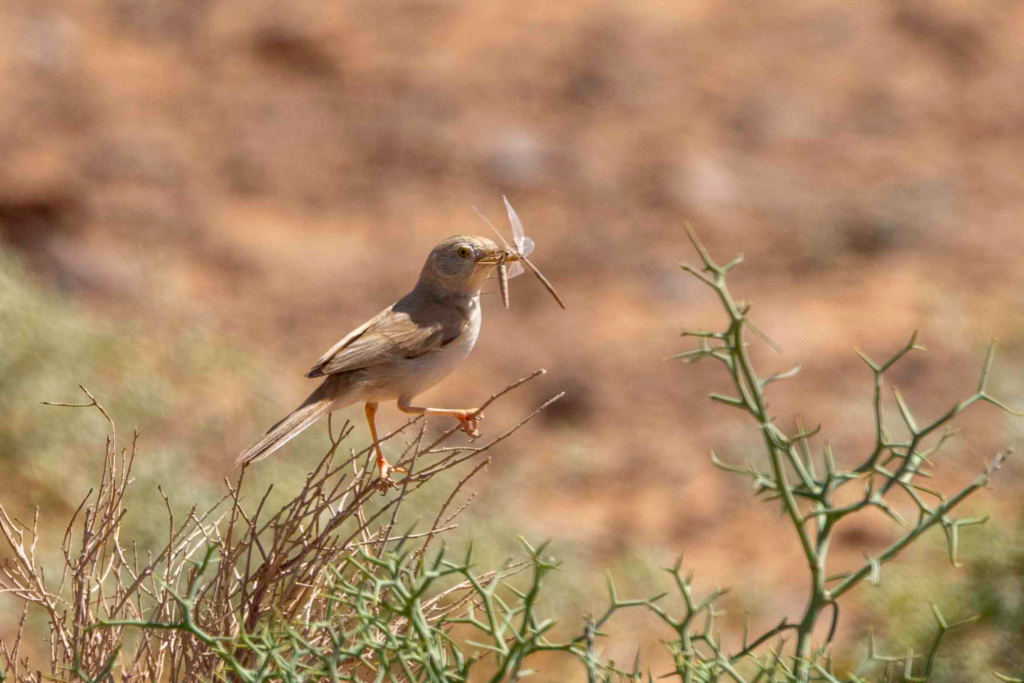
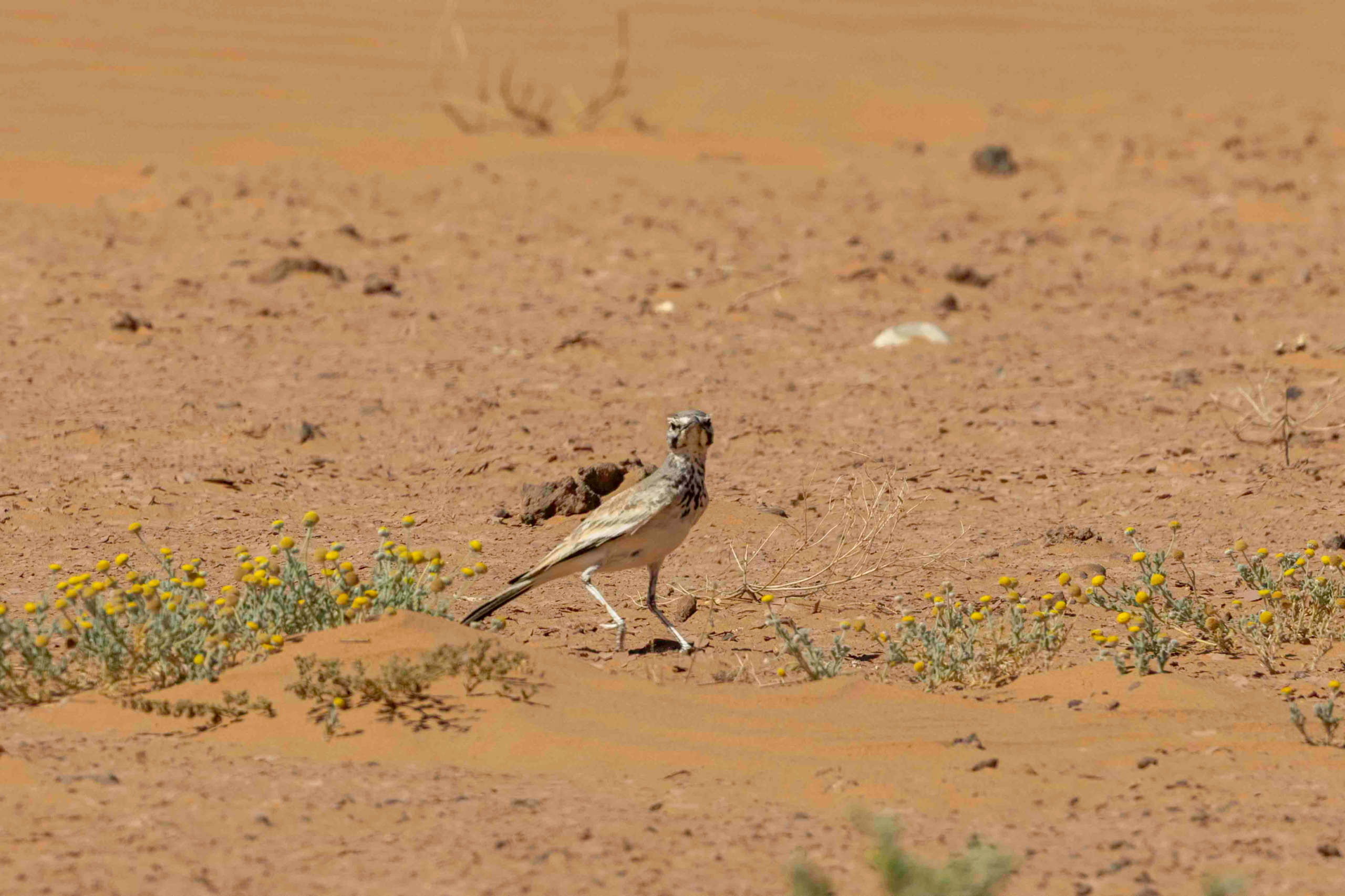
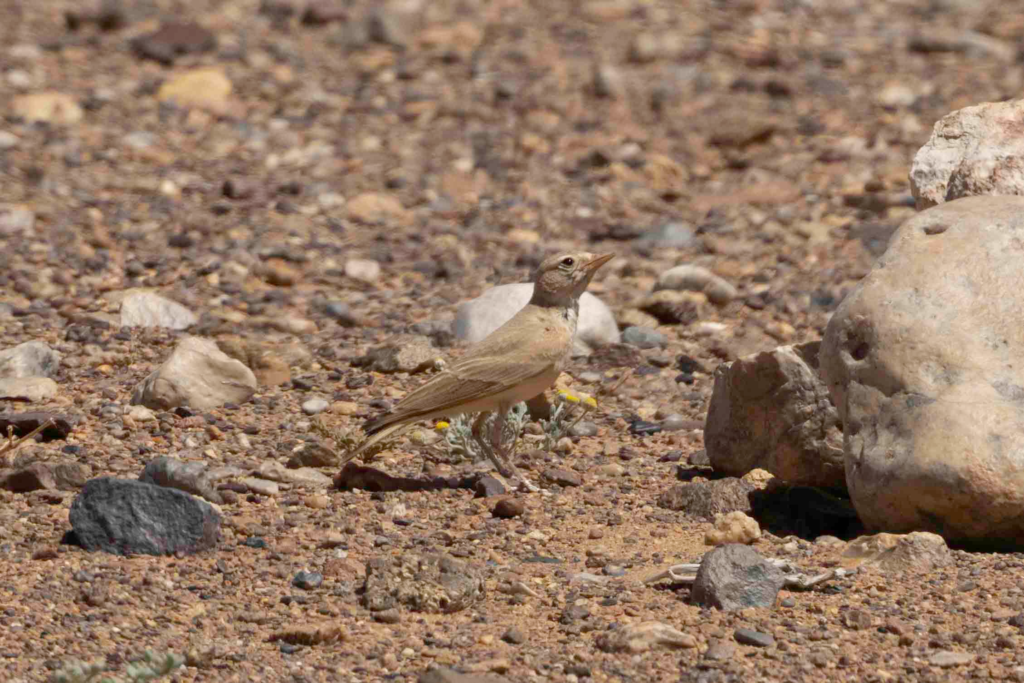
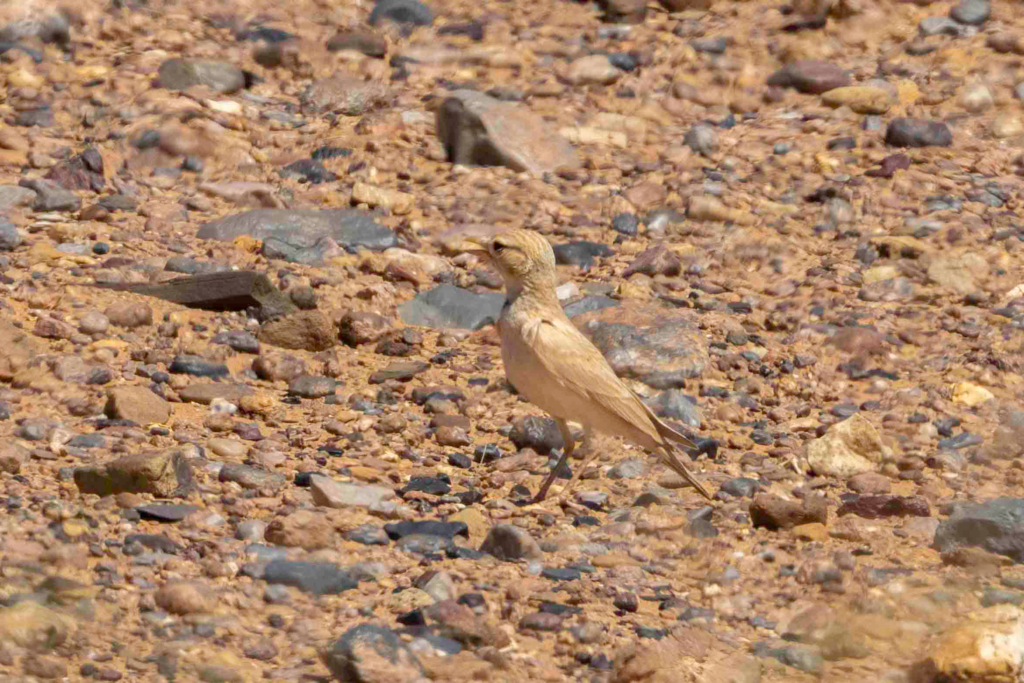
It was approaching noon and starting to warm up, although still in the low-to-mid 80s. But it was time to head back to the inn since most birds were seeking shade. However, we had a final stop and came across two lark species — a Bar-tailed Lark, which we had seen before, and a Dunn’s Lark. The Dunn’s Lark was quite rare for Morocco, with its typical range further south in the Sahara. Our guide was quite excited to see it here.
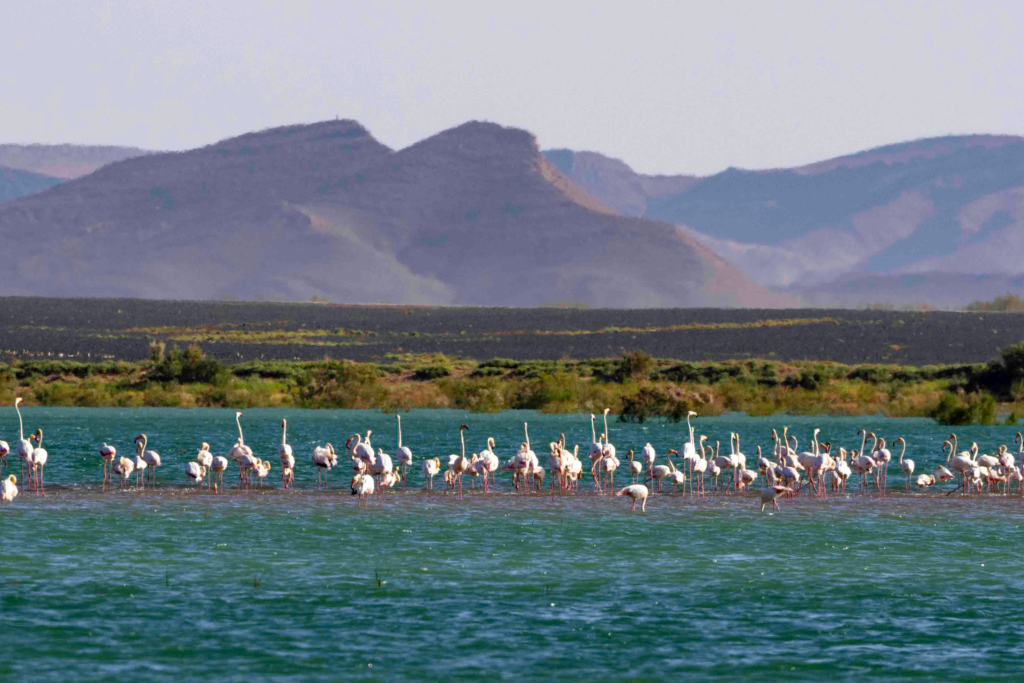
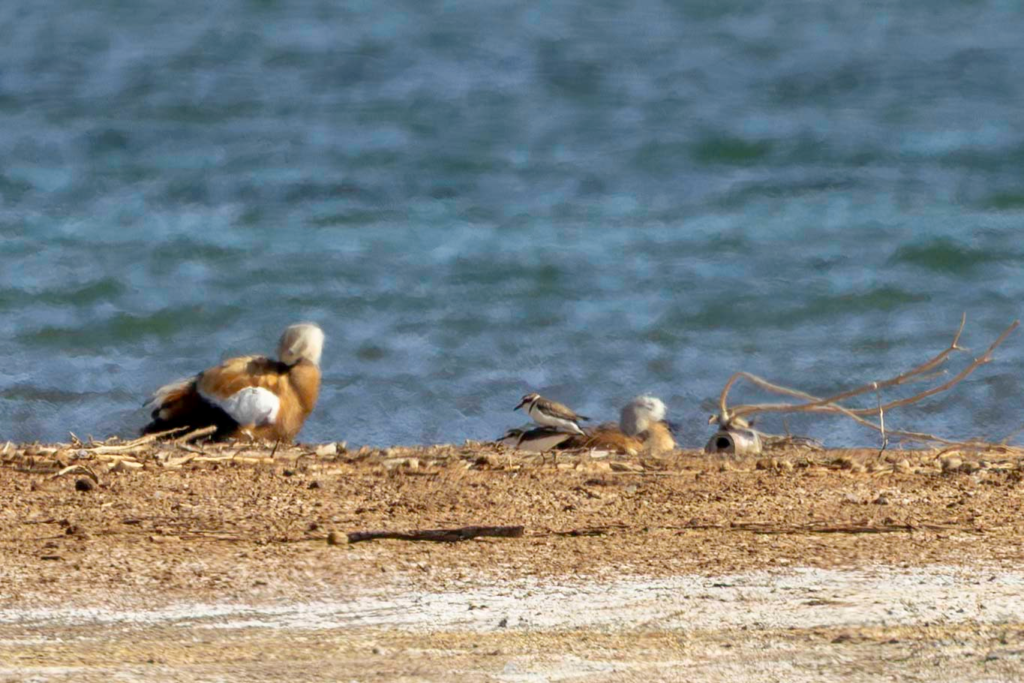
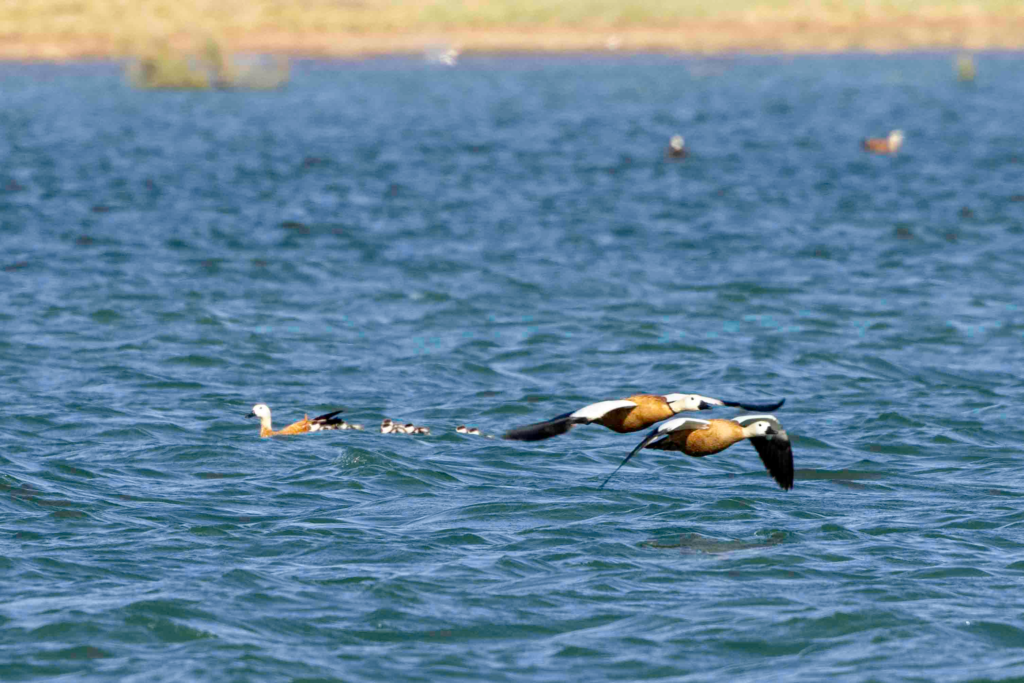
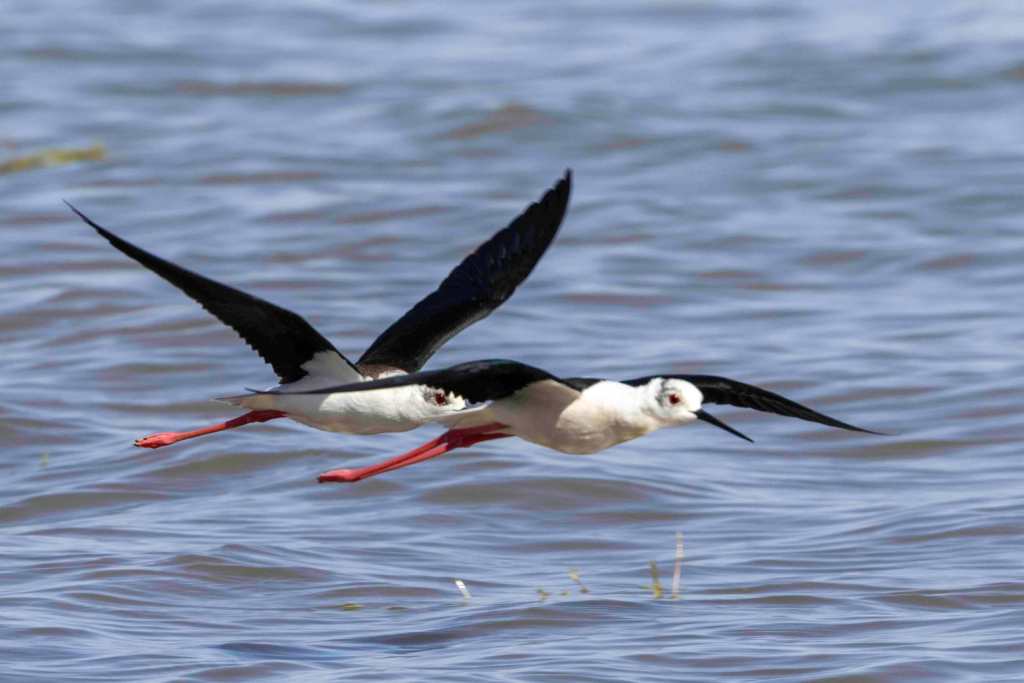
After a mid-day break, we headed to lake Dayet Srij, a seasonal saltwater lake just west of Merzouga. This desert oasis fluctuates based on rainfall, and in the past few years had dried up almost to nothing due to a prolonged drought. This past year, higher rainfall (but still meager — this is a desert after all) had returned the lake to more normal seasonal levels.
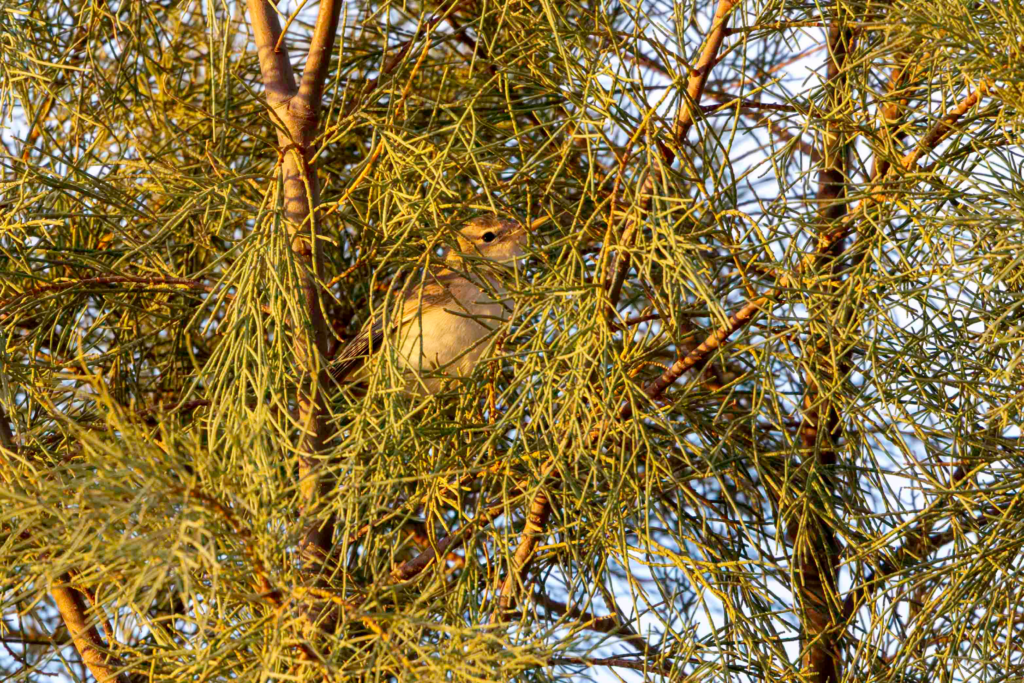
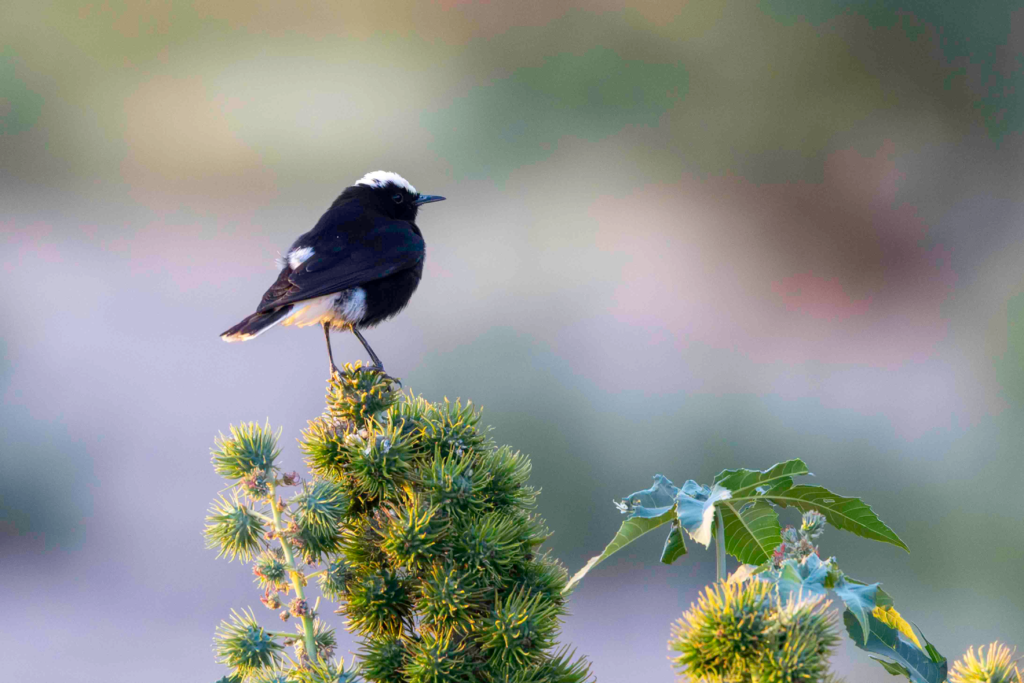
The next morning, we did some birding around the inn before breakfast. There was a grove of salt cedars next to the inn that held some warblers, and a coupe of White-crowned Wheatears were flying around — most likely they had a nest nearby.
After breakfast, we were preparing for a long driving day as we started our trek back east toward the coast, but first we would be spending a night in Ourzazate.