This page contains some of the coolest birds that I observed during the trip.
San Isidro Black-banded Owl
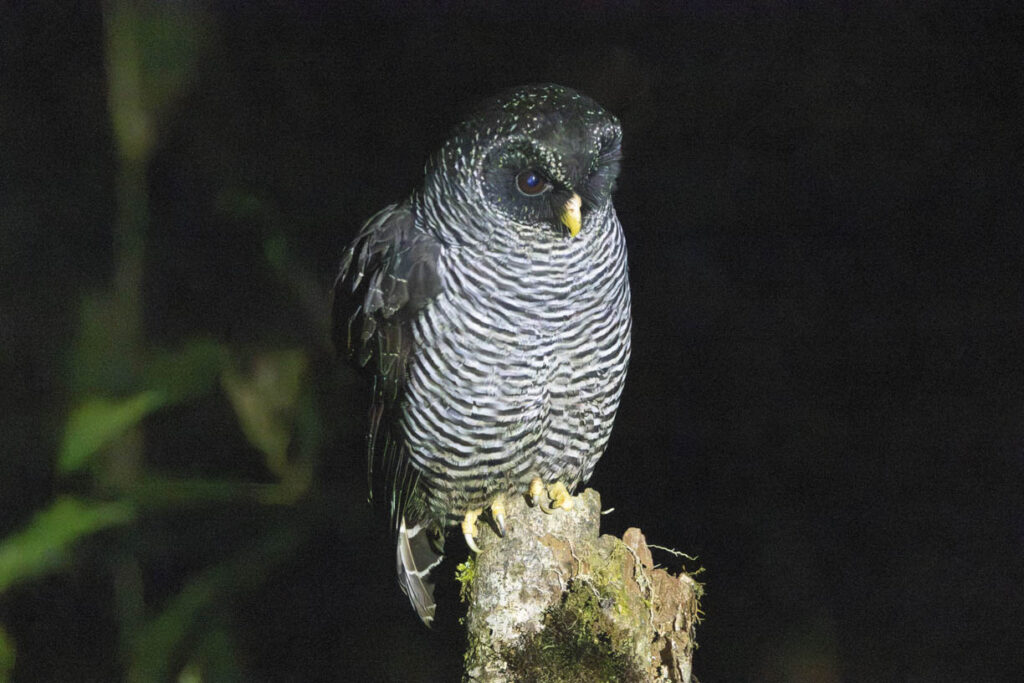
The first is the San Isidro Black-banded Owl. This species is found across a larger area of South America below 1800 meters (5900 feet), including the Amazon basin. I saw a pair of Black-banded Owls high in the canopy in dense forest while visiting the Sani Lodge along the Napo River in the Amazon during my March 2023 trip to Ecuador.
On this trip, we spent two nights at the San Isidro Lodge. We observed what is referred to as the San Isidro Black-banded Owl. This owl is at a higher elevation (over 2000 meters) and outside of the known range for the Black-banded Owl. In addition, its vocalization differs, and is similar to the Black-and-white Owl found at higher elevations. There has been much debate over the last couple of decades whether the San Isidro Owl should be treated as a subspecies or perhaps even a new species. Pending further analysis, including studies of larger DNA samples, it remains a mystery, still classified as a Black-banded Owl.
At dark, the owl, shown below, would visit the back of the main lodge, where it would perch on a snag and occasionally fly out to pick off moths attracted to the lodge’s lights.
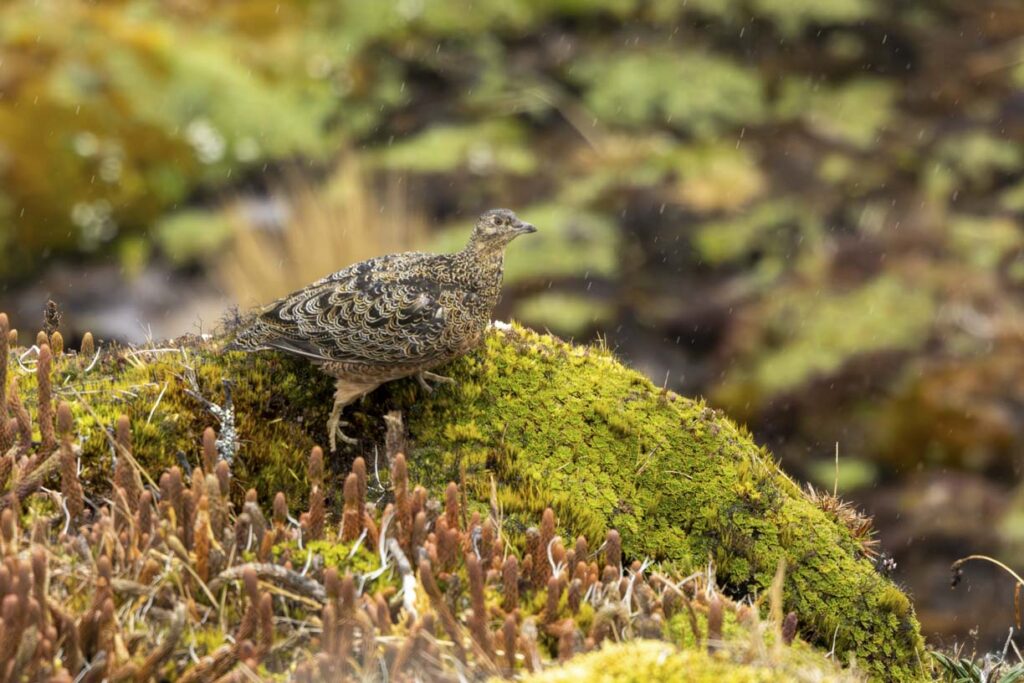
Rufous-bellied Seedsnipe
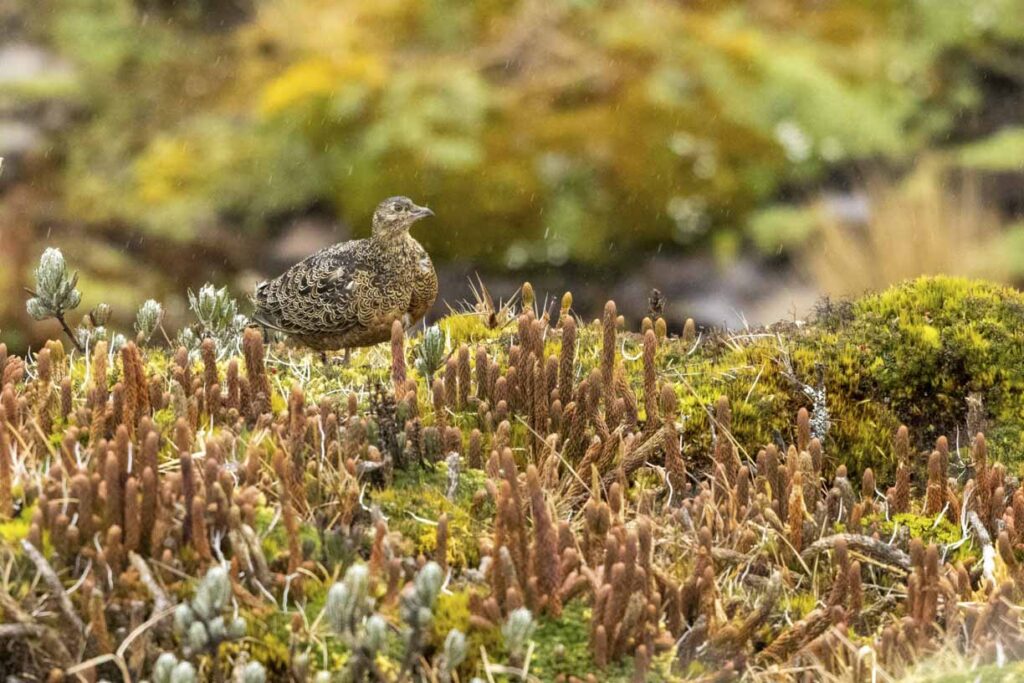
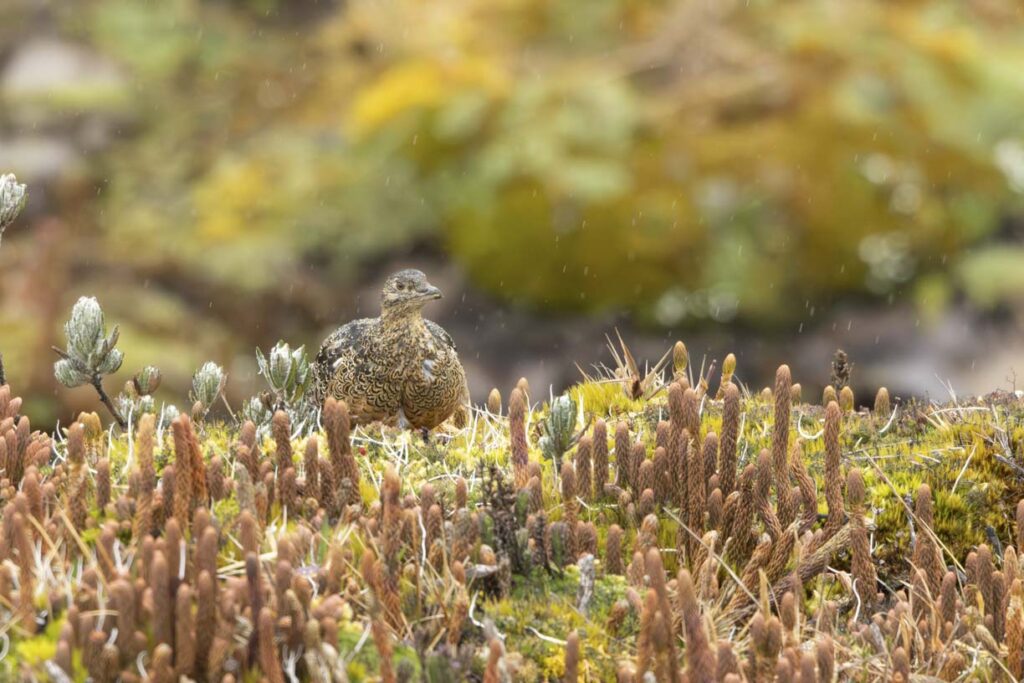
The second unique species is the Rufous-bellied Seedsnipe. Although this species is superficially similar to grouse, it is the order Charadriiformes, which encompasses shorebirds. Seedsnipes, however, are found at extremely high elevations, above the treeline. The Rufous-bellied is one of four seedsnipe species, found in the Andes above 3,000 meters (10,000 feet).
We found this bird in the Reserva Ecologica Cayamba-Coca, the town of Papallacta, at the top of what’s known as Antenna Peak, since it houses a complex of high antennas at the top of the peak. Elevation was around 14,000 feet. The Seedsnipe, unlike its carnivorous shorebird cousins, feeds mostly on vegetation — shoots, small leaves, buds, seeds, and berries — but will also take insect larvae. A large bird, it can often be overlooked due to its cryptic plumage and habit of staying still for long periods of time.
Common Potoo
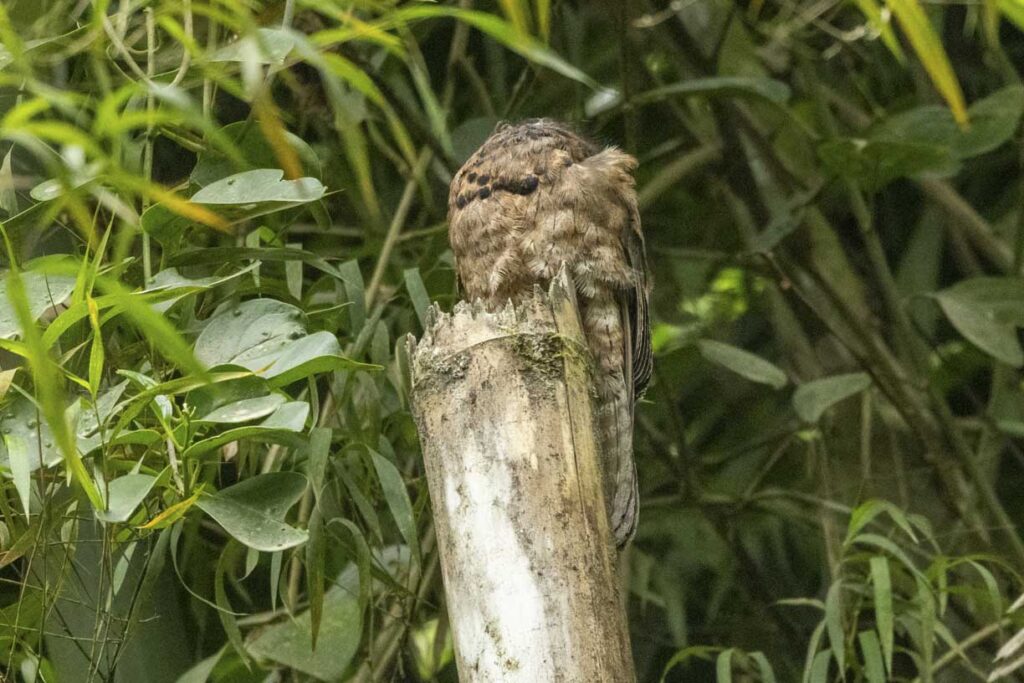
On our fourth day, we finished fairly early and were back at the Sachatamia Lodge around 3:00 pm. The driver and Jorge, the local guide, offered to take us into the nearby town of Mindo. I had heard that a Stygian Owl sometimes roosts around Mindo, and asked Jorge if he knew where that was. He did. To my surprise, I was the only one of our group to take up the offer to visit Mindo.
When we arrived, it had just finished raining but was still overcast. We went downtown, and behind one of the main buildings was a large stand of bamboo. Jorge indicated that was one of its roosting spots. Despite our best efforts, we were unable to find it. However, while we were scanning, a friend of Jorge’s walked by and they spoke briefly in Spanish. Jorge informed me that his friend told him about a Common Potoo that had been roosting nearby.
Common Potoos are mostly nocturnal. They are in the Nightjar family, a group of birds that have extremely large mouths and feed on the wing, mouths wide open to capture insects. During the day, the roost on tree snags or limbs, where they often blend in and look like an extension of tree limbs.
We jumped into the van and after a couple of minutes were on the Mindo outskirts. Walking a couple of hundred yards along a one-lane road, Jorge and I scanned the woods, and Jorge was able to pick it out.