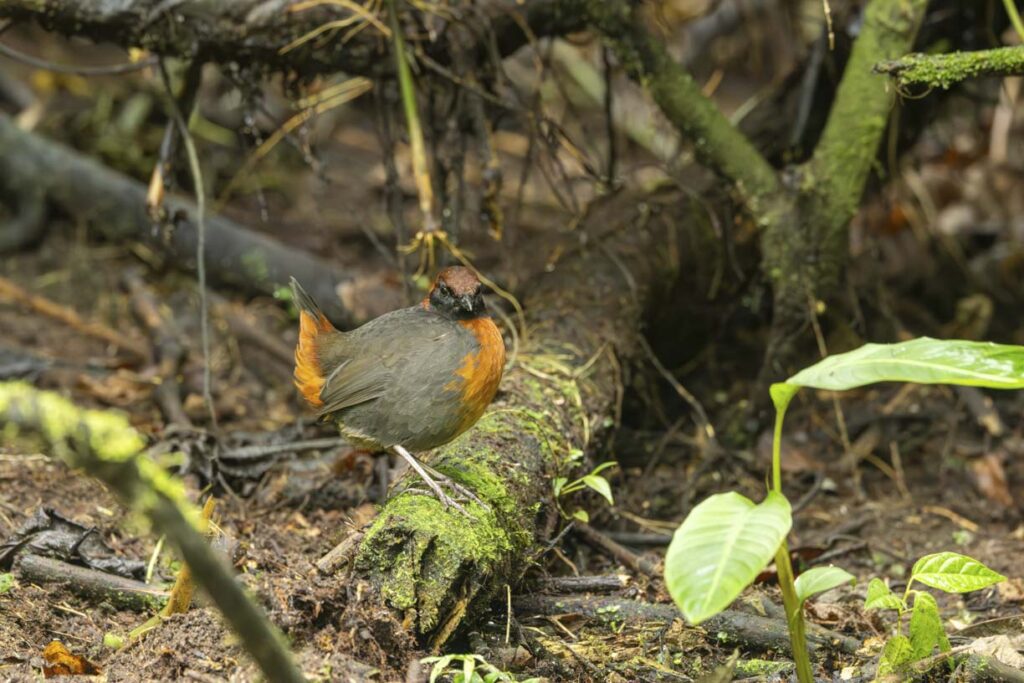
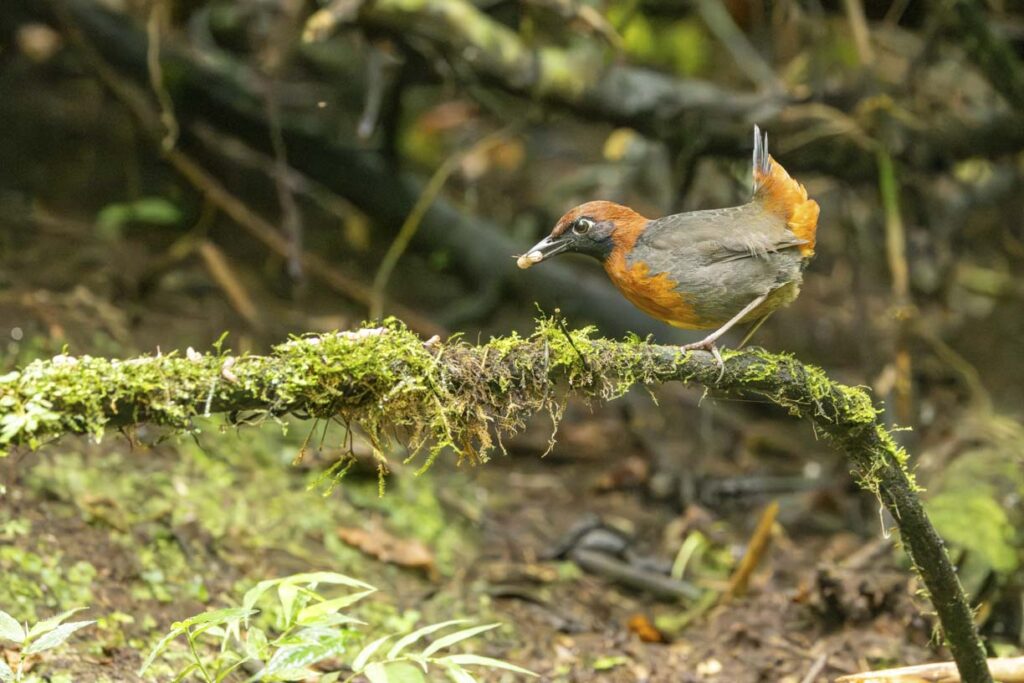
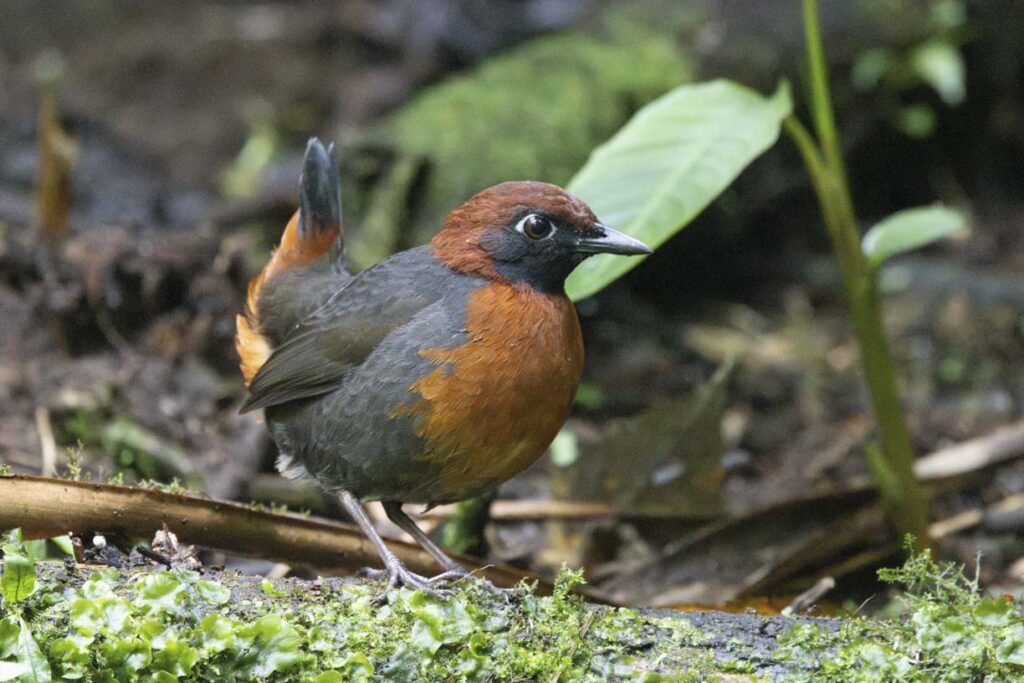
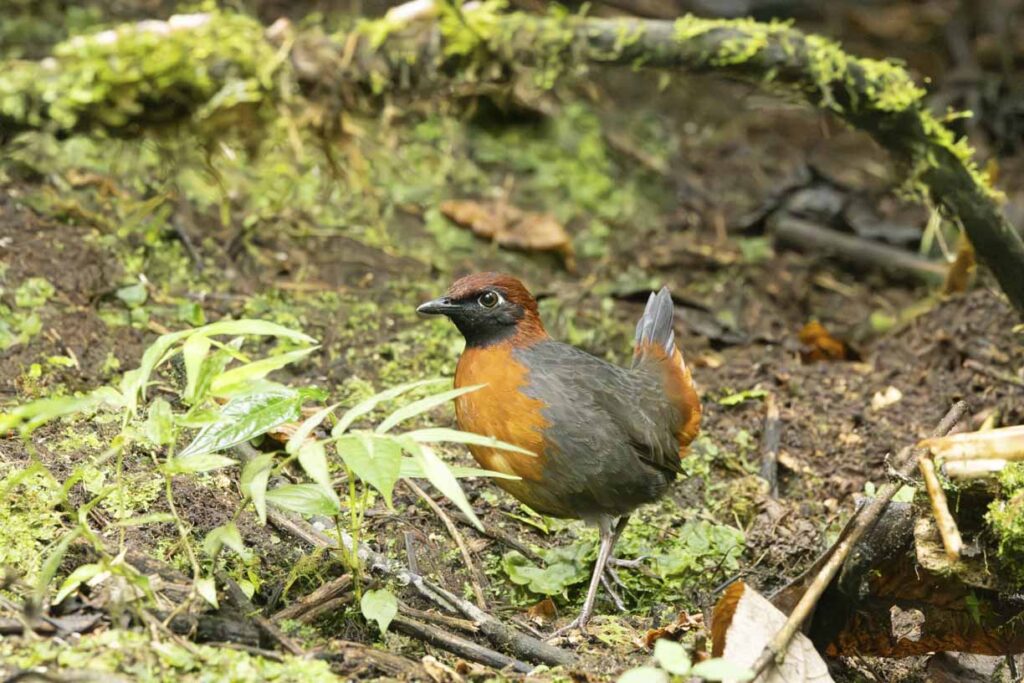
The 70 species of Antpittas in 5 genera are mostly brown birds, standing upright on long legs. They can be found in neotropic forests of South and Central America and southern Mexico. More often heard than seen, they feed on arthropods and other invertebrates, spending their time in the thick understory tossing leaf litter aside in search of worms and grubs.
In 2025, an Ecuadorian farmer named Angel Paz decided to try his hand at eco-tourism by creating a trail on his 65-acre property where visitors could observe an Andean Cock-of-the-Rock lek. Things started out slowly, with only a single birder visiting the trail during the first two months. One day, while Angel was walking the deteriorating trail, he observed a brown bird on the trail eating worms. He started carrying some worms and grubs with him and eventually conditioned the bird to emerge from the understory to eat the worms. The word soon spread, and before long Refugio Paz de las Aves became a must stop for every north Ecudor bird trip.
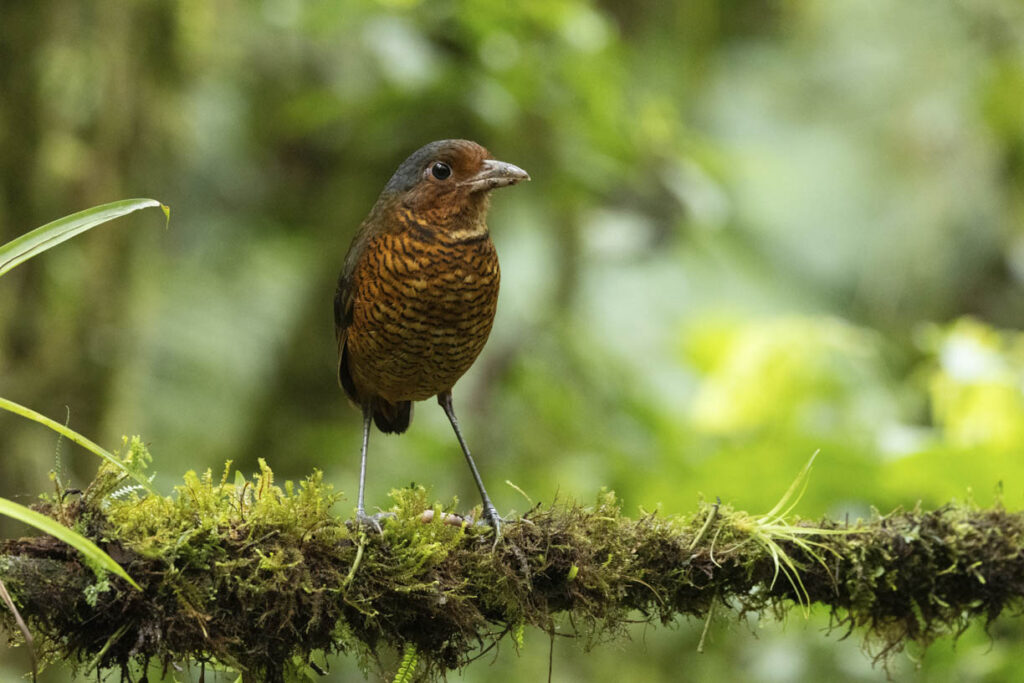
I first visited Refugio Pazin March 2023, during my first trip to Ecuador. At that time, I observed Maria, a Giant Antpitta who started it all.
The Giant Antpitta is one of the largest of the Antpitta species. They are found on both the east and west slopes of the Andes at elevations between 4,000 and 10,000 feet.
During this trip, I learned that Maria was no longer around, but had the pleasure of seeing Corazoncito, a progeny of Maria.
This picture is of Corazoncito, or Little Sweetheart, as she emerges for some grubs.
Angel has used his feeding technique on several other species of Antpittas, as well as other forest dwelling species. In addition, other refuges have adopted this technique, contributing to the success of ecotourism in Ecuador and likely resulting in the conservation of thousands of hectares of land that otherwise would have been clearcut for other uses. During our trip, we saw a total of 7 antpitta species.
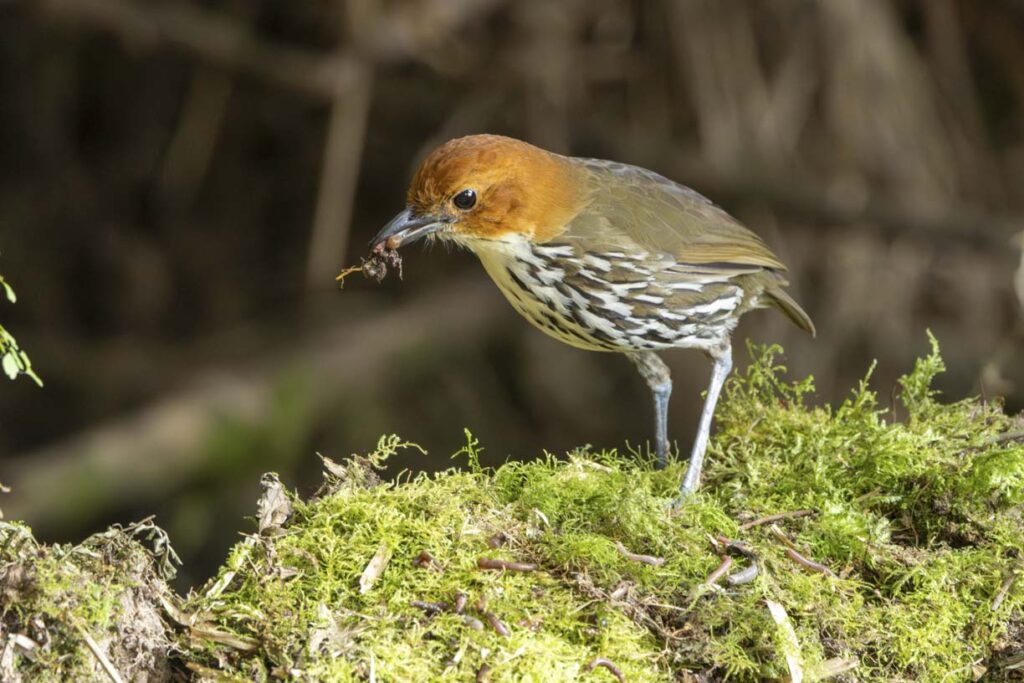
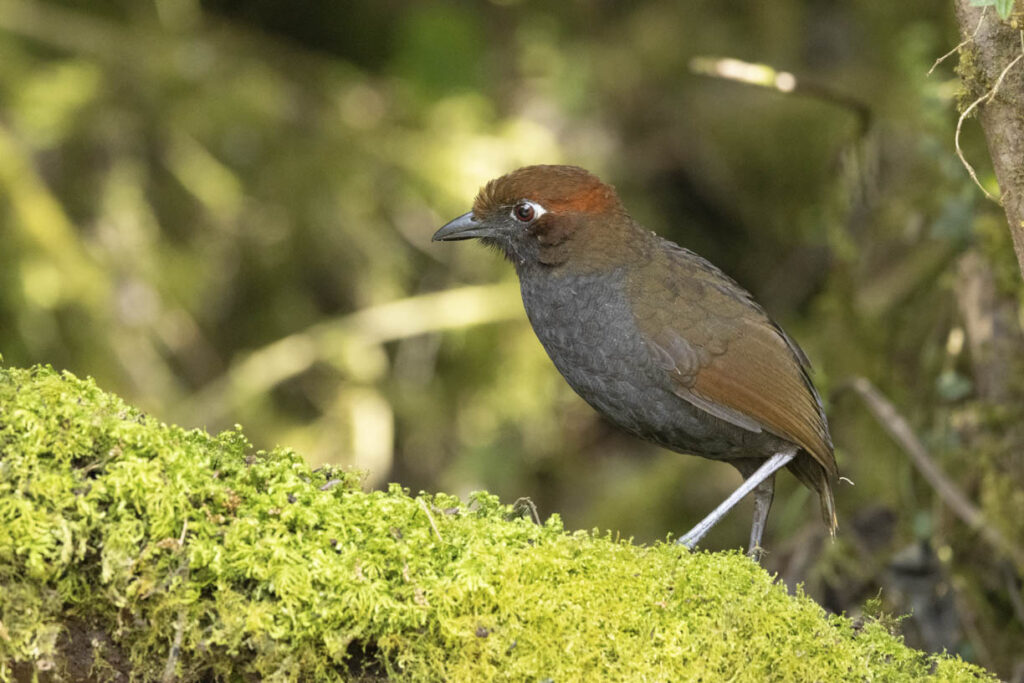
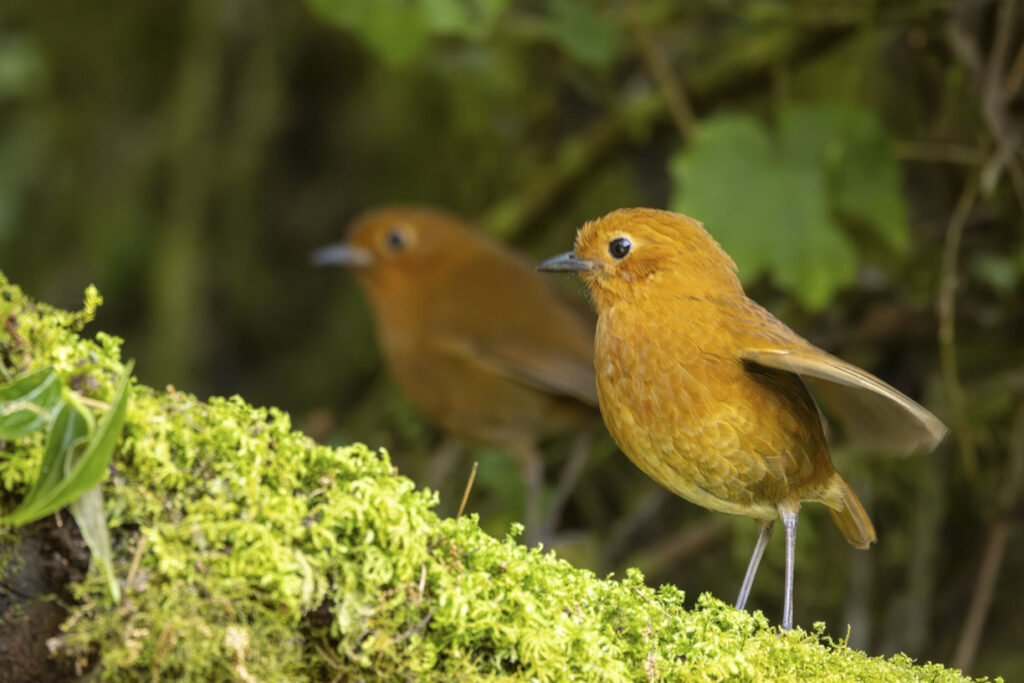
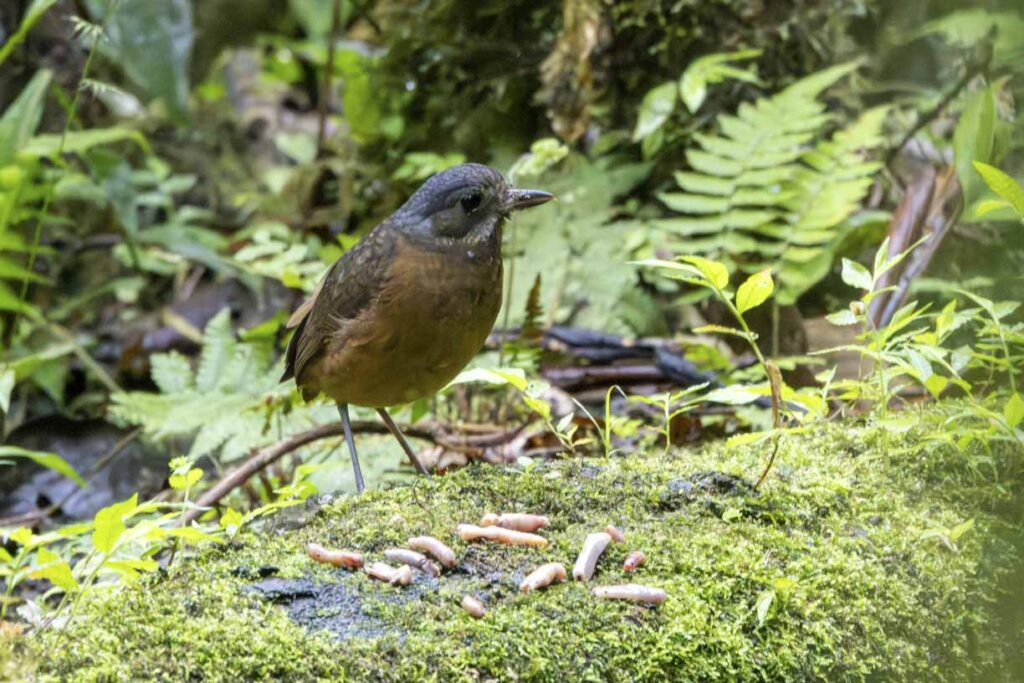
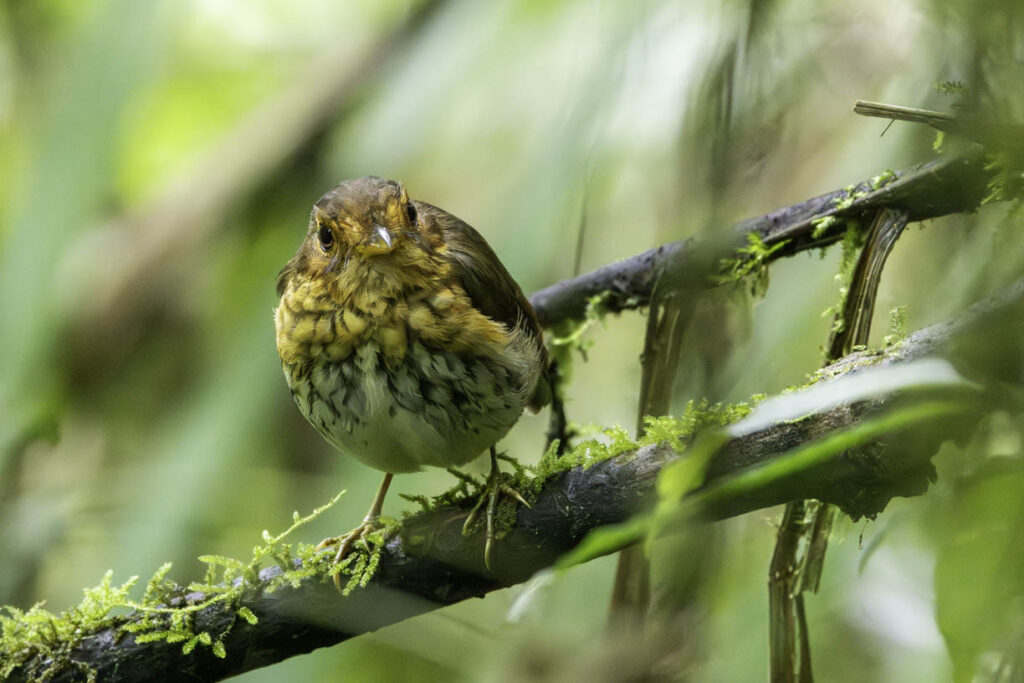
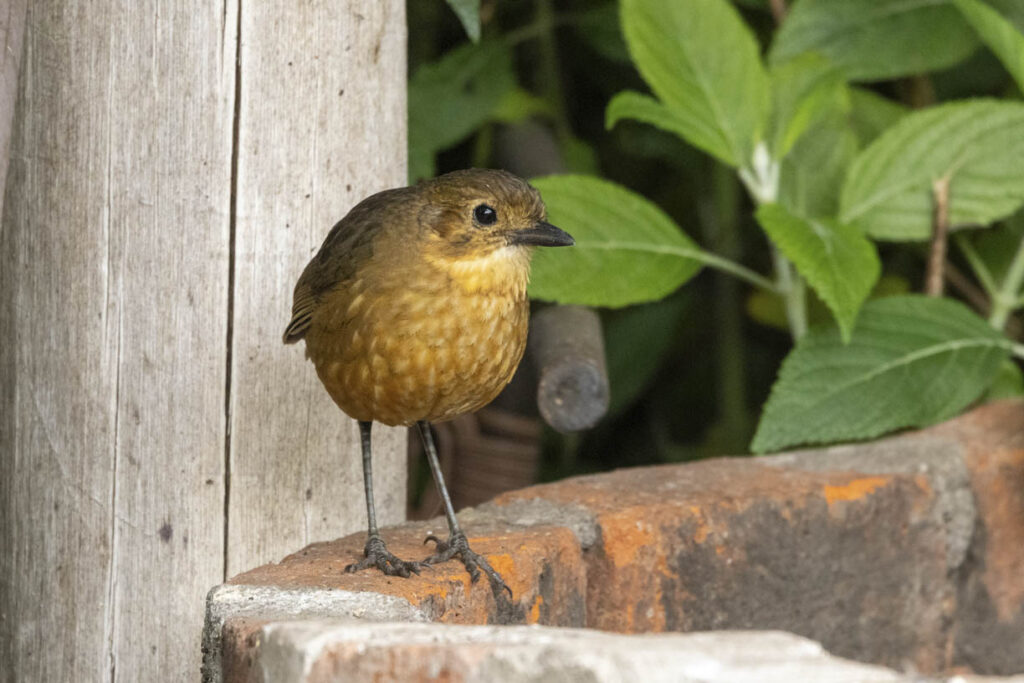
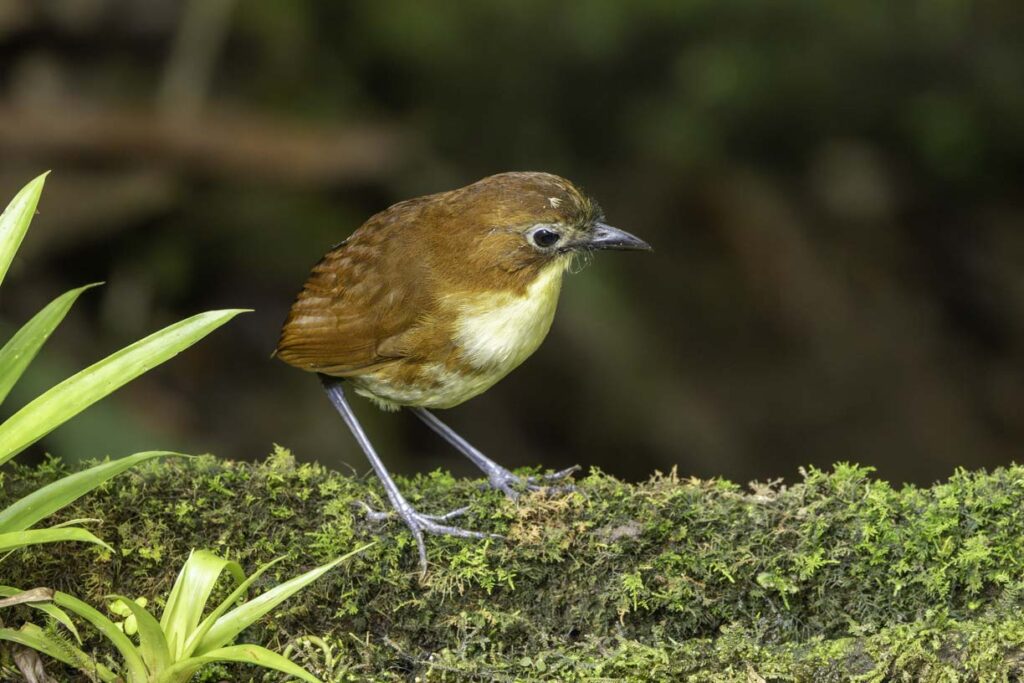
The Mustached, Ochre-breasted, and Yellow-breasted Antpittas were observed at Refugio Paz (along with the Giant Antpitta; the Equatorial, Chestnut-crowned, and Chestnut-naped Antpittas were observed at Reserva Zuro Loma; and the Tawny Antpitta was observed at Antisana.
The Antthrushes are related to Antpittas, and were once grouped in the same family. While more recent genetic studies place them in separate families, they share a similar range, similar foraging habits, and similar challenges to spot them in the dense understory. However, Angel Paz has recently conditioned a Rufous-bellied Antthrush to be lured out in the open to feed on grubs.