Barbets and Toucans are both in the taxonomic order Piciformes. Puffbirds are also includes since, until recently they were also included in this order but are now in a separate order called Galbulifores. Piciformes also includes the Picidae or woodpecker family; those species will be covered separately.
Seven species are included here: the Barred Puffbird, Red-headed Barbet, Toucan Barbet, Gray-breasted Mountain-Toucan, Plate-billed Mountain-Toucan, Yellow-throated Toucan, and Choco Toucan.
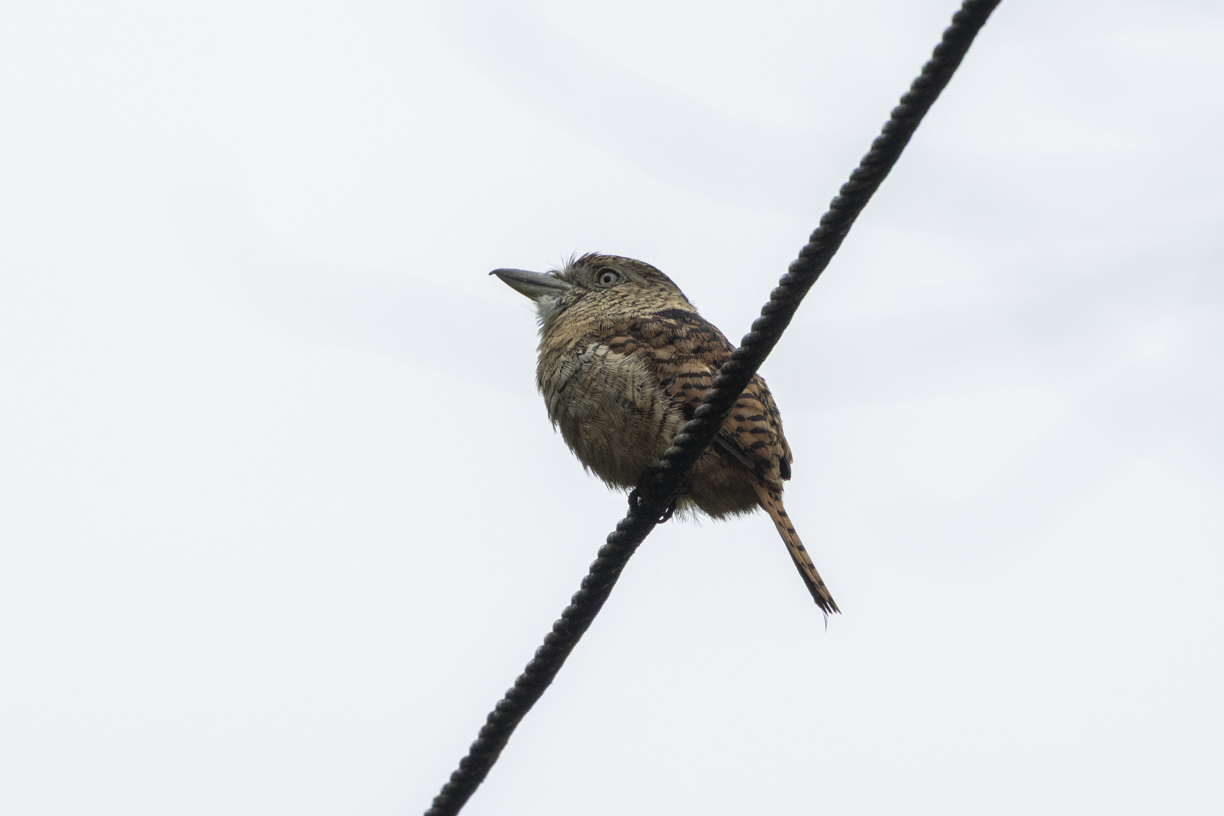
Leading off is the Barred Puffbird, one of 37 species in 10 genera. We spotted a pair perched of Barred Puffbirds perched on an overhead utility line along a remote road in the Choco region. Puffbirds sit motionless for hours at a time, making them hard to see. We were fortunate since our sharp-eyed driver spotted them.
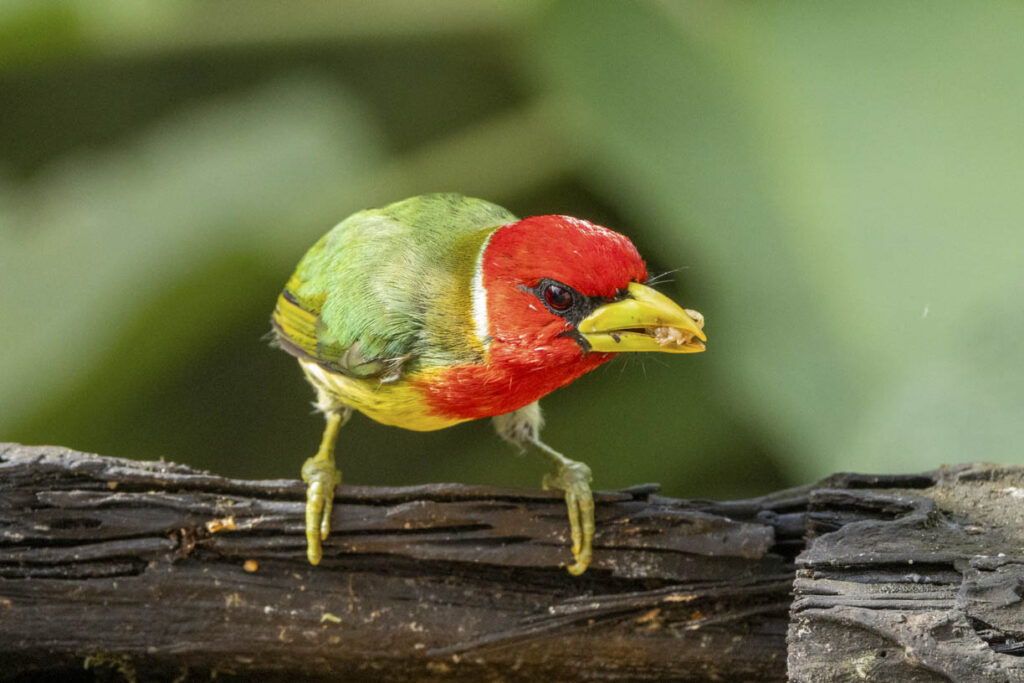
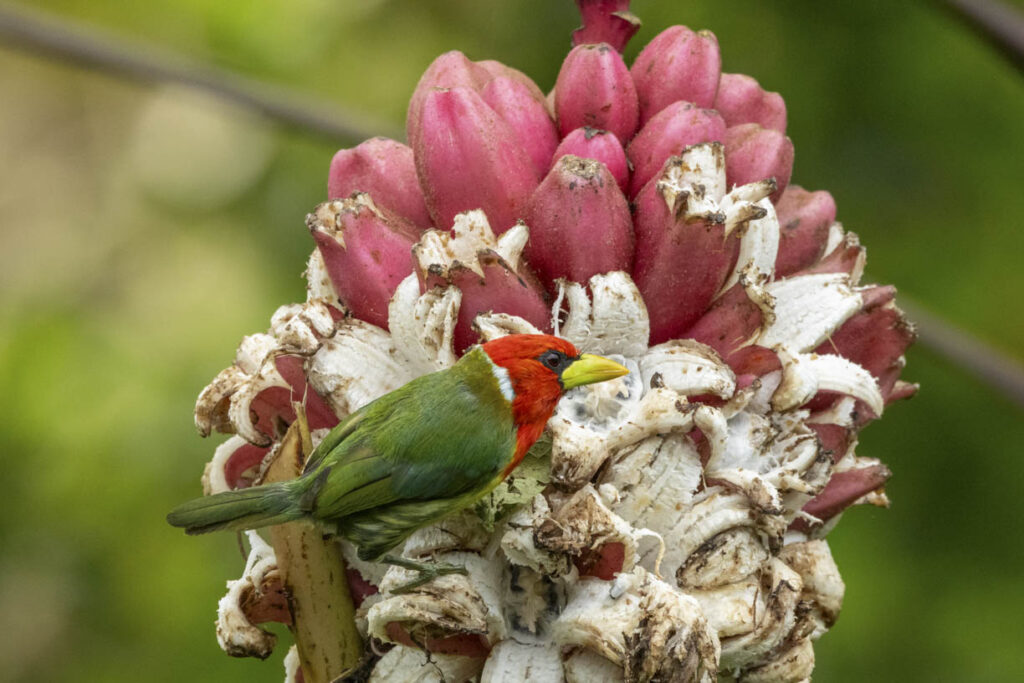
Our next bird is a Red-headed Barbet. We saw several at various locations. They primarily consume fruit, but will also take insects. They are cavity nesters, using old woodpecker nests but can also excavate cavaties in rotting trees.
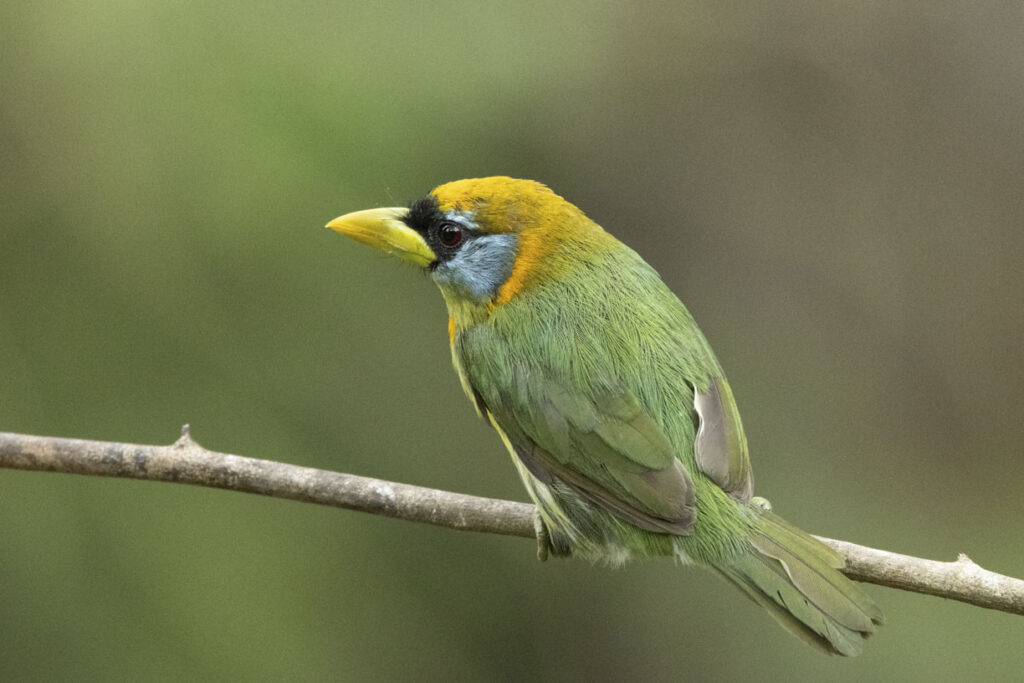
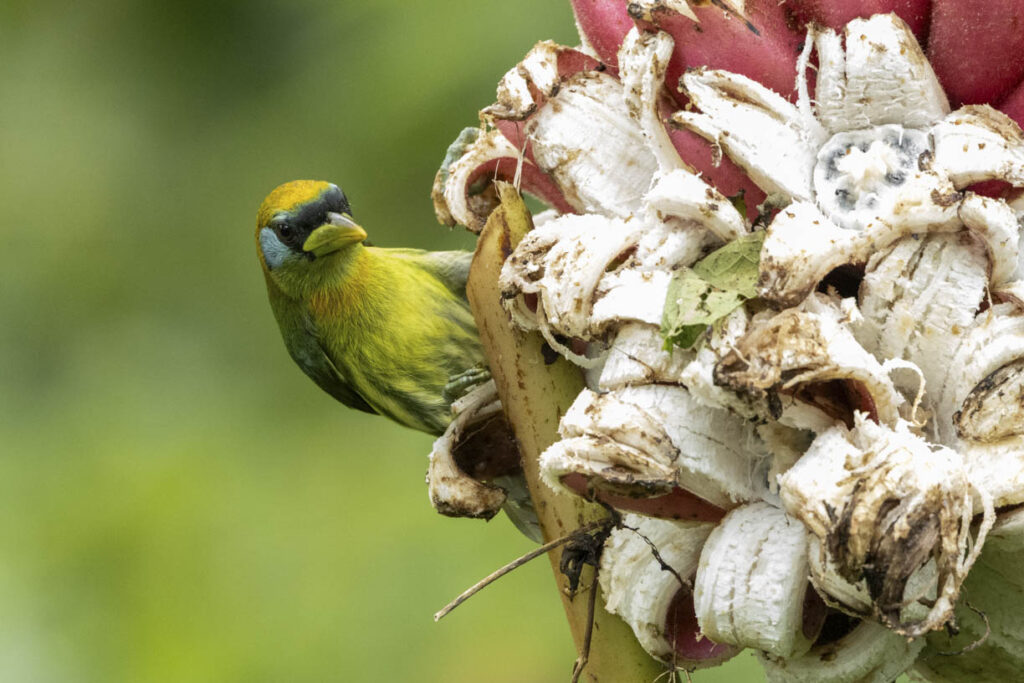
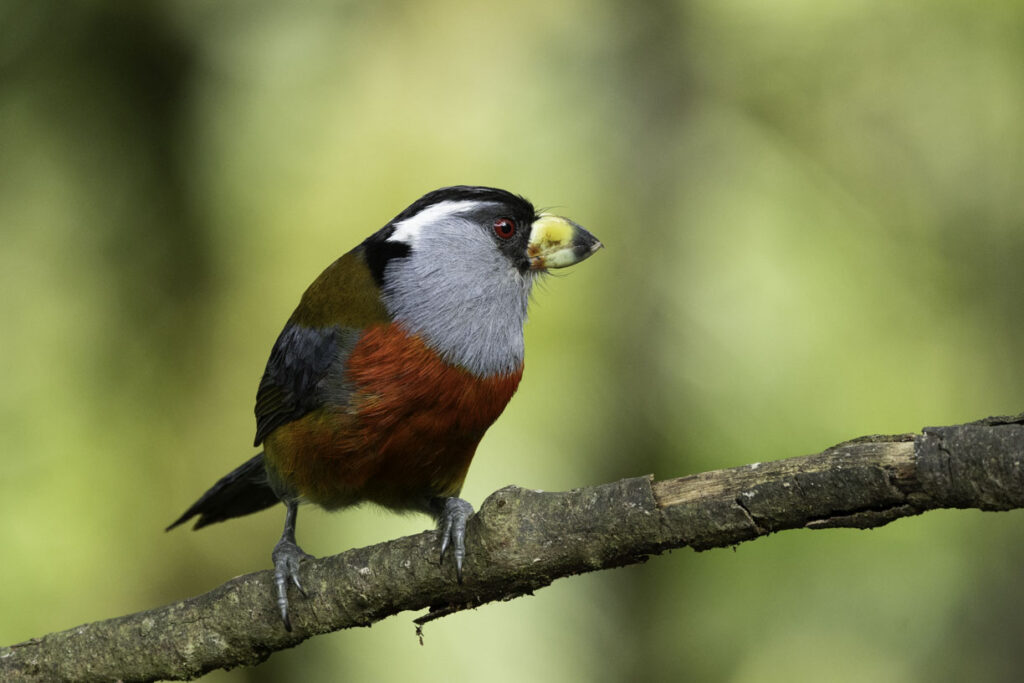
We also had a couple of sitings of Toucan Barbets. These are in a separate order from the Red-headed Barbet.
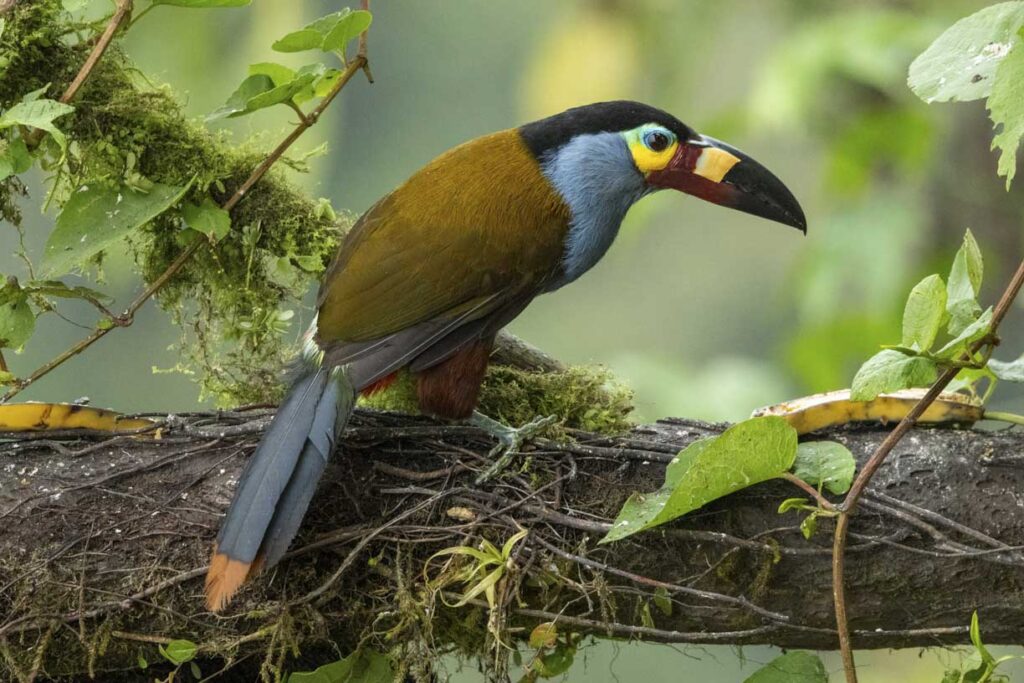
Our next four species are the larger Toucans. They are in the order Ramphastidae, encompassing 36 species in five genera. I’ll start with the Plate-billed Mountain-Toucan. This species is restricted to the west Andes, with its range extending from southwest Columbia into central Ecuador. It is currently listed as near-threatened due to its restricted range in areas where forest clearings are reducing its habitat.
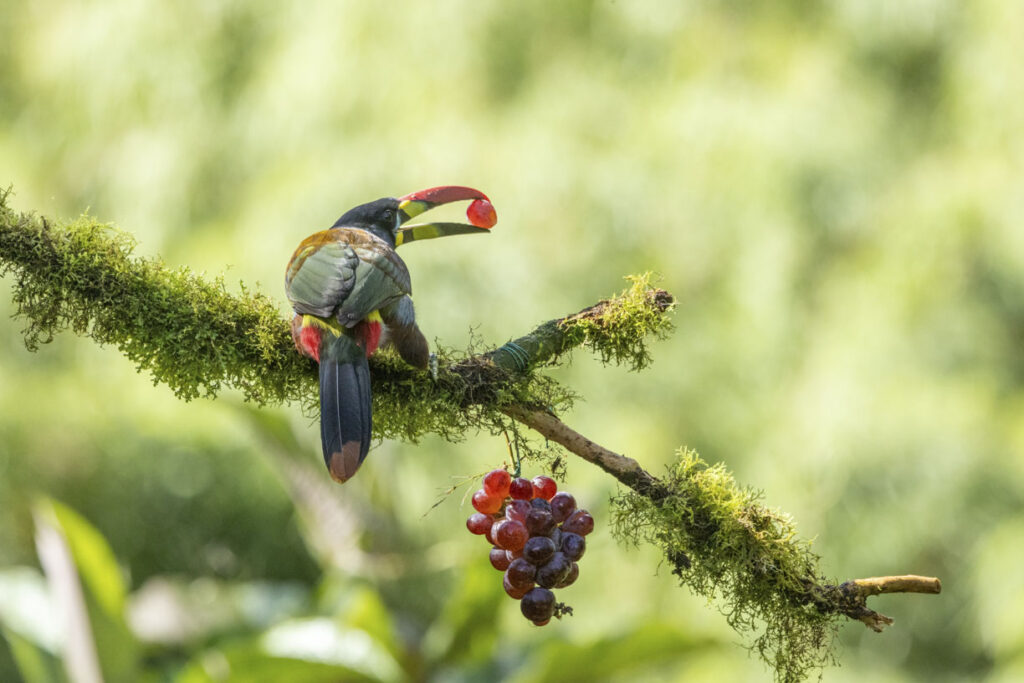
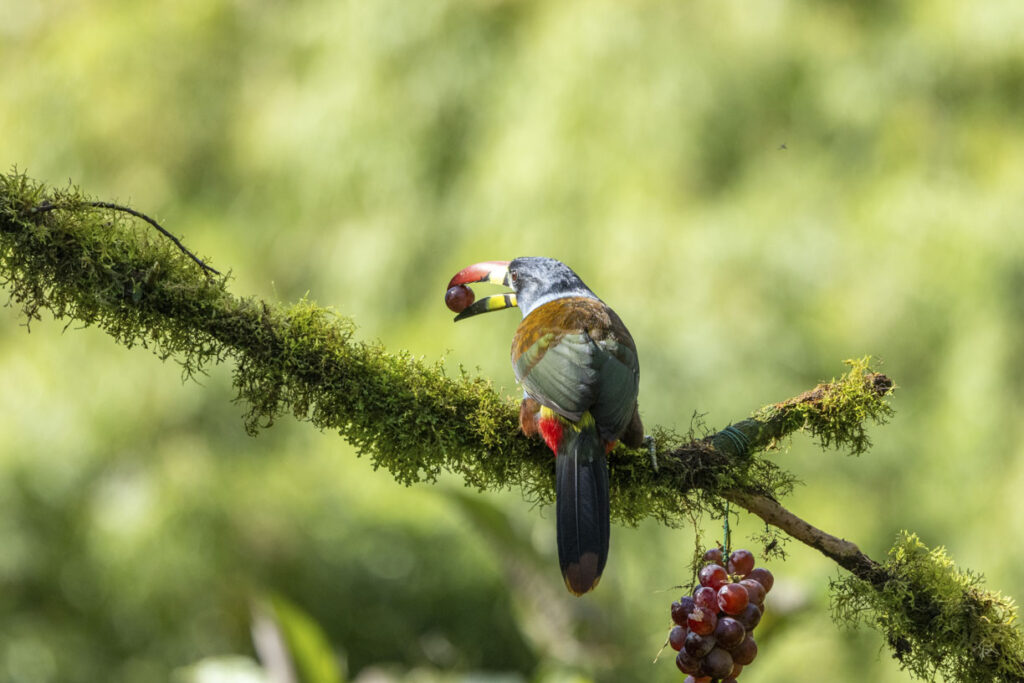
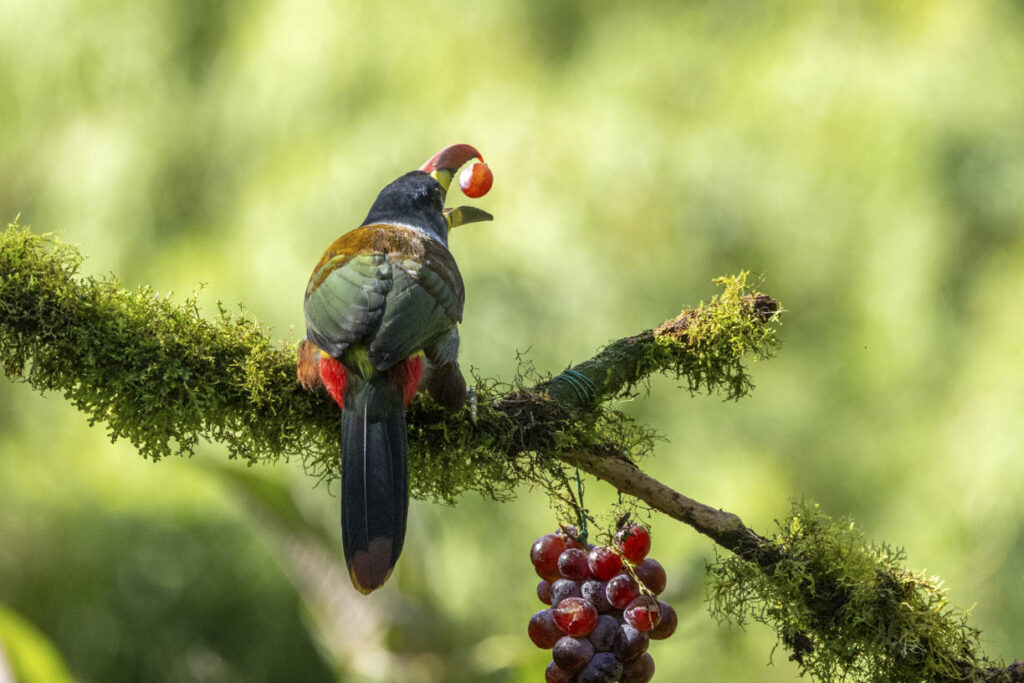
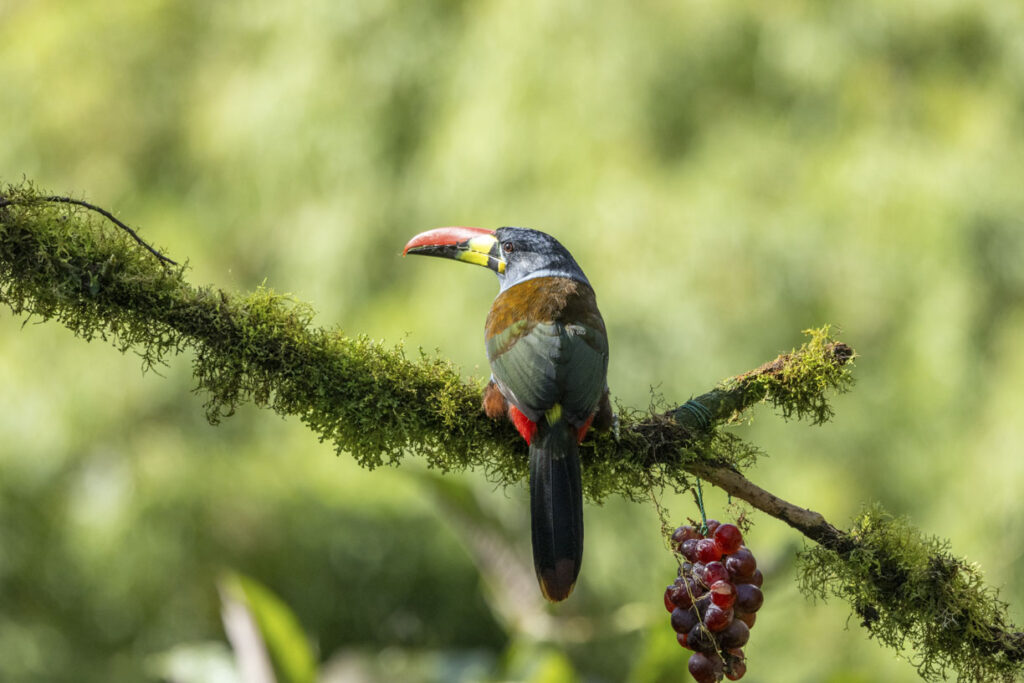
The next species is the Gray-breasted Mountain-Toucan. It, too, has a restricted range in the high Andes, from Columbia to Peru, and can be found at higher elevations than other Toucan species. Ours was observed at the Guango lodge at about 10,000 feet, lured in by a bunch of grapes. The photo sequence shows the Toucan’s feeding technique at work. They grab food by the tip of their bill, then toss it into the back of their throat.
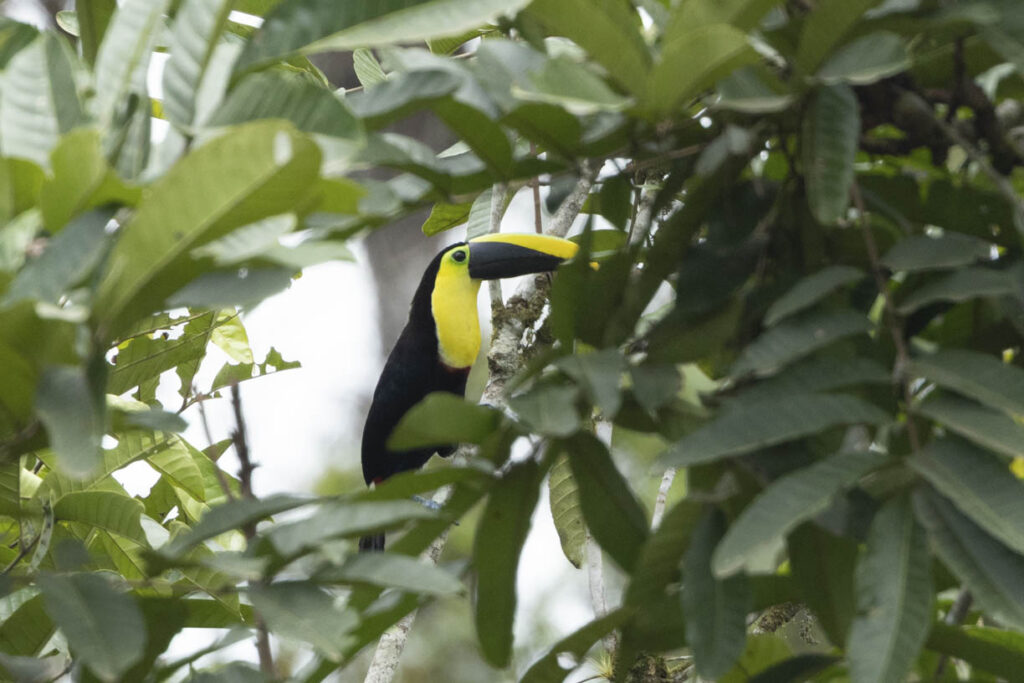
The next two species are large Toucans and look quite similar. We observed both in the same area. First is the Yellow-throated Toucan. It indeed has a very bright yellow-throat that extends to the face and all but the top of its head. Its large bill is yellow above and dark red below.
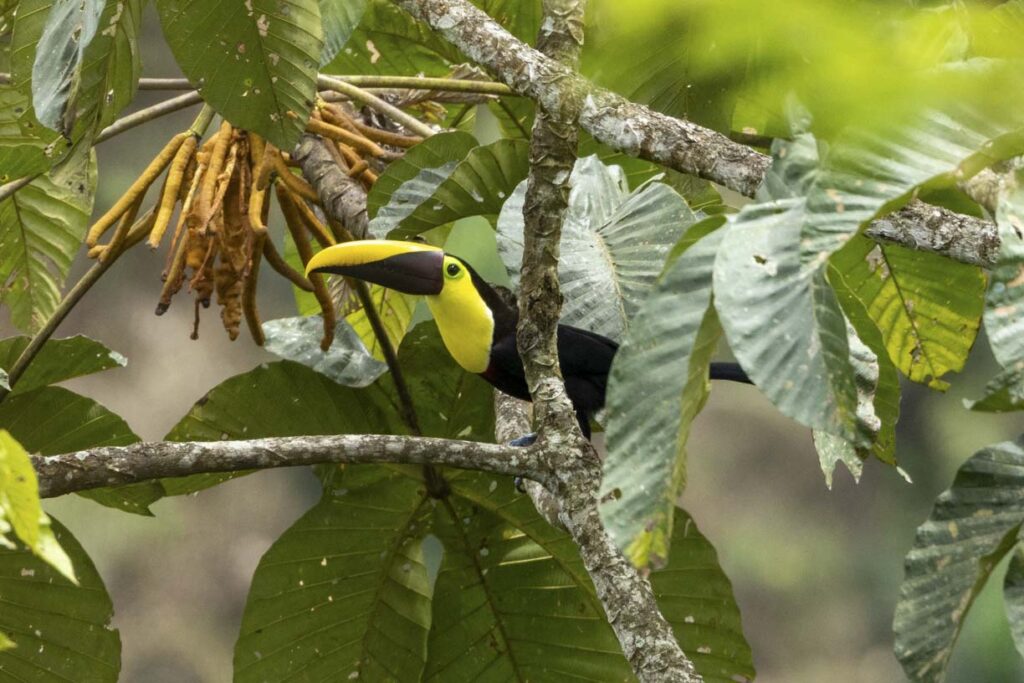
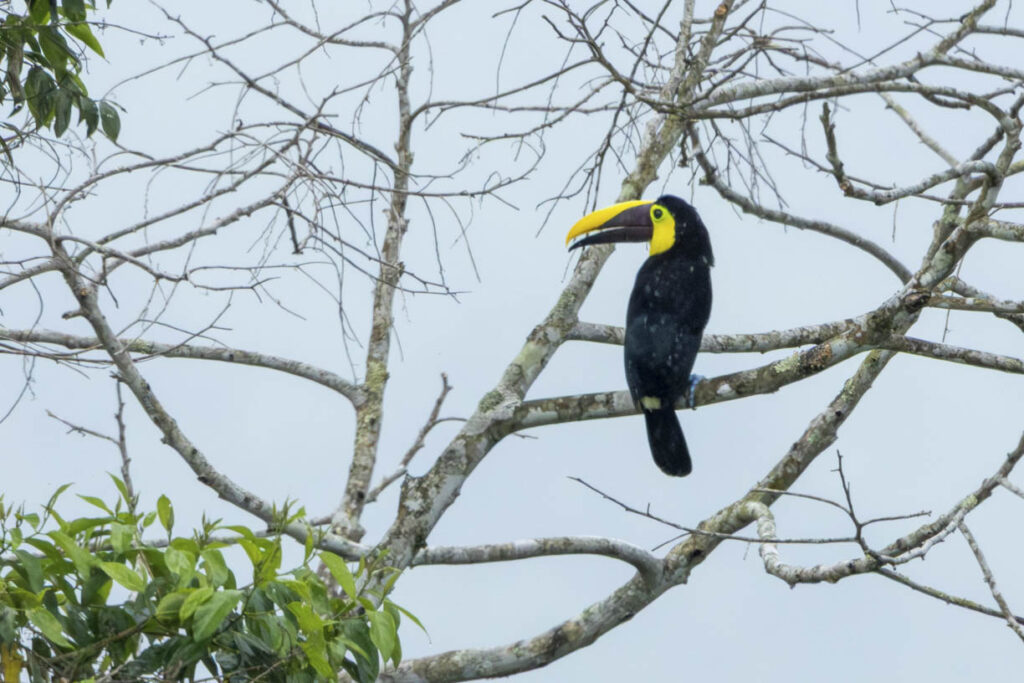
The final species is a Choco Toucan. It’s very similar to the Yellow-throated, but has a different vocalization, it’s slightly smaller, and the bottom of its bill is black rather than dark red or chestnut.