In April 2024, Matt Whitbeck and I attended the Prairie-Chicken Festival sponsored by Audubon of Kansas. We stayed in Hays, KS. The trip focused on seeing Lesser Prairie-Chickens, one of the smallest and most range-restricted of the North American grouses. It is currently a candidate for listing under the Endangered Species Act. Its range includes the southwest quadrant of Kansas, western Oklahoma, the Texas Panhandle, the eastern edge of New Mexico, and the southeastern edge of Colorado.
Audubon of Kansas (AOK) works with private landowners to conserve short-grass prairie land. Landowners are compensated for these efforts. AOK holds an annual festival where you can reserve a spot in a blind to watch the Prairie-Chickens as they perform their breeding rituals on short-grass prairie leks. The leks are simply an area of ground that is at a higher elevation that the surrounding area. It’s a site where Prairie Chickens traditionally gather where males can display in the hopes of courting a female in the hopes of mating with her. While numerous males and females may gather on a lek, typically one male dominates and ends up breeding with most, if not all, the females. No true pair bond exists — the male’s role in breeding is simply to copulate with the female. The female is solely responsible for nesting and raising the young.
The lek was about an hour and a half from our hotel, and we needed to arrive at least an hour before first light to set up our portable blinds. That meant we needed to be in the van by 4 am, so the alarm was set for 2:30 am. We arrived at the site around 5:30. By flashlight, we climbed through a barbed wire fence into a field. Our blinds were set up on the east edge near the lek so the sun would be at our back, making it ideal for viewing and photography.
The leks could hold 4 people, but you could pay double for a “photography blind” that held just two. That’s what Matt and I opted for, since we were hoping to get some good shots. We set up our blind and crawled in — it was about 4 feet high and maybe 6 feet across. It would have been tight with 4 people, and I can’t say it was comfortable but it worked just fine. We were settled in a little after 6 am. Shortly after 6:30, we heard the first sound of a Lesser Prairie-Chicken. Shortly after that, the first one appeared on the lek. For the next two hours, we enjoyed a great show.
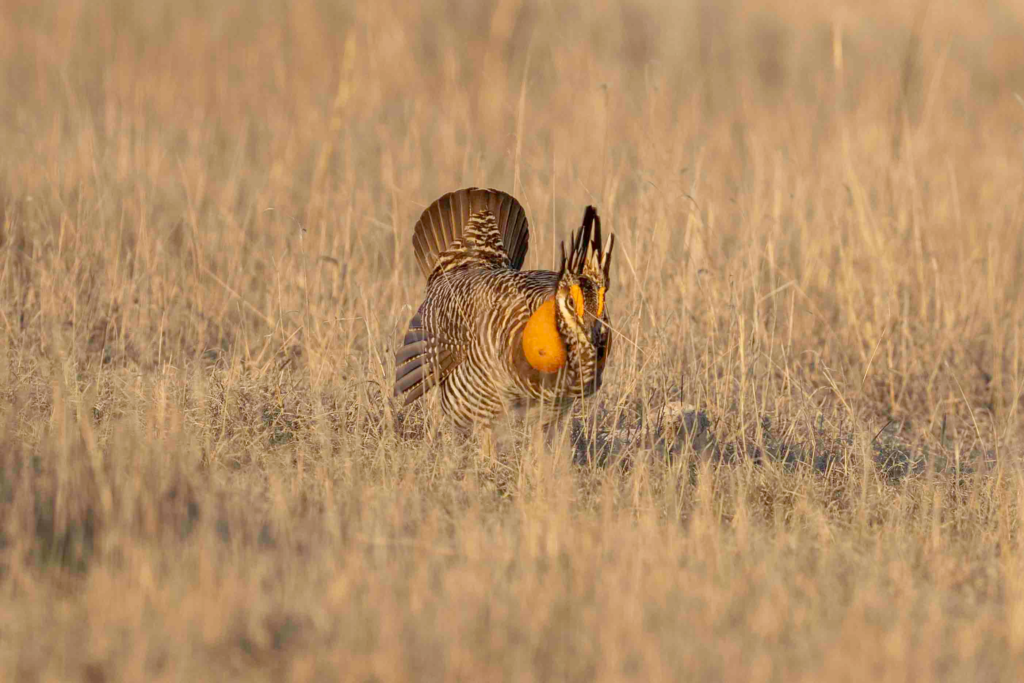
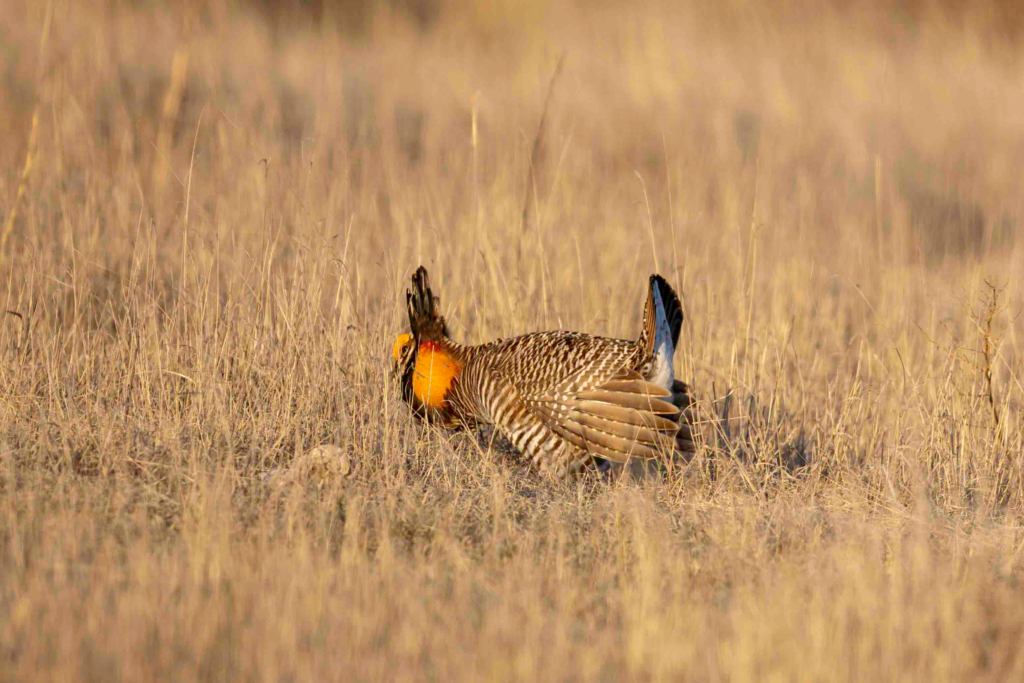
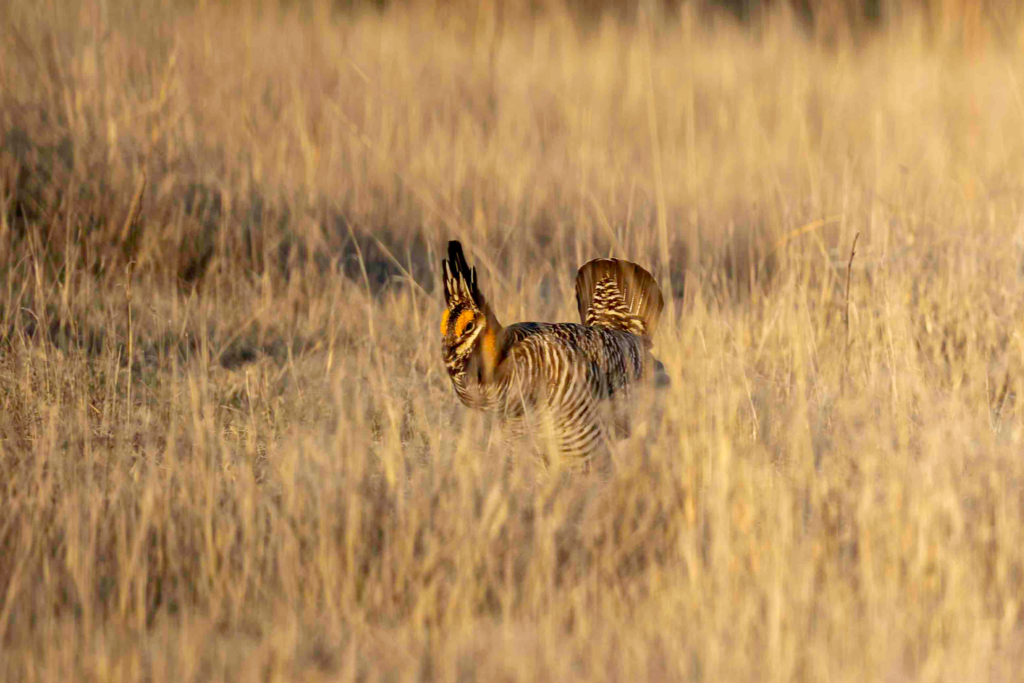
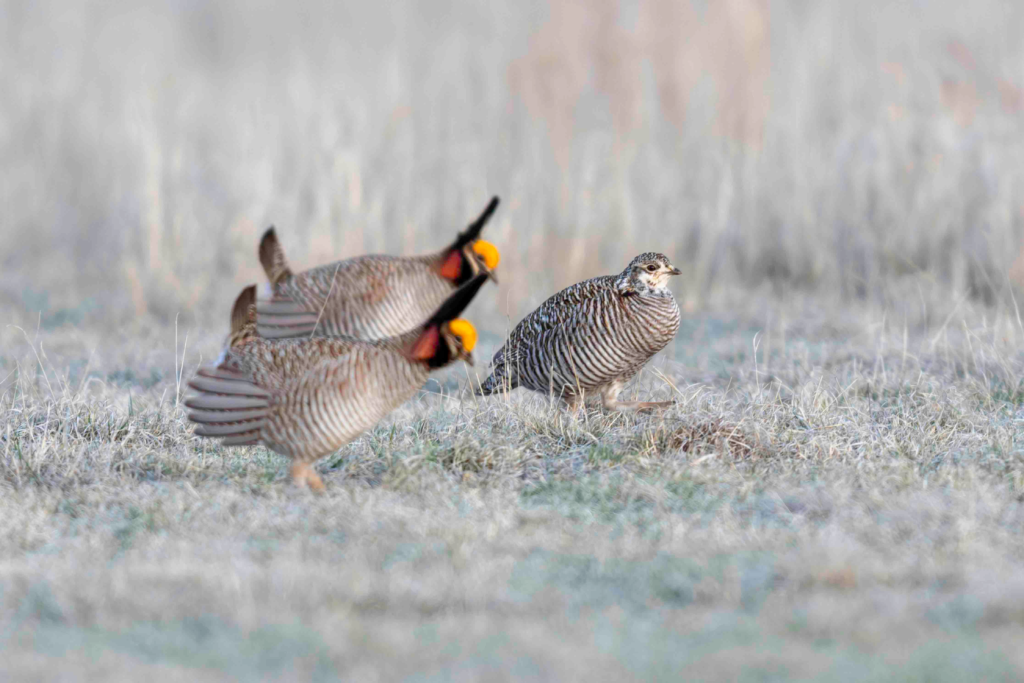
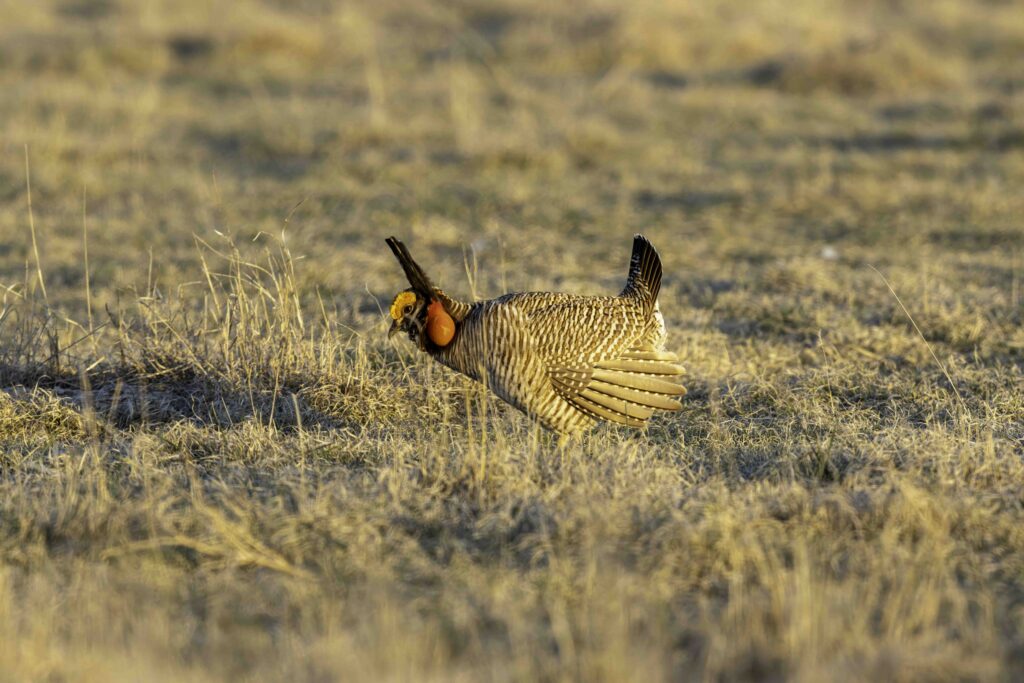
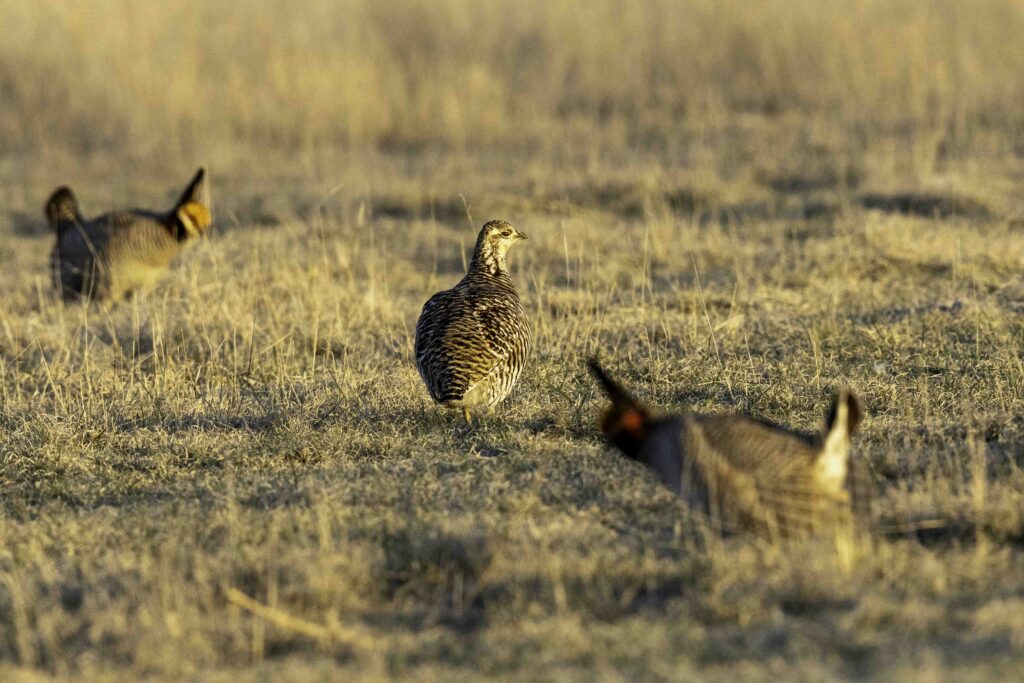
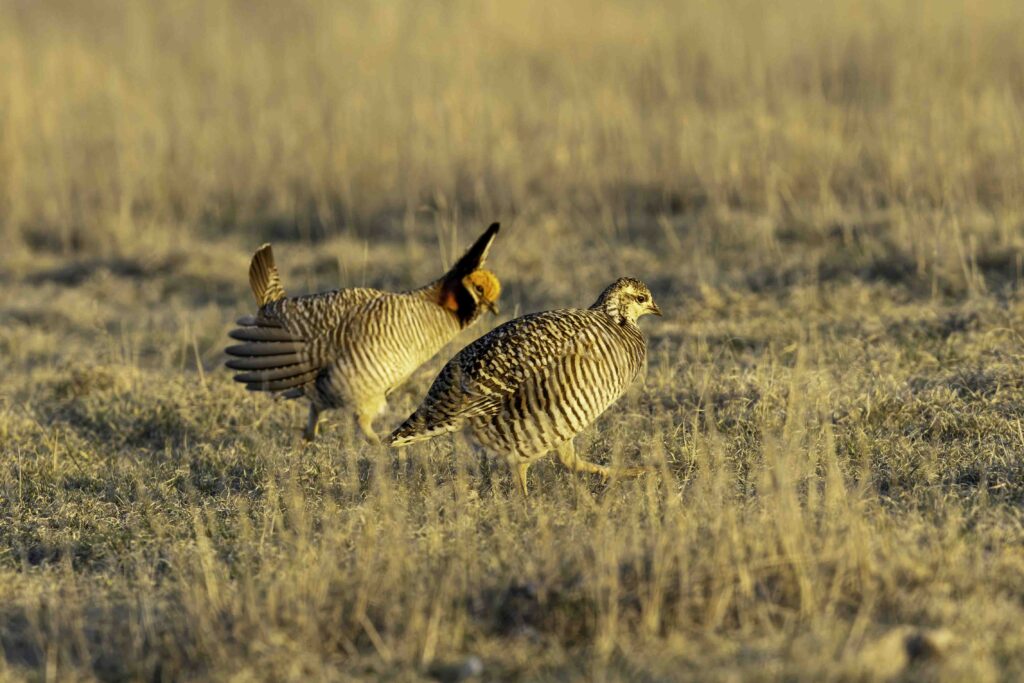
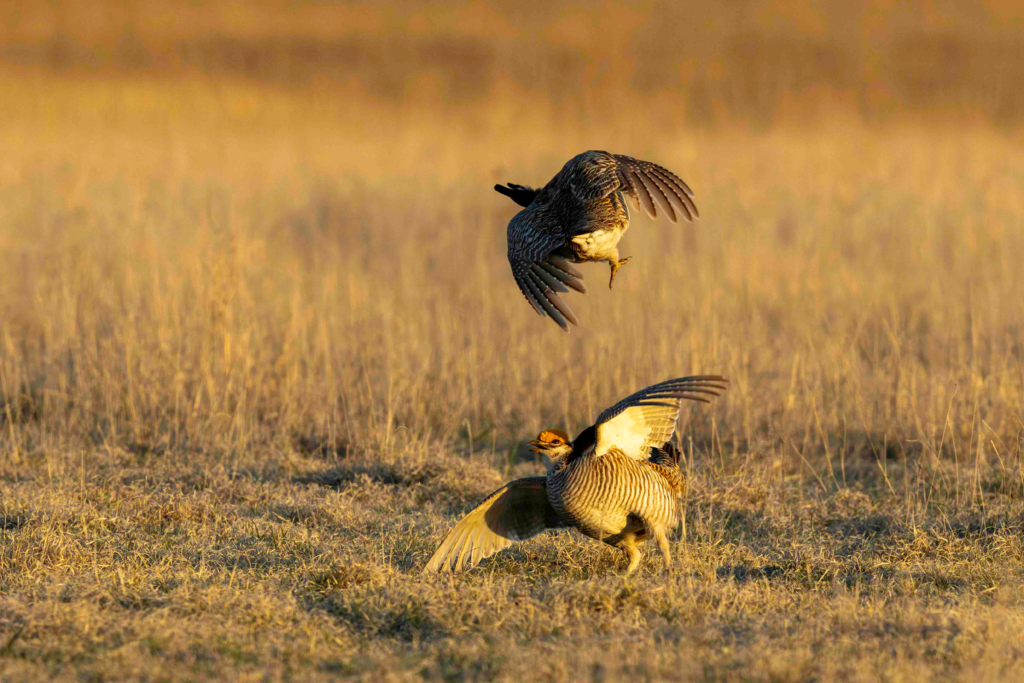
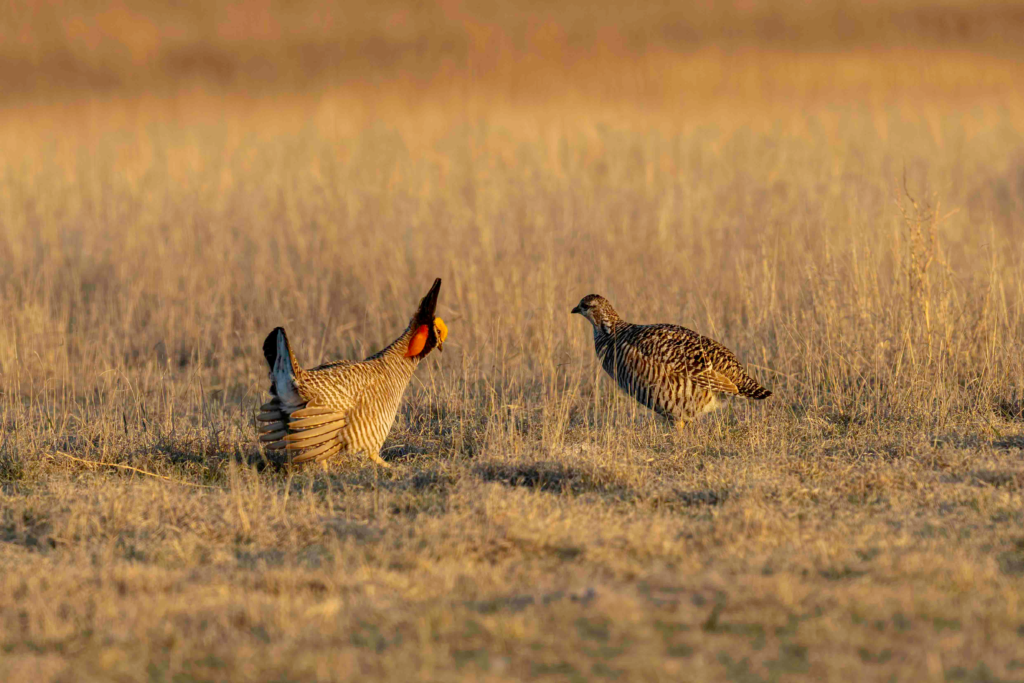
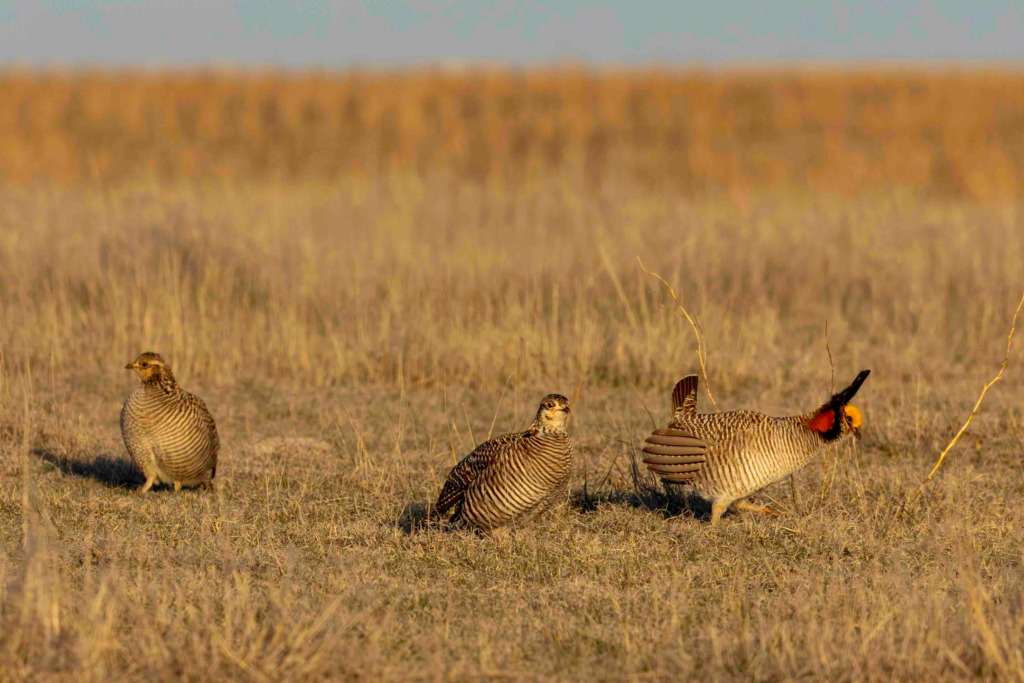
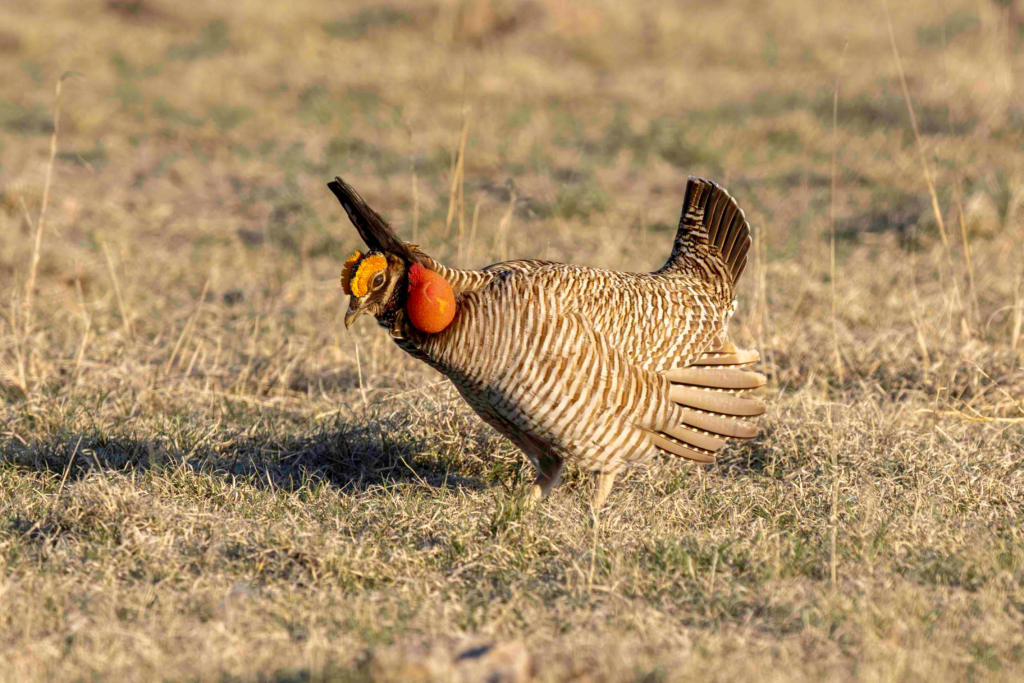
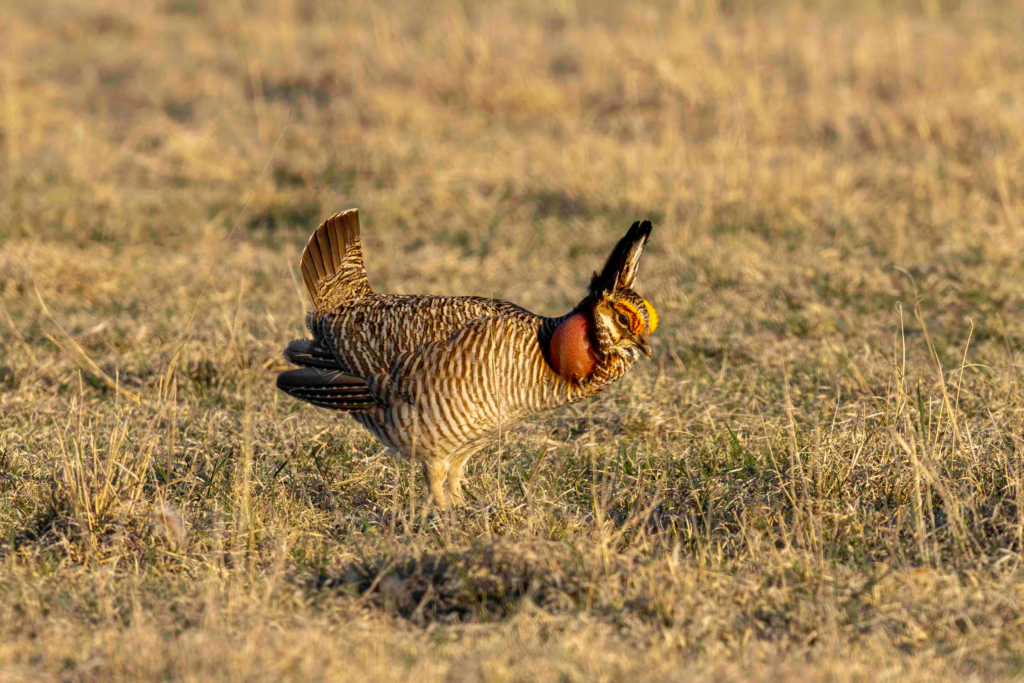
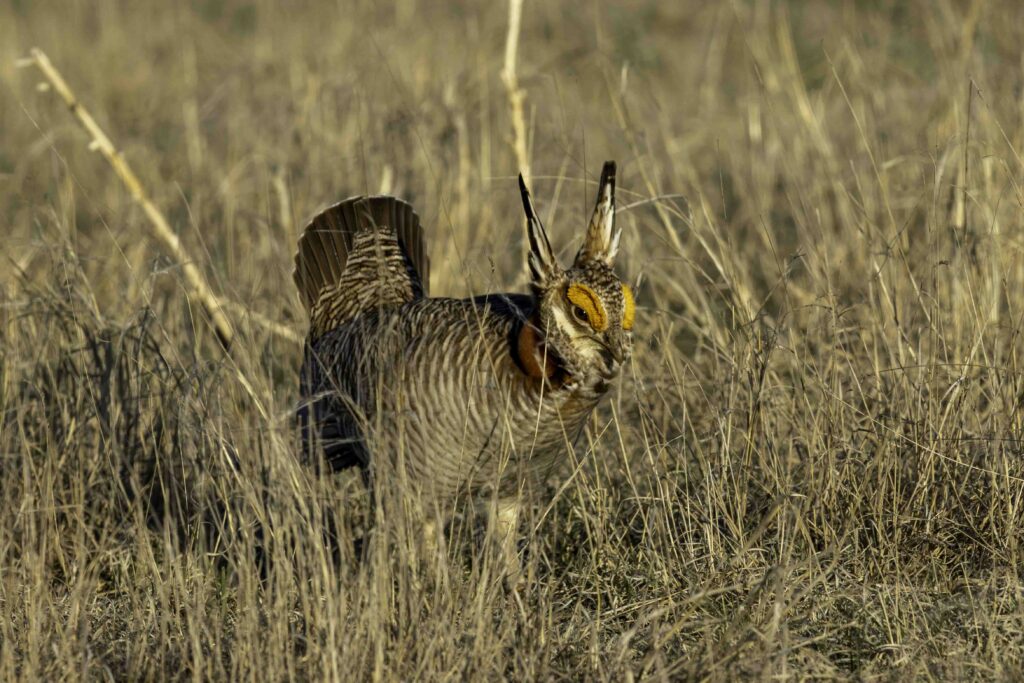
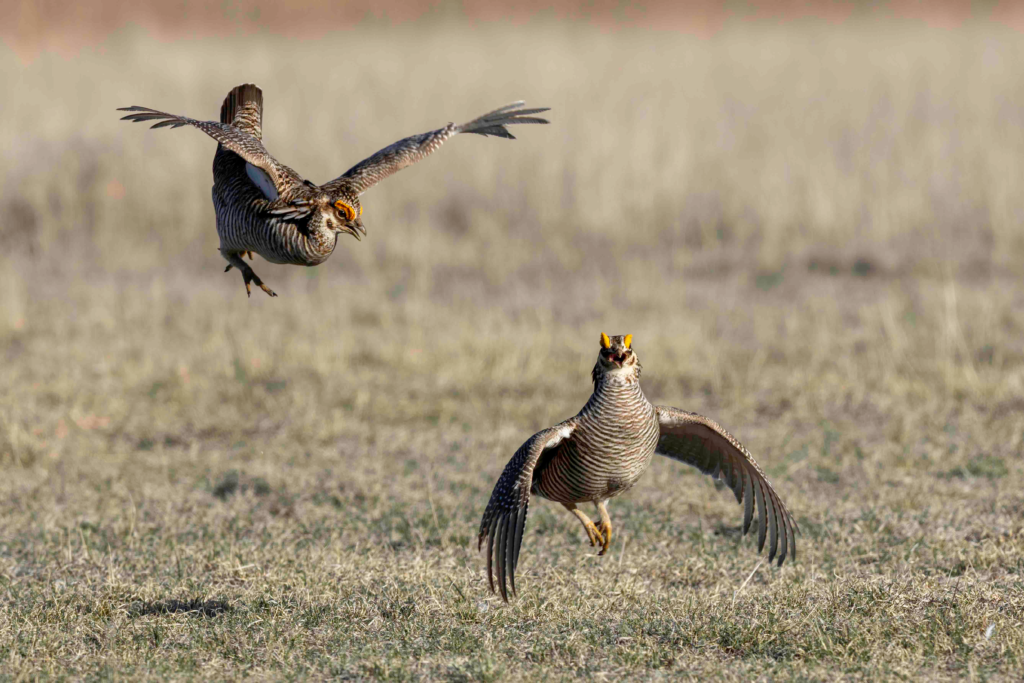
We saw around 20 Lesser Prairie Chickens, along with 2 Greater Prairie-Chickens. One of the easiest ways to distinguish male Lesser and Greater Prairie-Chickens is the color of the air sac on the side of the neck that they inflated during their courtship dance. The air sac for the Lesser is red, while it’s orange for the Greater. Here are some of the pictures I took.
Lesser Prairie-Chicken
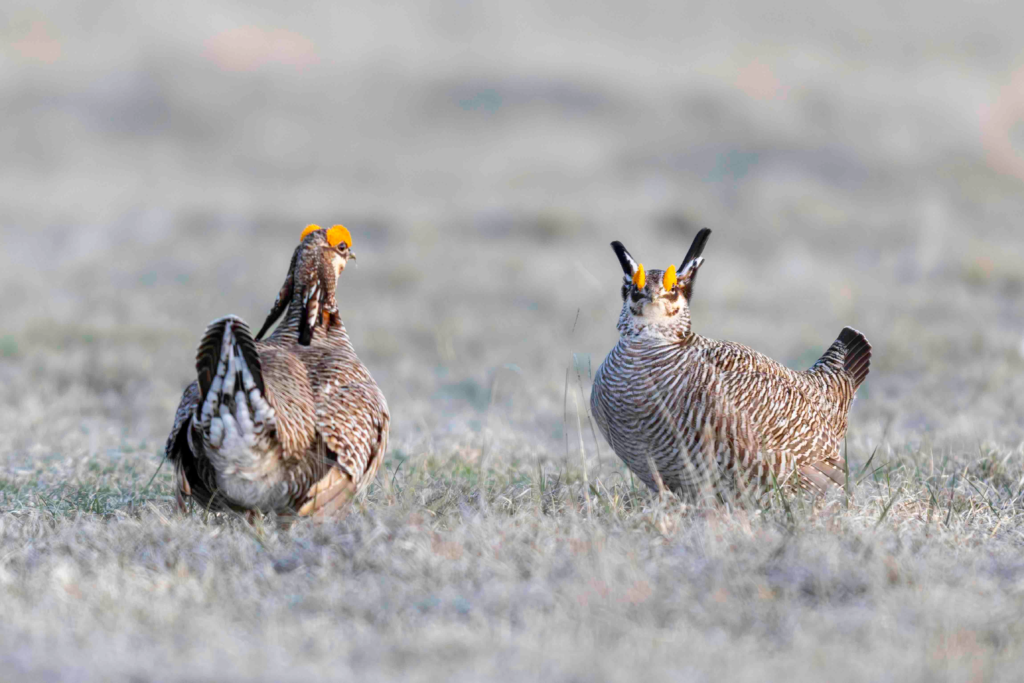
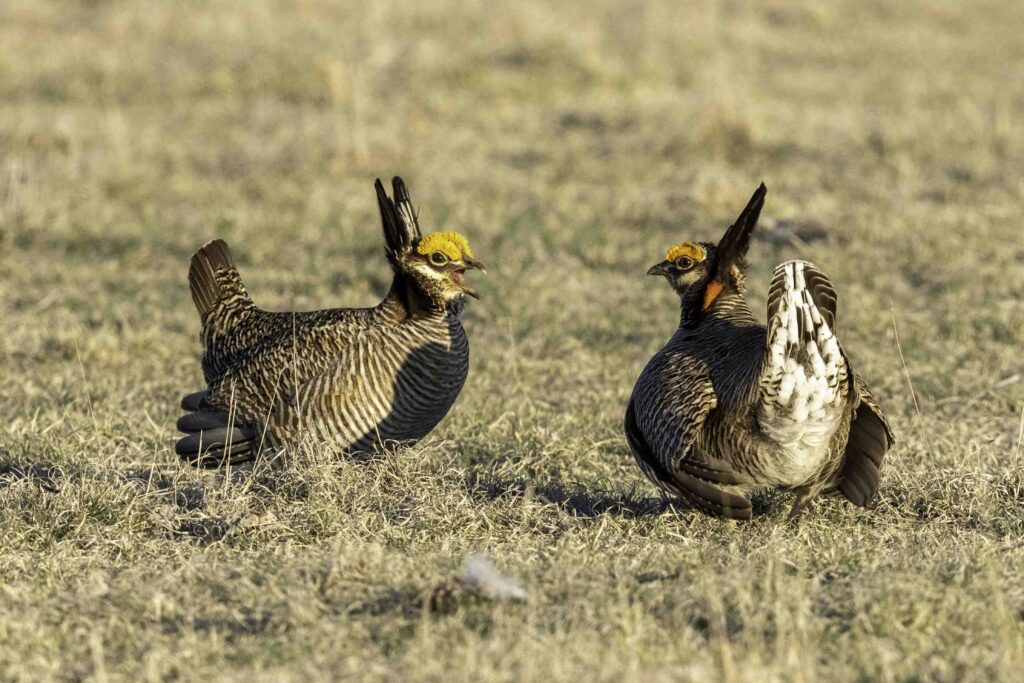
Greater Prairie-Chicken